Fall Coffee Shop Supplies: What Your Cafe Should Stock This Season
Fall coffee shop supplies are the seasonal items a cafe stocks for autumn service: insulated paper hot cups, warm-toned sleeves and lids, pumpkin spice and apple cider ingredients, seasonal syrups, and fall-themed packaging. Operators typically order these before September to cover the busy October–November rush.
The first pumpkin spice order of the year lands earlier every season — and the cafes that win fall are the ones that finished ordering before it did. Fall coffee shop supplies are not a nice-to-have layer on top of your regular stock; they are a distinct seasonal inventory category with its own ordering calendar, its own packaging, and its own margin profile. September through December is the strongest stretch of the year for seasonal beverage sales — Starbucks' 2025 fall menu launch produced the strongest single day and the best sales week in the company's history, according to Nation's Restaurant News. Independent cafes ride the same demand curve. This guide covers exactly what to stock, when to order it, and how to plan a fall menu that sells.
TL;DR — The Fall Stocking Checklist at a Glance
- Order window: place seasonal supply orders in August; have everything in-house by early September.
- Packaging: insulated paper hot cups, kraft or fall-print sleeves, sip lids, and take-out cup carriers sized for your busiest to-go daypart.
- Ingredients: pumpkin spice sauce or syrup, apple cider, maple, caramel, chai, and whipped cream — the core of every fall cafe menu.
- Equipment check: service and holding gear (airpots, dispensers, warming equipment) tuned up before volume spikes — hot-held items must stay at 135°F (57°C) or above per the FDA Food Code.
- Menu: 3–5 seasonal drinks and 2–3 seasonal bakery items beat a bloated menu every time.
| Supply category | Core fall items | Order by |
|---|---|---|
| Hot cups & lids | 8, 12, 16 oz insulated paper hot cups; sip lids | Early–mid August |
| Sleeves & carriers | Kraft or custom-printed coffee sleeves; 2- and 4-cup carriers | Mid August (custom prints: late July) |
| Seasonal ingredients | Pumpkin spice, apple cider, maple, caramel, chai, spices | Late August |
| Servingware | Mugs, warm-toned tableware, dessert plates | August–early September |
| Holding & warming equipment | Airpots, urns, dispensers, food warmers (inspect/replace) | August |
What Are Fall Coffee Shop Supplies?
Fall coffee shop supplies are the subset of cafe supplies a shop adds or swaps for autumn service — roughly September through November in the US. Everyday cafe supplies stay constant year-round: brewing equipment, espresso tools, cleaning chemicals, standard cups, napkins, and stirrers. (If you're building that baseline list, our full coffee shop supplies collection covers the year-round essentials.) The fall layer sits on top of it and breaks into four categories:
- Seasonal packaging: insulated paper hot cups in fall colorways, kraft or printed coffee sleeves, sip lids, and cup carriers for the to-go surge.
- Seasonal ingredients: pumpkin spice sauces, apple cider, maple and caramel syrups, chai concentrate, cinnamon, nutmeg, and whipped cream.
- Seasonal servingware: warm-toned mugs, dessert plates, and display trays for pastry cases that shift toward spiced and baked items.
- Service and holding equipment: the airpots, dispensers, and warming equipment that keep drip coffee, cider, and soups at safe serving temperature through longer, busier dayparts.
The distinction matters for budgeting. Seasonal packaging is consumable and volume-driven — order it against a forecast. Equipment is durable — audit it in August and replace only what's worn, so capital spend doesn't collide with your biggest inventory buy of the year.
When Should Cafes Order Seasonal Supplies?
Order fall coffee shop supplies in August, with custom-printed items ordered by late July. That timing is driven by three hard dates:
- Late August: the big chains launch fall menus — Starbucks' 2025 pumpkin spice latte returned August 26 — which resets customer expectations overnight. Independent cafes that launch the same week capture the wave; those that wait until October miss the peak.
- Custom print lead times: personalized sleeves and printed cups typically need 2–4 weeks of production and shipping. A late-July order arrives comfortably before launch; a mid-September order arrives after the season's best weeks are gone.
- October–November volume: hot beverage sales climb as temperatures drop, and to-go volume climbs with them. Running out of 16 oz cups in mid-October means paying rush shipping at the worst possible time.
Demand is worth planning for seriously. Total US restaurant and foodservice sales are projected to reach $1.55 trillion in 2026, with operators adding more than 100,000 jobs, per the National Restaurant Association's 2026 State of the Restaurant Industry report (current as of July 2026). The same report projects modest real growth and persistent cost pressure — which is exactly why the fall season matters: seasonal LTOs carry premium prices and drive visit frequency, making autumn one of the few reliable margin-expansion windows in the calendar.
A simple forecasting rule from our own customers: pull last year's September–November cup usage by size, add your year-over-year traffic growth, then add 15–20% buffer on the top two selling sizes. Storage is cheap; a stockout during pumpkin spice season is not.
Fall Cups, Sleeves, and Packaging: The To-Go Backbone
Hot cups and sleeves are the highest-volume fall coffee shop supplies, and they're also your most visible branding surface of the year. Three decisions to make in August:
Which cups work best for hot seasonal drinks?
Insulated, double-wall or poly-lined bulk paper hot cups are the standard for fall service. Spiced lattes and ciders serve at higher volumes and larger sizes than summer drinks, so weight your order toward 12 oz and 16 oz. Single-wall cups cost less per unit but demand a sleeve on every serve; double-wall cups can go sleeveless at moderate temperatures. Price the two combinations against each other per drink served, not per case.
Sleeves: kraft, printed, or custom?
A coffee cup sleeve does two jobs in fall: it protects hands from drinks served hotter and larger than summer orders, and it carries your seasonal branding. Plain kraft reads "autumn" on its own and costs the least. Custom-printed sleeves are the highest-ROI upgrade of the season — a walking ad on every to-go order during your busiest quarter. We stock custom coffee sleeves for cafes, coffee shops and events with fall-ready print options; order these first, since printing adds lead time.
Carriers and fall-themed packaging
Cooler weather pushes group orders — office runs, tailgates, family pickups. Stock 2- and 4-cup take-out cup carriers at roughly one carrier per six to-go drinks sold in October, based on typical customer ordering patterns we see. For bakery items, kraft boxes and window bags in warm tones extend the seasonal look to the pastry case without a custom print run.
Fall Cafe Menu Ideas: What to Actually Put on the Board
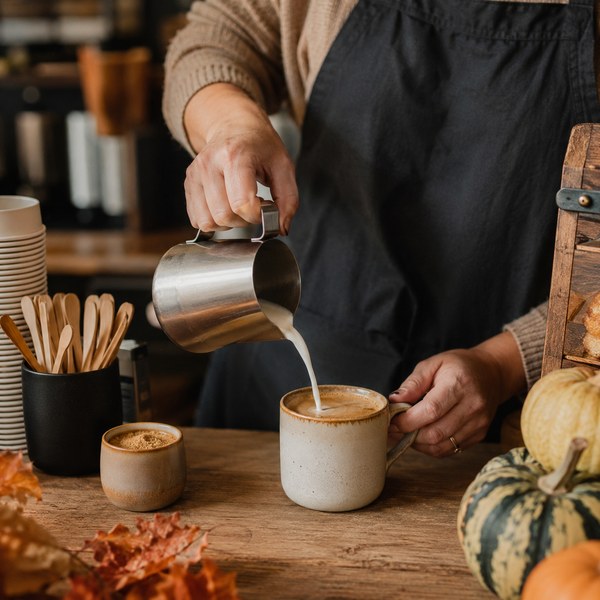
Fall cafe menu ideas succeed when they're focused. Three to five seasonal drinks plus two or three bakery items outsell a ten-item seasonal board because throughput stays high and ingredient waste stays low. The proven core:
- Pumpkin spice latte — the anchor. The PSL has run as a seasonal LTO for 22 consecutive years and still sets sales records, per Nation's Restaurant News (current as of July 2026). Offer it hot and iced — iced pumpkin drinks now carry the early-fall weeks when afternoons are still warm.
- Hot apple cider — the caffeine-free seasonal seller, and a natural fit for beverage dispensers at volume.
- Maple latte or maple cortado — maple is the strongest "beyond pumpkin" fall flavor and differentiates you from every chain running pumpkin-only.
- Chai and dirty chai — spiced profile, year-round base, zero extra inventory risk.
- Caramel apple or spiced mocha variants — built from syrups you already carry.
For build techniques and drink specs behind these menu items, see our guide to different types of espresso drinks — every fall latte variant on this list starts from the standard builds covered there. And for a deeper look at what sells each season, our roundup of the most popular seasonal coffees breaks down the winners quarter by quarter.
Ingredient stocking tip from our customer base: our cafe customers consistently report that pumpkin spice sauce (made with real pumpkin) outperforms thin pumpkin syrup on flavor, and it holds up better in iced applications. Buy one case less than your forecast on the first order — you can reorder in two weeks, but you can't return six cases of pumpkin sauce in December.
Holding and Warming Equipment: Keep Volume Hot and Safe
Fall is when service equipment gets stress-tested. Drip coffee volume rises, batch drinks like cider join the line, and soups often enter the food menu. August is the month to audit this gear, because equipment failures in October cost you your best weeks.
- Airpots and dispensers: check seals, pumps, and heat retention on your coffee airpots and accessories before volume spikes. If you're weighing airpots against urns or satellite dispensers for fall batch service, our coffee dispenser buying guide covers capacity, retention times, and sizing in full — we won't repeat it here.
- Food holding and warming: if fall adds soups, warm pastries, or breakfast items to your menu, dedicated food holding and warming equipment keeps them at safe temperature through service. The FDA Food Code requires hot-held foods to be maintained at 135°F (57°C) or above — a spot-check thermometer at the holding station is the cheapest insurance you'll buy all season.
- Cleaning and descaling: more brew cycles means faster scale buildup. Descale espresso machines and brewers at the start of September, not when the flow rate drops in November.
Mid-article CTA: Adding warm food to your fall menu? Shop food holding and warming equipment — in stock and ready to ship before the season starts.
How to Plan Fall Inventory Like an Operator
Seasonal coffee supplies reward discipline. The framework we recommend — refined across thousands of cafe orders every August — has four steps:
- 1. Pull last fall's numbers. Cup usage by size, seasonal drink mix, and to-go percentage for September–November. Your POS already knows what this fall will look like.
- 2. Order consumables against the forecast plus buffer. 15–20% extra on your top two cup sizes and your anchor seasonal ingredient. Everything else at forecast.
- 3. Stagger deliveries. Packaging in mid-August, ingredients in late August, second ingredient drop in early October. This protects cash flow and storage space simultaneously.
- 4. Set reorder triggers, not reorder dates. When pumpkin sauce hits two cases or 16 oz cups hit five sleeves of stock, reorder automatically. Fall demand is spiky; triggers catch spikes that calendar-based ordering misses.
Budget note: with the National Restaurant Association forecasting only 1.3% real sales growth for 2026 amid persistent cost pressure, over-ordering is a genuine risk — the buffer belongs on high-velocity consumables only, never on specialty ingredients with a hard seasonal expiration.
The Restaurantware Fall Setup: What We See Work
In 15+ years supplying more than 40,000 foodservice operations, we've watched hundreds of cafes run fall seasons well and badly, and the pattern is consistent: the winners treat fall as a packaging-and-menu system, not a syrup purchase. A typical high-performing setup from our customer base looks like this:
| Component | What top cafes use | Why it works |
|---|---|---|
| To-go cup | 12/16 oz insulated paper hot cups, warm-tone or kraft | Handles hotter, larger fall drinks without double-cupping |
| Sleeve | Custom-printed kraft sleeve with fall artwork | Seasonal branding on every order during peak quarter |
| Batch service | Airpots for drip, dispenser for cider | Frees the espresso machine for premium seasonal builds |
| Warm food | Countertop warming equipment for pastries/soup | Adds a food attach to the seasonal drink ticket |
| Group orders | 4-cup carriers stocked at the handoff point | Speeds the office-run daypart that spikes in October |
Our foodservice customers consistently tell us the custom sleeve is the item they wish they'd ordered earlier — not because it's complicated, but because print lead time is the one deadline in this list that can't be rushed. It's why we put it first in the ordering calendar above, and why our own fall stocking reminders to customers go out in July.
Frequently Asked Questions
What supplies does a coffee shop need for fall?
A coffee shop needs four groups of fall supplies: insulated paper hot cups with sleeves and sip lids; seasonal ingredients (pumpkin spice, apple cider, maple, chai, whipped cream); warm-toned servingware and bakery packaging; and serviced holding equipment — airpots, dispensers, and food warmers — for higher hot-beverage volume.
When should cafes order seasonal supplies?
Cafes should order fall supplies in August and have them in-house by early September. Custom-printed items like branded sleeves need orders by late July to clear 2–4 week production lead times. Major chains launch fall menus in late August, which is when customer demand for seasonal drinks begins.
What are the most popular fall coffee drinks to stock for?
The most popular fall coffee drinks are the pumpkin spice latte (hot and iced), hot apple cider, maple lattes, chai and dirty chai, and caramel-spice variants. The pumpkin spice latte remains the anchor — it has run as a seasonal item for 22 consecutive years and still breaks sales records.
What cups and sleeves work best for hot seasonal drinks?
Double-wall or insulated poly-lined paper hot cups in 12 oz and 16 oz sizes work best for hot seasonal drinks, paired with kraft or custom-printed sleeves. Fall drinks serve hotter and larger than summer orders, so insulation and a sleeve on every serve protect customers and prevent double-cupping waste.
How should a cafe plan seasonal packaging and menu changes?
Plan seasonal packaging and menu changes from last year's POS data: pull September–November cup usage and drink mix, forecast with 15–20% buffer on top sellers, and launch a focused menu of 3–5 seasonal drinks the same week major chains launch theirs. Stagger deliveries to protect cash flow and storage.
How much does cafe equipment cost?
Core cafe equipment — espresso machines, brewers, refrigeration — represents the largest startup cost, but fall-specific equipment spend is modest by comparison. Airpots, beverage dispensers, and countertop warmers sit at the low end of commercial equipment pricing, and most cafes only audit and selectively replace this gear in August rather than buying new, keeping seasonal capital spend low.
Conclusion: Stock Early, Launch Focused, Sell the Season
Fall coffee shop supplies come down to a calendar and a checklist: custom prints ordered by late July, packaging and ingredients in-house by early September, equipment audited before the rush, and a tight seasonal menu launched when demand ignites in late August. The cafes that treat autumn as a planned system — not a scramble — capture the most profitable beverage quarter of the year.
Ready to build your fall order? Start with food holding and warming equipment to get service-ready, then round out cups, sleeves, and packaging in our full coffee shop supplies collection — and browse more operator guides for coffee shops on the blog.