Reusable Flatware Sets Review: The Best Options for Foodservice Operators
A reusable flatware set is a washable, multi-use group of forks, knives, and spoons — typically 18/10 stainless steel or thick-gauge bamboo — designed to replace single-use cutlery. For foodservice operators, stainless steel sets deliver the lowest cost per use, surviving thousands of commercial dishwasher cycles while cutting disposable waste.
If you are comparing reusable flatware set options for a restaurant, café, hotel, or catering operation, the math matters more than the marketing. A disposable fork costs a few cents and gets thrown away; a quality stainless steel fork costs a couple of dollars and serves guests for years. In this review, we rank the best reusable flatware sets by material, durability, dishwasher survival, and true cost per use — the criteria that decide whether a set is still in your drawer three years from now or in the trash after three months.
TL;DR verdict: 18/10 stainless steel flatware sets are the best reusable option for virtually every foodservice operation. They survive high-temperature commercial dishwashing indefinitely, resist corrosion better than any other flatware material, and cost pennies per service over their lifespan. Bamboo and reusable plastic sets fill narrower roles — travel kits, outdoor service, and budget-sensitive high-loss environments — but neither matches stainless steel for longevity in a commercial kitchen.
How We Evaluated These Reusable Flatware Sets
We evaluated every reusable flatware set in this review against four criteria that determine real-world performance in foodservice — not just how a set looks in a product photo:
- Durability: Resistance to bending, pitting, rust, and handle failure under daily commercial use. Flatware that bends when it hits a dense cheesecake or pits after a month of dishwashing fails this test.
- Cost per use: Purchase price divided by realistic service life. A $2.00 stainless fork used 2,000 times costs $0.001 per service; a $0.04 disposable fork costs $0.04 every single time. Over one year at 200 covers a day, that difference compounds into thousands of dollars.
- Commercial dishwasher survival: Whether the set withstands high-temperature mechanical warewashing. Under the FDA Food Code (2022), hot-water sanitizing machines must hit 165°F for stationary-rack single-temperature machines or 180°F for all other machine types (§4-501.112). Any "reusable" set that cannot take that heat cycle after cycle is not reusable in a commercial kitchen.
- Material quality: For stainless steel, the alloy grade (18/10 vs. 18/0); for bamboo, gauge and finish; for reusable plastic flatware, polymer type and heat rating.
These criteria come from experience, not theory. In 15+ years supplying more than 40,000 foodservice operations, we've watched thin-gauge "bargain" flatware get replaced two and three times while properly specified 18/10 sets from the same era are still in service. The cheapest set is almost never the cheapest set.
Best Reusable Flatware Sets Compared
The comparison table below summarizes how each category of reusable flatware performs in commercial use. Details on each pick follow.
| Set / Material | Commercial Dishwasher | Realistic Service Life | Price Tier | Best Use |
|---|---|---|---|---|
| 18/10 stainless steel (Imperial, Sovereign, Speculo) | Yes — unlimited high-temp cycles | 5–10+ years | $$–$$$ | Best overall: restaurants, hotels, cafés, fine dining |
| 18/0 stainless steel | Yes — dry promptly to limit spotting | 2–5 years | $ | Best budget: high-volume, high-loss settings |
| Reusable bamboo flatware | No — hand wash; heat and detergent degrade it | Months to ~2 years | $ | Travel kits, low-heat rinse settings, eco-branding |
| Reusable plastic flatware (thick PP/Tritan) | Limited — check heat rating; many warp above 180°F | 50–200 washes | $ | Poolside, outdoor, kids' service, events near water |
Best Overall: 18/10 Stainless Steel Flatware Sets (Imperial, Sovereign, Speculo)
The best reusable flatware set for commercial foodservice is an 18/10 stainless steel set. The "18/10" designation means the alloy contains 18% chromium and 10% nickel: chromium forms the passive layer that prevents rust, and nickel adds corrosion resistance plus the bright, lasting luster that survives thousands of wash cycles without dulling. This is the grade used in hotel and fine-dining flatware worldwide.
Three Restaurantware lines lead this category, each sold as a service-for-two set (one dinner fork, salad fork, knife, teaspoon, and soup spoon per person) so operators can standardize a full place setting from a single SKU:
- Imperial 18/10 stainless steel flatware set with service for 2 — classic, balanced-weight profile that fits traditional and upscale-casual dining rooms alike. The workhorse of the three.
- Sovereign 18/10 stainless steel flatware set with service for 2 — a heavier, more sculpted handle for steakhouses and hotels that want noticeable weight in the guest's hand.
- Speculo 18/10 stainless steel flatware set with service for 2 — a sleek, mirror-finish modern profile suited to contemporary concepts and event design.
All three run through high-temperature commercial dish machines indefinitely, meet the sanitizing requirements of the FDA Food Code, and — priced per service over a 5–10 year life — cost a fraction of a cent per guest. If you buy one reusable flatware set for a commercial operation, buy 18/10 stainless.
Best Budget / High-Volume Option: 18/0 Stainless Steel
For cafeterias, quick-service concepts, food halls, and any operation where flatware regularly walks out the door or lands in the trash with tray scraps, 18/0 stainless steel is the value play. The 18/0 alloy keeps the 18% chromium (so it still resists rust and survives the dish machine) but drops the nickel, which lowers the price significantly. The trade-offs are a slightly duller finish, more water-spotting, and less long-term corrosion resistance than 18/10 — acceptable costs when replacement, not longevity, is your operating reality. Browse weight and pattern options across the full flatware collection to match gauge to your loss rate: the higher your shrinkage, the lighter and cheaper you can afford to spec.
Best for Catering & Events: Boxed Service Sets
Caterers and event operators have a different problem: counts. Loose flatware disappears at off-site events, and re-sorting hundreds of mixed pieces after a wedding burns labor hours. Boxed service-for-two sets like the Imperial, Sovereign, and Speculo lines solve this — each box is a complete, countable unit, so pack-out and pack-in become simple box counts instead of piece-by-piece inventories. Pair the set count to your table setting plan for formal and casual dining and you can spec an entire 200-cover event from a purchase order that fits on one line. For upscale events, coordinating your flatware finish with the rest of the tablescape — including charger plates — is what makes a rental-grade table look owned, not borrowed.
Bamboo vs. Stainless Steel: Which Reusable Flatware Lasts Longer?
Stainless steel lasts dramatically longer than bamboo in commercial use — measured in years versus months. A reusable bamboo flatware set is genuinely washable and multi-use, but bamboo is an organic material: repeated exposure to 165–180°F sanitizing rinses, alkaline detergents, and soak tanks dries it out, raises the grain, and eventually splits or delaminates the utensils. Most reusable bamboo flatware is specified as hand-wash-only for exactly this reason, and hand-washing hundreds of covers per night is not a realistic labor plan for a commercial kitchen.
Where bamboo earns its place:
- Travel and to-go kits. A reusable bamboo flatware set with a carrying case is light, quiet, TSA-friendly, and inexpensive — the format popularized by consumer retailers (Anthropologie, Package Free Shop, To-Go Ware) selling reusable travel flatware to individual buyers. For a hotel gift shop or an eco-branded grab-and-go program, bamboo works.
- Low-heat, low-volume settings. Juice bars, pop-ups, and kiosks that hand-wash small quantities can run bamboo successfully.
- Sustainability optics with a caveat. Bamboo reads as eco-friendly to guests, but a stainless set that lasts ten years and never gets replaced is usually the lower-waste choice overall.
Reusable plastic flatware sits between the two. Thick-gauge polypropylene or Tritan reusable plastic flatware survives 50–200 wash cycles, costs little, and won't shatter — which is why it dominates poolside, patio, healthcare, and children's service where metal or breakage is a concern. But most plastic reusable flatware has a heat ceiling near or below the 180°F sanitizing rinse, so verify the manufacturer's dishwasher rating before running it through a high-temp machine, or plan on chemical-sanitizing (low-temp) machines instead.
For context on the waste problem all of these solve: the U.S. EPA reports that plastic containers and packaging alone exceeded 14.5 million tons of municipal solid waste in 2018, with plastic foodservice items like cups and utensils adding to the nondurable-goods stream on top of that (current as of July 2026). Every durable set you put in service takes a recurring line of disposable waste — and disposable spend — off your books.
How Does Reusable Flatware Work in a Real Foodservice Operation?
Reusable flatware works in commercial foodservice when three systems are in place: enough inventory (par), a compliant warewashing loop, and a polish-and-restock routine. Here is how our customers actually run it:
- Par levels: Stock 2.5–3× your seat count in each piece. One set is on the table, one is in the dish pit, and one is clean in reserve. Under-buying par is the #1 reason operators think reusable flatware "doesn't work" — the dish machine can't turn pieces around fast enough at 1:1.
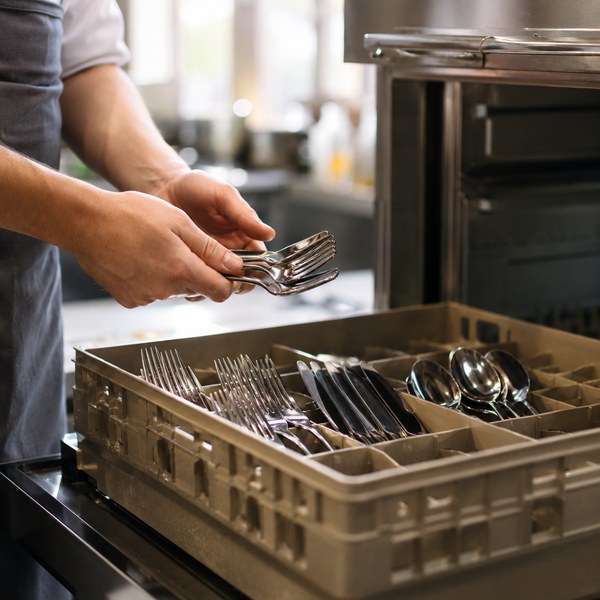
- Warewashing: Pre-soak to release proteins and starches, rack handles-down in flatware cylinders, run the machine to FDA Food Code sanitizing temperatures, then dry promptly. Prompt drying is what prevents water-spotting on 18/0 and keeps 18/10 bright.
- Polish and audit: A 10-minute steam-and-polish during side work keeps stainless presentation-grade, and a weekly count against par catches shrinkage before a Saturday night runs you short.
Our foodservice customers consistently tell us the switch pays for itself faster than they modeled — usually within months — because they compared only purchase price and forgot the recurring disposable line item disappears entirely. That spend matters more than ever: the National Restaurant Association projects total restaurant and foodservice sales to reach $1.55 trillion in 2026 while flagging persistent cost pressures and stretched margins as the industry's defining challenge (current as of July 2026). In a margin-squeezed year, converting a perpetual consumable cost into a one-time durable purchase is one of the simplest wins available. And in 15+ years supplying 40,000+ operations, the pattern we see is consistent: operators who spec 18/10 once stop thinking about flatware, while operators who chase the cheapest box respec it every year.
Ready to run the numbers on your own operation? Shop Flatware Sets to compare 18/10 lines, weights, and finishes side by side.
Frequently Asked Questions
Can you buy reusable flatware sets in bulk for a restaurant or event?
Yes. Reusable flatware sets are sold in bulk boxed counts — the Imperial, Sovereign, and Speculo 18/10 stainless steel lines each come as service-for-two sets in 10-count boxes, so a single order covers a full dining room or event. For bulk buying, order to par (2.5–3× seats), not to seat count, so service never waits on the dish machine.
What is the best reusable flatware set with a carrying case?
For individual carry, a bamboo or stainless travel set in a fabric roll or hard case is best — bamboo for weight and price, stainless for longevity. For operators, the better "case" is the boxed set: a 10-count service-for-two box functions as a countable storage and transport case for catering, which is why caterers standardize on boxed 18/10 sets rather than loose flatware.
What should you look for in a reusable travel cutlery set?
A good reusable travel flatware set needs four things: a case that contains the pieces after use (dirty utensils loose in a bag end the habit fast), dishwasher-safe materials, a fork with real tines and a knife with a real edge — not a flimsy spork — and weight you'll actually carry. Stainless travel sets outlast bamboo several times over; bamboo wins on weight and airport-security friendliness.
Bamboo vs. stainless steel reusable flatware — which lasts longer in commercial use?
Stainless steel lasts far longer: 5–10+ years of commercial dishwashing for 18/10 stainless versus months to about two years for bamboo, which degrades under high-heat sanitizing and alkaline detergents and is usually hand-wash-only. In any operation with a dish machine, stainless steel is the only flatware material that treats commercial warewashing as routine rather than as damage.
How do you clean and sanitize reusable flatware in a commercial kitchen?
Pre-soak, wash, sanitize, and air-dry. Under the FDA Food Code, mechanical hot-water sanitizing requires a final rinse of 165°F (stationary-rack, single-temperature machines) or 180°F (all other machines); chemical-sanitizing machines are the low-temperature alternative and the right match for reusable plastic flatware with lower heat ratings. Rack flatware loosely, handles down, and dry promptly to prevent spotting.
Conclusion: The Verdict on Reusable Flatware Sets
An 18/10 stainless steel reusable flatware set is the best choice for nearly every foodservice operation — it is the only option that shrugs off commercial dishwashing for a decade while costing fractions of a cent per use. Spec 18/0 where loss rates are brutal, bamboo for travel kits and eco-branded retail, and heat-rated reusable plastic for poolside and outdoor service. Whichever material fits your operation, buy to par, run a compliant wash loop, and the set pays for itself quietly for years.
Shop Flatware Sets at Restaurantware to compare Imperial, Sovereign, and Speculo 18/10 lines — or browse the full flatware collection to build a complete place setting.