Food Inflation: How Rising Prices Are Hitting the Food Industry
Food inflation is the rate at which food prices rise over time, tracked through the Consumer Price Index (CPI) food indexes. As of June 2026, U.S. food prices are up 3.0% year over year — grocery prices rose 2.7% while restaurant prices climbed 3.4%. For foodservice operators, that gap means cost control now decides profitability.
Food inflation never really left — it just changed shape. The 9.9% spike of 2022 has cooled, but food prices are still climbing faster than the Federal Reserve would like, and beef, fresh vegetables, and coffee are climbing much faster than the headline number suggests. In 15+ years supplying 40,000+ foodservice operations, we've learned that operators don't get hurt by the food inflation rate they read about — they get hurt by the specific ingredients on their own invoices. This guide breaks down where food prices stand right now, why they keep rising, and the concrete levers restaurants and foodservice businesses can pull to protect their margins.
TL;DR: U.S. food inflation is running at 3.0% year over year (June 2026 CPI). USDA forecasts food prices to rise 3.1% for full-year 2026 — 2.7% at grocery stores and 3.5% at restaurants. Beef (+11.8%), fresh vegetables (+9.9%), and sugar and sweets (+6.9%) are the pain points; eggs (−27.9%) are the relief. Operators can't control commodity markets, but they can control portions, waste, packaging cost-per-use, and menu engineering — and those levers decide who stays profitable.
| Measure (U.S. CPI, not seasonally adjusted) | 12-Month Change (June 2026) | USDA Forecast for 2026 |
|---|---|---|
| All food | +3.0% | +3.1% |
| Food at home (grocery) | +2.7% | +2.7% |
| Food away from home (restaurants) | +3.4% | +3.5% |
| Beef and veal | +11.8% | +10.7% |
| Fresh vegetables | +9.9% | +6.8% |
| Sugar and sweets | +6.9% | +7.2% |
| Eggs | −27.9% | −30.7% |
Sources: U.S. Bureau of Labor Statistics CPI (June 2026) and USDA Economic Research Service Food Price Outlook (July 2026 forecast).
What Is Food Inflation and Where Does It Stand in 2026?
Food inflation is the sustained increase in the price of food over time, measured in the United States by two Bureau of Labor Statistics CPI indexes: food at home (grocery and supermarket purchases) and food away from home (restaurant and foodservice purchases). When people ask "what is the food inflation rate," they usually mean the 12-month change in the combined CPI for all food.
Here is where those numbers stand, current as of August 2026, per the BLS Consumer Price Index release for June 2026:
- All food: +3.0% over the 12 months ending June 2026, and +0.2% month over month.
- Food at home (grocery price increases): +2.7% year over year. Fruits and vegetables led at +5.3%, while dairy rose just 0.4%.
- Food away from home (menu price inflation): +3.4% year over year — full-service meals rose 3.7% and limited-service meals rose 3.1%.
- Overall CPI: +3.5% — so food is rising slightly slower than the economy-wide average, largely because energy jumped 15.7% over the same 12 months.
The food price outlook for 2026 points the same direction. The USDA Economic Research Service Food Price Outlook (July 2026 forecast) predicts all-food prices will increase 3.1% in 2026, with food-at-home prices up 2.7% and food-away-from-home prices up 3.5%. For 2027, ERS currently projects another 3.1% increase for all food. In plain terms: the food price increase in 2026 is not a spike, it's a grind — steady, compounding, and slightly heavier on restaurants than on grocery stores.
How Does 2026 Compare to the 2022 Food Inflation Spike?
Today's 3% food inflation rate is far below the 2022 peak, but the increases stack on top of each other. Per USDA ERS historical data: food prices rose 9.9% in 2022 — the fastest annual increase since 1979, driven by avian influenza, the Russia-Ukraine war, and high energy costs — then 5.8 points of grocery inflation cooled through 2023 (food at home +5.0%, food away from home +7.1%), followed by +2.3% in 2024 and +2.9% in 2025. A menu item that cost $10.00 to plate in early 2022 costs roughly $12.30 to plate today just from cumulative food inflation. That's why "inflation is cooling" feels false to operators: prices are rising more slowly, but they are rising from a permanently higher base.
What's Causing Food Inflation?
Why are food prices going up when headline inflation has moderated? Food inflation in 2026 is driven by five overlapping forces, and each one shows up differently on an operator's invoice.
1. Commodity Supply Shocks — Beef Is the Headline
Beef and veal prices were 11.8% higher in June 2026 than a year earlier, and USDA ERS forecasts a 10.7% increase for full-year 2026. The cause is structural: the U.S. cattle herd has shrunk to its lowest level in 75 years, and wholesale beef prices are at all-time highs for this time of year, according to the USDA ERS Livestock, Dairy, and Poultry Outlook. Herd rebuilding takes years, not months — expect beef to stay expensive through at least 2027. Fresh vegetables tell a similar story: up 9.9% year over year in June, with lettuce up 32.1% and tomatoes up 19.5%.
2. Labor Costs Across the Supply Chain
Every step between farm and fork — processing, trucking, warehousing, and the restaurant kitchen itself — is paying more for labor. The National Restaurant Association projects restaurant and foodservice employment will reach 15.8 million jobs in 2026, with nearly three-quarters of operators planning to hire and most expecting difficulty filling positions. Wage pressure gets baked into wholesale food prices before an operator ever sees the invoice.
3. Supply Chain Fragility and Disease Outbreaks
The Highly Pathogenic Avian Influenza (HPAI) outbreak that began in 2022 pushed retail egg prices up 32.2% in 2022, 8.5% in 2024, and 21.9% in 2025, per USDA ERS. The 2026 relief — egg prices are forecast to fall 30.7% this year as flocks recover — shows how quickly a single disease event can whipsaw an entire category in both directions. Operators who build flexibility into menus and supplier lists ride these swings; those who don't absorb them.
4. Tariffs and Trade Policy
New tariffs on imported goods have added cost pressure on imported ingredients, packaging materials, and equipment. The National Restaurant Association's 2026 State of the Restaurant Industry research found that more than two-thirds of operators said tariffs drove up their costs. Categories with heavy import exposure — coffee, cocoa, seafood, produce out of season — feel this first, which is part of why sugar and sweets are forecast up 7.2% and nonalcoholic beverages up 3.9% in 2026.
5. Energy and Transportation
Energy prices rose 15.7% over the 12 months ending June 2026, per BLS — and energy touches every stage of food production, from fertilizer and diesel to refrigeration and the gas under your range. Even after June's 5.7% monthly energy pullback, the year-over-year increase keeps freight surcharges and utility bills elevated for both suppliers and operators.
How Does Food Inflation Hit Restaurants and Foodservice Operators?
Food inflation hits restaurants twice: once on the invoice and once on the menu. Restaurant food costs rise with wholesale prices, but menu price increases are constrained by what guests will tolerate — and that squeeze lands directly on margin.
The National Restaurant Association's 2026 State of the Restaurant Industry report quantifies the squeeze. Total restaurant and foodservice sales are projected to reach $1.55 trillion in 2026, but:
- More than 9 in 10 operators cite food, labor, insurance, energy, and swipe fees as significant challenges.
- 42% of operators reported their restaurant was not profitable in 2025.
- 60% of operators reported softer customer traffic last year, limiting their ability to raise menu prices.
- Real sales growth is forecast at a modest 1.3% — meaning most dollar growth is price, not traffic.
Why the Grocery-vs-Restaurant Price Gap Matters
Since 2024, food-away-from-home prices have consistently outpaced food-at-home prices: 4.1% vs 1.2% in 2024, 3.8% vs 2.3% in 2025, and a forecast 3.5% vs 2.7% in 2026, per USDA ERS. Every year that gap persists, cooking at home gets relatively cheaper than dining out, and value-conscious guests trade down — fewer visits, cheaper items, less add-on spend. The Association found that more than 7 in 10 consumers say they would use restaurants more often if they had more disposable income. Demand is there; spending power isn't. That's why menu price inflation is a blunt instrument: raise prices too far and you feed the very trade-down that's shrinking traffic.
The Food-Cost Percentage Squeeze
Most full-service operators target a food cost around 28–35% of menu price. Run the math on beef: an 11.8% ingredient increase on a burger that was costed at 30% pushes the plate to roughly 33.5% food cost overnight. To restore the original margin through price alone, the operator needs a menu increase of nearly 4% on that item — on top of last year's increases, in front of guests who are already trading down. This is why the answer to food inflation is never just "charge more." It's a portfolio of small operational wins that add up to the same margin without testing guest patience.
How Can Operators Fight Rising Food Costs?
Operators can't set commodity prices, but they control five levers that directly offset food inflation. In 15+ years supplying 40,000+ foodservice operations, we've watched the profitable ones treat these as weekly disciplines, not crisis responses. Here they are, ranked by margin impact:
| Rank | Cost-Control Lever | Typical Margin Impact | Speed to Results |
|---|---|---|---|
| 1 | Portion control & recipe costing | High — stops 2–4% invisible food-cost creep | Days |
| 2 | Menu engineering & strategic pricing | High — shifts mix toward high-margin items | Weeks |
| 3 | Waste reduction & inventory discipline | Medium-high — recovers food already paid for | Weeks |
| 4 | Supplier strategy & flexible sourcing | Medium — blunts category spikes like beef | 1–2 quarters |
| 5 | Packaging & off-premise cost-per-use | Medium — protects the growing takeout margin | Days |
1. Lock Down Portions Before You Touch Prices
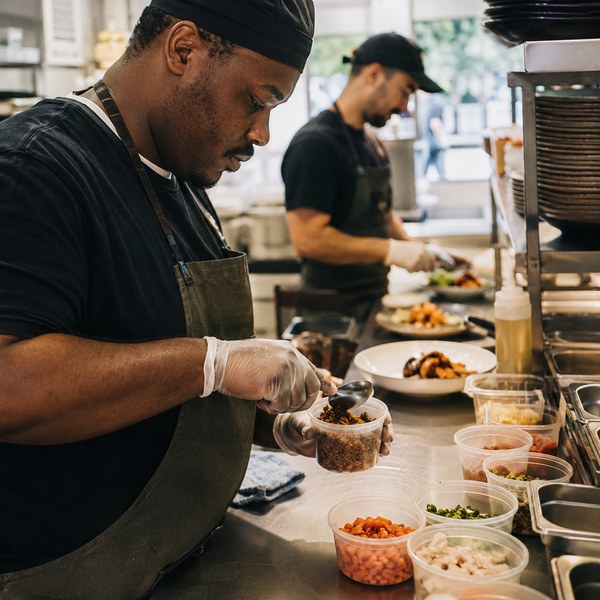
Portion drift is the most expensive problem nobody sees. When every cook free-pours dressing or eyeballs the fry basket, actual plate cost quietly runs 5–10% over the costed recipe — and when prices are rising, that drift compounds on top of already-higher ingredient prices. Standardize with portion control cups and lids for sauces, dressings, and sides, and re-cost your top 20 menu items at current invoice prices. Our foodservice customers consistently tell us this is the fastest food-cost fix they make: portioned sauces alone often bring a plate back in line without changing anything the guest notices.
2. Engineer the Menu Instead of Raising Every Price
Menu engineering means promoting items with the best margin, redesigning items with the worst, and pricing surgically instead of across the board. Practical moves for 2026's cost map: feature chicken and pork builds (forecast up just 1.0% and 1.6% this year, per USDA ERS) while beef stays at record highs; reintroduce egg-forward dishes as egg prices fall; and swap high-inflation produce like lettuce and tomatoes for lower-inflation alternatives where recipes allow. Small-format and shareable portions let you hit value price points without giving away margin.
3. Attack Waste — It's Food You Already Bought
Every pound of spoiled produce or over-prepped protein is pure loss at today's prices. Tighten par levels, use first-in-first-out labeling, and track waste by reason for two weeks — most kitchens find one or two root causes account for the majority. Our guide to cutting operating costs in food businesses covers the full playbook, and these six ways to cut food purchase costs go deeper on the purchasing side.
4. Build a Supplier Strategy With Escape Hatches
Single-source operators absorb every category spike at full force. Qualify a second supplier for your five highest-spend categories, ask primary vendors for fixed-price contracts on stable items, and watch the USDA Food Price Outlook monthly so you see category inflation coming a quarter early. Disease events like HPAI and structural shortages like the cattle herd prove the point: flexibility is cheaper than loyalty when a category moves 10–30% in a year. We've outlined how to prepare for supply chain issues before they hit your kitchen.
5. Protect Off-Premise Margins With Smarter Packaging
Takeout and delivery keep growing — the National Restaurant Association notes Gen Z and millennials continue to lead off-premises growth — but every to-go order adds packaging cost to a margin already squeezed by rising ingredient prices. Think cost-per-use, not unit price: right-sized restaurant take out containers eliminate the waste of oversized packaging and reduce damage-driven refunds, and leak-resistant designs cut the remakes that quietly destroy delivery profitability. For events and high-volume service, catering disposables also offset rising labor and dishwashing costs — when labor is your other runaway line item, cost-per-use math often favors quality disposables over warewashing. And if rising labor costs are compounding your food-cost problem, our guide to dealing with labor shortages in restaurants pairs well with this one.
Frequently Asked Questions About Food Inflation
What is the current inflation rate for food?
The current U.S. food inflation rate is 3.0% for the 12 months ending June 2026, per the BLS Consumer Price Index. Grocery prices (food at home) rose 2.7% and restaurant prices (food away from home) rose 3.4%. USDA ERS forecasts all-food prices to increase 3.1% for full-year 2026. Figures current as of August 2026; the next CPI release is August 12, 2026.
What's causing food inflation?
Food inflation in 2026 is caused by commodity supply shocks (the U.S. cattle herd is at its lowest level in 75 years, pushing beef up 11.8% year over year), labor costs across the supply chain, lingering supply-chain fragility and disease outbreaks like avian influenza, tariffs on imported goods, and energy prices that rose 15.7% over the past year. No single factor dominates — which is why food prices keep grinding upward even as headline inflation cools.
Can you live on $200 a month for food?
For a single adult, $200 a month is possible but very tight in 2026 — it requires cooking nearly every meal at home, buying store brands, and building menus around lower-inflation staples like poultry, pork, eggs (down 27.9% this year), and grains while limiting beef and fresh produce, which are seeing the steepest grocery price increases. The same math drives restaurant guests: when home cooking gets relatively cheaper, budget-stretched diners trade down — which is exactly why operators feel food inflation as softer traffic, not just higher invoices.
Is $300 a month on food a lot?
No — $300 a month for one person is a moderate food budget in 2026, roughly in line with a careful mix of home cooking and occasional dining out, given that restaurant prices are rising 3.4% year over year versus 2.7% at grocery stores. For operators, this consumer math is the market signal: guests are managing to a number. Menus that offer clear value at accessible price points capture the diner who still wants restaurant experiences — more than 7 in 10 consumers say they'd dine out more with more disposable income.
The Bottom Line on Food Inflation
Food inflation in 2026 is a grind, not a spike: 3.0% and climbing steadily, with restaurants absorbing more than grocery stores and categories like beef and fresh vegetables running at multiples of the headline rate. Operators can't wait it out — USDA already projects another 3.1% food price increase for 2027. The winners will be the ones who treat cost control as a weekly discipline: portions locked down, menus engineered around the cost map, waste tracked, suppliers diversified, and every off-premise order packed at the right cost-per-use.
We've helped 40,000+ foodservice operations put that discipline into practice. Explore our full range of restaurant disposables — from portion cups to take-out packaging — and turn the levers you actually control.