Top 10 Plant-Based Protein Sources Chefs Are Using Today
- Cannibalization note: keep this page focused on INGREDIENTS/PROTEINS; the separate Plant-Based Menu Planning hub owns MENU strategy — cross-link, don't duplicate.
- Mobile: keep the top-10 protein comparison table horizontally scrollable.
- External links: all carry target="_blank" rel="nofollow noopener" in markup. Internal links: no nofollow.
- /blogs/kitchen-and-cooking-tips/sourcing_sustainable_plant-based_ingredients_for_your_menu → /blogs/kitchen-and-cooking-tips/top-10-plant-based-protein-sources-chefs-are-using-today
- /blogs/kitchen-and-cooking-tips/preparing_plant-based_meals_efficiently_in_commercial_kitchens → /blogs/kitchen-and-cooking-tips/top-10-plant-based-protein-sources-chefs-are-using-today
- /blogs/tech-and-innovation/7-best-non-dairy-milk-alternatives-for-restaurants → /blogs/kitchen-and-cooking-tips/top-10-plant-based-protein-sources-chefs-are-using-today
- /blogs/kitchen-and-cooking-tips/top-10-plant-based-protein-sources-chefs-are-using-today → /blogs/kitchen-and-cooking-tips/top-10-plant-based-protein-sources-chefs-are-using-today
- /blogs/kitchen-and-cooking-tips/top-10-plant-based-protein-sources-chefs-are-using-today → /blogs/kitchen-and-cooking-tips/top-10-plant-based-protein-sources-chefs-are-using-today
Post-launch: re-point any inbound internal links that used to hit the five merged posts directly at the winner URL so equity flows without a redirect hop. Note: the brief's anchor to /blogs/recipes was dropped — that URL now redirects to the blog index (dead link).
The top plant-based protein sources chefs use today are lentils, chickpeas, tofu, tempeh, seitan, edamame, black beans, quinoa, hemp seeds, and pea protein. Each delivers complete or complementary protein for commercial menus. This consolidated guide covers protein content per USDA data, sustainable sourcing, non-dairy alternatives, prep workflows, and the equipment that makes plant-based service profitable.
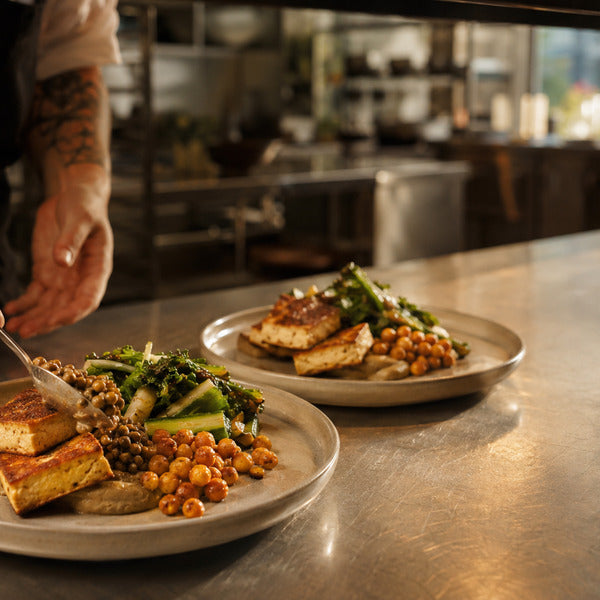
Plant based protein sources have moved from the afterthought corner of the menu to a core revenue category. In 15+ years supplying 40,000+ foodservice operations, we've watched plant-based mains go from a single obligatory entrée to an entire menu section — and we've watched the operators who treat these ingredients with the same rigor as animal proteins consistently outperform the ones who don't. U.S. plant-based retail food sales reached $7.9 billion in 2025, roughly double the $3.9 billion recorded in 2017, according to the Good Food Institute's SPINS-tracked market data (current as of July 2026). Restaurants remain the single largest purchasers of plant-based proteins in U.S. foodservice, per GFI's Circana-based foodservice insights — and over one-third of consumers open to plant-based meat say they haven't ordered it recently simply because it isn't on the menus of restaurants they visit. That availability gap is your opportunity.
TL;DR: Build your plant-based program on whole-food proteins (lentils, chickpeas, black beans, quinoa) for cost control, soy trio (tofu, tempeh, edamame) for complete protein, seitan and pea protein for meat-like applications, and hemp seeds for finishing. Source through suppliers who can document sustainability claims, standardize batch-cook workflows, and invest in three equipment categories: high-speed blending, batch cookery, and airtight storage.
What Are the Best Plant-Based Protein Sources for Foodservice?
The best plant-based protein sources for foodservice are legumes (lentils, chickpeas, black beans), soy foods (tofu, tempeh, edamame), wheat protein (seitan), seeds and pseudo-grains (hemp, quinoa), and extracted proteins (pea protein). The category breaks down into three tiers that matter operationally:
- Whole-food proteins — legumes, grains, seeds. Lowest food cost per portion, longest dry shelf life, most labor to prep. These anchor scratch kitchens.
- Traditional processed proteins — tofu, tempeh, seitan. Moderate cost, ready to portion, centuries of culinary technique behind them. These are the workhorses of dedicated plant-based menus.
- Modern analogs and isolates — pea-protein burgers, crumbles, plant-based chicken. Highest cost per pound, zero prep skill required, drop-in consistency for high-volume and franchise operations.
Most successful programs blend all three tiers: whole foods for bowls and sides, traditional proteins for signature entrées, and analogs where guests expect a familiar format like a burger or nuggets.
All protein figures below are drawn from USDA FoodData Central (SR Legacy database, verified July 2026), standardized per 100 grams for honest comparison.
| Rank | Protein Source | Protein (g per 100 g, USDA) | Complete Protein? | Best Menu Applications |
|---|---|---|---|---|
| 1 | Lentils (cooked) | 9.0 g | No — pair with grains | Soups, dal, bolognese, salads |
| 2 | Chickpeas (cooked) | 8.9 g | No — pair with grains | Hummus, falafel, curries, crispy garnish |
| 3 | Tofu (firm, raw) | 17.3 g | Yes (soy) | Stir-fries, grilling, scrambles, desserts |
| 4 | Tempeh | 20.3 g | Yes (soy) | Marinated steaks, crumbles, bacon-style |
| 5 | Seitan (vital wheat gluten) | 75.2 g (dry gluten) | Near-complete — low lysine | Roasts, sandwich "meats," skewers |
| 6 | Edamame (prepared) | 11.9 g | Yes (soy) | Appetizers, bowls, purées, succotash |
| 7 | Black beans (cooked) | 8.9 g | No — pair with rice | Burgers, tacos, bowls, soups |
| 8 | Quinoa (cooked) | 4.4 g | Yes | Grain bowls, pilafs, stuffed vegetables |
| 9 | Hemp seeds (hulled) | 31.6 g | Yes | Crusts, dressings, smoothies, garnish |
| 10 | Pea protein (split peas cooked: 8.3 g; isolates vary by manufacturer) | 8.3 g+ | Near-complete — low methionine | Burger analogs, shakes, fortified sauces |
The Top 10 Plant-Based Protein Sources, Ranked for Commercial Kitchens
1. Lentils — the cost-per-portion champion
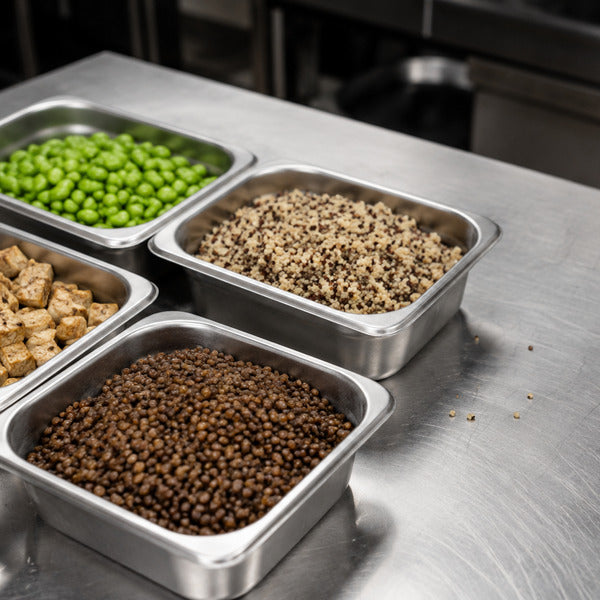
Lentils deliver 9.0 g of protein per 100 g cooked (roughly 18 g per cup), per USDA FoodData Central. No soaking, 20–30 minute cook times, and a dry cost that undercuts nearly every animal protein on your order guide. Red lentils collapse into dals and soups; French green and black beluga lentils hold their shape for composed salads and warm side dishes. For volume operations, lentils batch-cook beautifully and hold for days in airtight food storage containers without quality loss.
2. Chickpeas — the most versatile legume on the line
Chickpeas provide 8.9 g of protein per 100 g cooked (USDA). One case feeds five stations: hummus at garde manger, falafel at fry, curries at sauté, crispy roasted chickpeas as a crunch garnish, and aquafaba — the cooking liquid — as an egg-white replacer in desserts and cocktails. That cross-utilization is why chickpeas appear on more of our customers' plant-based menus than any other single ingredient.
3. Tofu — the blank canvas with real numbers
Firm tofu carries 17.3 g of protein per 100 g (USDA, calcium-sulfate set) — nearly double most cooked legumes. The technique gap is what separates forgettable tofu from craveable tofu: press it, freeze-thaw it for a chewier structure, marinate after (not before) searing, and finish with high heat. Silken tofu is a separate tool entirely, blending into dressings, mousses, and non-dairy custards.
4. Tempeh — fermented, firm, and flavor-forward
Tempeh leads whole-soy foods at 20.3 g of protein per 100 g (USDA). Fermentation gives it a nutty depth and a dense structure that takes marinades, smoke, and hard sear without crumbling. Steam it briefly before marinating to mellow bitterness — the single most common tempeh mistake we hear about from chef customers is skipping that step.
5. Seitan — the protein density leader
Seitan is made from vital wheat gluten, which measures 75.2 g of protein per 100 g dry (USDA) — the highest protein density of any common plant ingredient. Hydrated and simmered, finished seitan still out-muscles most proteins on the plate and delivers the chew guests expect from sliced and skewered "meats." One flag for menu writers: seitan is pure wheat gluten, so it can never share a fryer or slicer with gluten-free items.
6. Edamame — speed-scratch protein
Prepared edamame delivers 11.9 g of protein per 100 g (USDA) with essentially zero labor — thaw, blanch, season. Beyond the appetizer bowl, shelled edamame bulks grain bowls, blends into vivid green purées, and stands in for lima beans in succotash. It is the fastest complete protein you can add to an existing menu.
7. Black beans — the burger builder
Black beans hold 8.9 g of protein per 100 g cooked (USDA) and bring the structure and dark color that make house-made veggie burgers look and eat like a serious entrée rather than a concession. Paired with rice, they form the classic complementary complete protein that anchors Latin menus.
8. Quinoa — the complete-protein grain
Quinoa cooks to 4.4 g of protein per 100 g (USDA) — modest per bite, but it is one of the few plant foods supplying all nine essential amino acids on its own, which is why it earns its place as the base layer of protein bowls rather than as the headline. Toast it dry before simmering for a nuttier profile, and rinse thoroughly to remove bitter saponins.
9. Hemp seeds — the finishing protein
Hulled hemp seeds pack 31.6 g of protein per 100 g (USDA) into a soft, fatty seed that needs no cooking. Three tablespoons over a bowl adds roughly 9 g of protein and a line-cook-proof garnish. Blend them into green goddess dressings, press them into crusts for roasted vegetables, or fold them into granola for brunch programs.
10. Pea protein — the analog engine
Pea protein powers most of the current generation of plant-based burgers, crumbles, and nuggets. Its raw material is humble — cooked split peas measure 8.3 g of protein per 100 g (USDA) — but commercial isolates concentrate that dramatically (exact percentages vary by manufacturer; check your spec sheets). For operators, pea protein's real value is allergen positioning: it avoids soy and gluten, the two flags that complicate tofu and seitan on allergy-sensitive menus.
Which Alternative Proteins Work Best for Foodservice Menus?
The alternative proteins that work best for foodservice menus are the ones that hold quality at volume: pea- and soy-based analogs for burger and nugget formats, tempeh and seitan for center-of-plate scratch cooking, and legumes for high-margin bowls. According to GFI's foodservice market insights (Circana data, current as of July 2026), analogs account for more than half of plant-based protein pound sales in U.S. foodservice — guests still gravitate to familiar formats — and specific formats like plant-based chorizo sausage crumbles and chicken nuggets grew double digits in pound sales in 2025 even as the broader category softened.
Consistency at scale. For large-scale operations, the most consistent plant-based options are pre-portioned analogs and IQF (individually quick frozen) legumes and edamame, because they eliminate batch-to-batch variation. Scratch proteins like seitan and marinated tofu can hit the same consistency, but only with written specs: exact press times, marinade ratios by weight, and portion weights checked at plating.
Allergen-free menu diversification. Allergen-conscious diversification is now table stakes. Soy (tofu, tempeh, edamame) and wheat (seitan) are both major allergens; pea protein, lentils, chickpeas, quinoa, and hemp cover the protein slot without either. Map every plant-based item against the FDA's major-allergen list and give servers a one-page cheat sheet — the fastest way to lose a plant-based guest is an allergen surprise.
Delivery platforms. Alternative proteins are increasingly common on delivery menus, and they travel unevenly. Analogs and braised proteins (lentil stews, chickpea curries) hold heat and texture in transit; crispy tofu and fried items degrade fastest. If delivery is a meaningful channel, build your plant-based delivery lineup around saucy, braised, and bowl formats. For more on introducing these items to your lineup, see our guide to adding plant-based proteins to your menu.
How Do You Source Sustainable Plant-Based Ingredients for Your Menu?
Sourcing sustainable plant-based ingredients means verifying claims at the supplier level, not the label level. Sustainable sourcing is defined by documentation: certifications, traceability, and supplier answers you can audit. Here is the framework we recommend to the operations we supply — treat it as seriously as your HACCP plan, because guests increasingly ask servers pointed sustainability questions and expect real answers.
Run a supplier sustainability questionnaire — for ingredient and non-ingredient suppliers
Send every vendor — ingredient suppliers and non-ingredient suppliers (packaging, chemicals, smallwares) alike — a short written questionnaire and keep the responses on file:
- Which third-party certifications do you hold (USDA Organic, Fair Trade, Non-GMO Project, Rainforest Alliance, B Corp)?
- Can you trace this ingredient to farm or region of origin? In writing?
- What are your water, energy, and packaging reduction commitments — with dates and numbers?
- Do you publish an ethical sourcing or supplier code of conduct?
- What percentage of this product's inputs are certified or audited?
A supplier who answers in specifics is a keeper. A supplier who answers in adjectives is greenwashing. When a guest asks whether a brand on your menu "has any sustainability or ethical sourcing practices for their ingredients," your team should be able to answer from this file — including for baked goods: prioritize bakery brands that publish sourcing standards for flour, sugar, and oils (regenerative or identity-preserved wheat programs, certified palm-oil-free or RSPO-certified fats) rather than brands that simply put a leaf on the box.
Audit your top 20 ingredients first
You cannot audit everything at once. Pull your 20 highest-volume plant-based ingredients — for most kitchens that list starts with soy, wheat flour, rice, canola/soy oil, chickpeas, lentils, oats, almonds, coconut products, and cocoa — and score each on certification, origin transparency, and seasonality. Twenty ingredients typically cover the large majority of plant-based purchasing spend, so this single exercise moves your sustainability profile more than any menu redesign. Then re-audit annually; commercial versions of retail brands often carry different sourcing than their consumer counterparts, so spec the foodservice SKU, not the one you saw at retail.
Prioritize eco-friendly culinary ingredients with short supply chains
Legumes and pulses are inherently strong here: lentils and chickpeas are nitrogen-fixing crops grown at scale in North America, which shortens supply chains and improves soil in rotation. Domestic-grown pulses, regional tofu producers, and local mushroom farms give you a sourcing story servers can tell in one sentence — and a hedge against import price swings. Menu the story ("Montana-grown lentils") and the premium takes care of itself.
What Are the Best Non-Dairy Milk Alternatives for Restaurants?
The seven best non-dairy milk alternatives for restaurants are oat, soy, almond, coconut, cashew, rice, and pea milk. Each solves a different operational problem, and "I don't eat dairy" is now one of the most common guest statements your servers will hear — so every daypart that touches milk (coffee, baking, sauces, desserts) needs a designated alternative.
| Milk Alternative | Best For | Operational Notes |
|---|---|---|
| Oat milk | Espresso drinks, baking | Barista formulations steam and stretch closest to dairy; the default café choice |
| Soy milk | Coffee, custards, savory sauces | Highest protein of the group; curdles in high-acid applications — temper first |
| Almond milk | Smoothies, cereal, light baking | The most-requested by name; thin body, nut allergen flag |
| Coconut milk | Curries, soups, ice creams | High fat carries flavor and body; distinct taste limits neutral uses |
| Cashew milk | Cream sauces, queso, dessert bases | Blends silky-rich; house-made cashew cream is a scratch-kitchen staple |
| Rice milk | Allergen-sensitive service | Free of nuts and soy; thin texture, best as the "safe option" |
| Pea milk | Protein-forward smoothies, coffee | Protein comparable to soy without the soy allergen; neutral flavor |
Two service policies worth adopting: first, all non-dairy milks should be served from clearly labeled, dedicated pitchers and stored separately to prevent cross-contact — dairy avoidance is often an allergy, not a preference. Second, stock at least one nut-free and soy-free option (oat, rice, or pea) so no guest hits a dead end. On cost, upcharging for alternatives increasingly reads as a penalty; most of the high-volume café operators we supply have folded the cost into drink pricing instead.
How Do You Prepare Plant-Based Meals Efficiently in a Commercial Kitchen?
Efficient plant-based prep in a commercial kitchen comes down to batch cooking, a dedicated prep-line layout, and equipment that multiplies labor. Plant-based cooking is prep-heavy — more knife work, more soaking and simmering, more components per plate — so the kitchens that win engineer the labor out of service and into prep blocks.
Batch-cook the foundations
Cook legumes and grains in large batches two or three times per week, not per shift. A steam-jacketed kettle, tilt skillet, or combi oven turns dried beans and grains into holding-ready product with almost no active labor; pressure cookers cut dried chickpeas from hours to under an hour. Cool rapidly per your HACCP plan, portion into dated food storage containers, and you've converted a prep problem into an assembly line. Cooked pulses hold 3–4 days refrigerated and freeze exceptionally well, which also slashes waste from over-prep.
Set up a dedicated plant-based prep line
Layout follows workflow: dry storage and soaking at the start, wet cookery (kettles, steamers) in the middle, and a finishing station (pressing, marinating, portioning) at the end, with color-coded boards and utensils if the same kitchen handles animal proteins and allergens. The goal is that a single prep cook can run lentils, quinoa, and marinated tofu in parallel without crossing streams. Our full range of food preparation supplies — prep bowls, mixing containers, portioning tools — is built around exactly this kind of station work.
Use high-speed blenders as a labor multiplier
A commercial high-speed blender is the single highest-leverage machine in plant-based prep: cashew creams, silken-tofu custards, hemp dressings, bean purées, and nut-milk bases all come off one station in minutes. Food processors handle the coarse work — falafel mix, burger blends, crumbles — that blenders over-purée. Between the two, most plant-based mise en place is machine work, not knife work.
Scale for campus-style and non-commercial dining
Campus dining, healthcare, and B&I operations face the hardest version of this problem: hundreds of plant-based covers in a 90-minute window. The pattern that works is batch-cooked bases (grains, braised legumes) held hot, with high-turnover finishing stations for customization — and it's a growing segment: GFI's foodservice data shows sales of plant-based proteins to non-commercial outlets including healthcare, business, and government operators continued to expand in 2025 even as the broader category declined. Batch bases plus made-to-order finishing keeps throughput high without turning every bowl into a made-from-scratch ticket.
What Equipment Does a Plant-Based Kitchen Need?
A plant-based kitchen needs three equipment categories above all: high-speed blending and processing, batch-cooking capacity, and airtight storage. Here is the essentials list we've refined with customers running high-volume plant-based prep:
- High-speed blender (commercial-rated): nut creams, dressings, purées, non-dairy bases. Buy the peak-horsepower model; underpowered blenders leave grit in cashew cream.
- Food processor: burger blends, falafel, crumbles, vegetable ricing. The coarse-texture counterpart to the blender.
- Batch cookery — steam-jacketed kettle, tilt skillet, or combi oven: the difference between cooking beans and manufacturing them.
- Pressure cooker: dried chickpeas and beans in a fraction of the time; frees burner space at volume.
- Tofu press (or weighted sheet-pan rig): pressed tofu sears, unpressed tofu steams. Non-negotiable for quality.
- Dehydrator: tempeh "bacon," vegetable jerky, crisps, and garnish work that drives menu differentiation.
- Airtight storage containers: cooked pulses, soaking beans, marinating proteins, and blended sauces all live in stackable, dated food storage containers — the unglamorous backbone of every efficient plant-based operation.
- Sharp knives and dedicated boards: plant-based prep is knife-intensive; dull steel is a labor tax on every shift.
Notice most of this list is standard equipment used harder, not exotic purchases. The genuinely plant-based-specific items — press, dehydrator, extra storage — cost less than one week of a single cook's wages and pay back in texture quality and prep speed.
Plating and Selling Plant-Based Proteins: The Foodservice Application
Our foodservice customers consistently tell us plant-based dishes demand stronger plating to command entrée prices. A braised lentil ragout in a bowl reads as a $12 side; the same ragout composed on a plate with height, color contrast, and a deliberate garnish reads as a $24 entrée. Because plant-based proteins lack the automatic center-of-plate authority of a steak, presentation does that work instead — precise portioning, sauce work, and finishing tools from our food presentation and plating tools collection are how kitchens close that perception gap. For technique specifics, our guide to serving plant-based dishes: presentation tips and tools goes deeper.
Pricing and portioning strategy for these ingredients — where to place them on the menu, how to engineer margin — is its own discipline, covered in our companion guide to cost-effective plant-based menu development strategies. Keep this page bookmarked for the ingredient side; use that one for menu strategy.
Frequently Asked Questions
What are the best plant-based protein sources for restaurants?
The best plant-based protein sources for restaurants are lentils, chickpeas, tofu, tempeh, seitan, edamame, black beans, quinoa, hemp seeds, and pea protein. Legumes deliver the lowest cost per portion, soy foods deliver complete protein with ready-to-cook convenience, and seitan and pea-protein analogs deliver meat-like formats guests recognize.
Which plant-based proteins are complete proteins?
Soy foods — tofu, tempeh, and edamame — plus quinoa and hemp seeds are complete proteins, supplying all nine essential amino acids. Legumes and grains are individually incomplete but complementary: rice and beans, hummus and pita, or lentils and quinoa together provide a complete amino acid profile on one plate.
How much protein do tofu, tempeh, and lentils provide per serving?
Per USDA FoodData Central, firm tofu provides 17.3 g of protein per 100 g, tempeh provides 20.3 g per 100 g, and cooked lentils provide 9.0 g per 100 g (about 18 g per cup). For comparison, hulled hemp seeds measure 31.6 g and dry vital wheat gluten (seitan base) 75.2 g per 100 g.
What alternative proteins work best for large-scale foodservice operations?
For large-scale operations, pre-portioned analogs (pea- and soy-based burgers, crumbles, nuggets) and IQF legumes and edamame work best because they deliver batch-to-batch consistency with minimal skilled labor. Scratch proteins like tofu and seitan scale well when written specs govern press times, marinade ratios, and portion weights.
How do chefs add plant-based proteins to menus cost-effectively?
Chefs add plant-based proteins cost-effectively by anchoring dishes to low-cost legumes and grains, cross-utilizing each ingredient across multiple stations (chickpeas in hummus, falafel, curries, and garnishes), batch-cooking foundations two or three times weekly, and reserving premium analogs for formats where guests expect them, like burgers.
Conclusion: Build the Protein Program First
Plant based protein sources reward the same discipline as any other station: verified sourcing, written specs, batch workflows, and plating that earns the price point. Start with the top-10 list above, audit your top 20 ingredients for sustainability documentation, standardize your non-dairy alternatives, and equip the line for batch cookery and storage. The demand is already seated in your dining room — GFI's data says a third of interested guests just haven't found plant-based options on your menu yet.
Ready to build out the line? Start with our food preparation collection for prep and batch-cookery smallwares, and browse food presentation and plating tools to make every plant-based plate command entrée money.
All nutrition figures verified against USDA FoodData Central; market figures verified against Good Food Institute published data. Current as of July 2026.