What Is Private Labeling? How Private Labels Become Dominant Brands
Private labeling is the practice of selling products manufactured by a third party under a retailer's own brand name. Unlike white labeling, where one generic product is resold by many companies, private label products are made exclusively for one seller. Consistent quality, distinctive packaging, and brand management turn a private label into a dominant brand.
Walk down any grocery aisle, browse any cafe's retail shelf, or open any restaurant supply catalog, and you will see private labeling at work. The practice has grown from a budget afterthought into one of the most powerful brand-building strategies in food and retail — U.S. store brand sales hit a record $282.8 billion in 2025, growing nearly three times faster than national brands. This guide defines private labeling, compares it with white labeling, and lays out the playbook we have used at Restaurantware to build house brands like Restpresso, Met Lux, and Bag Tek into names our customers ask for by name.
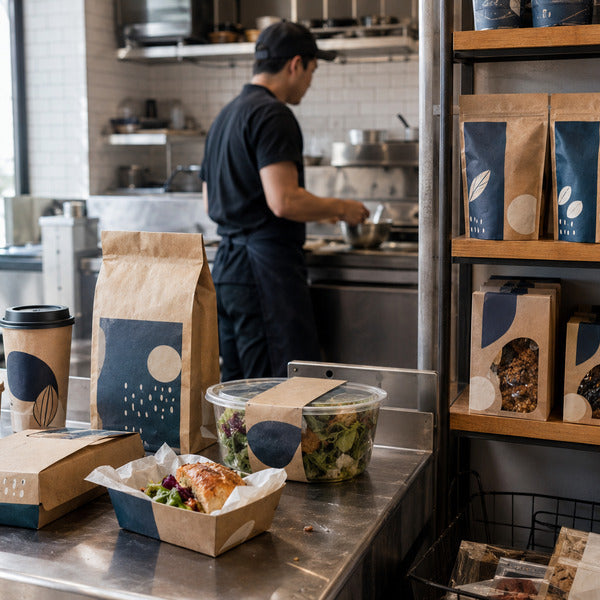
TL;DR: Private Labeling at a Glance
- Definition: Private labeling means a third-party manufacturer produces goods that are sold exclusively under your brand name.
- Market size: U.S. private label sales reached a record $282.8 billion in 2025, up 3.3% year over year, while national brands grew only 1.2% (PLMA/Circana, current as of July 2026).
- Consumer pull: 55% of shoppers increased private brand purchases in the past year, versus 28% for national brands (FMI, Power of Private Brands 2024).
- Private label vs white label: private label is exclusive to one seller; white label is a generic product rebranded by many sellers.
- The dominance formula: a focused name, packaging that works as advertising, and documented quality control — repeated consistently for years.
| Factor | Private Label | White Label |
|---|---|---|
| Exclusivity | Made for one seller only | Same product sold by many brands |
| Customization | Formula, specs, and packaging tailored to you | Logo swap on a fixed product |
| Speed to market | Slower (development cycles) | Fast (product already exists) |
| Margin control | High — you own the spec and the brand | Moderate — price competition with identical products |
| Long-term brand value | High — defensible and distinct | Low — easily copied |
What Is Private Labeling?
Private labeling is defined as a business arrangement in which a manufacturer produces goods to a retailer's specifications, and the retailer sells those goods under its own brand name. The manufacturer stays invisible; the seller's brand takes the credit. Private label brands are also called store brands or house brands — think of a supermarket's own line of coffee, or a restaurant supplier's own line of cookware.
The economics explain the appeal. Because the retailer buys direct from the factory and spends nothing on the manufacturer's marketing overhead, private label products typically carry higher margins than resold national brands while retailing at a lower price. The retailer also controls the specification — materials, sizing, packaging, and quality standards — which means the product can be tuned to exactly what its customers need.
The scale of the model is easy to underestimate. According to the Private Label Manufacturers Association, U.S. store brand sales reached a record $282.8 billion in 2025, climbing 3.3% while national brands grew just 1.2%. Over the five years from 2021 to 2025, private label dollar sales grew 30% and unit share rose to a record 23.5% — nearly one in four products sold. Private label is no longer the cheap alternative on the bottom shelf; it is where the growth is. (Current as of July 2026.)
Consumers are driving that shift deliberately, not accidentally. FMI's Power of Private Brands 2024 research found that 55% of shoppers bought more private brand items over the past year (versus 28% who bought more national brands), with good value (72%) and price (71%) as the top motivators — and quality and taste rising fast as reasons to choose store brands. Even more telling: 53% of shoppers say a store's private brands influence where they shop, up from 35% in 2016. A strong house brand doesn't just earn margin — it earns loyalty to the business behind it.
Private Label vs White Label: Which Should You Choose?
Private label vs white label is the first strategic fork for any business entering this space, and the difference comes down to exclusivity. A private label product is manufactured to your specification and sold only by you. A white label product is a finished, generic product that a manufacturer sells to many different companies, each of which slaps its own logo on it.
White labeling is faster and cheaper to launch: the product already exists, minimums are usually lower, and you can be selling in weeks. The trade-off is that your "unique" product is identical to a dozen competitors' products, so you end up competing purely on price and marketing. A private label program requires more investment up front — product development, spec sheets, quality audits, custom packaging — but the result is something no competitor can order from the same catalog.
Use this decision table to choose:
| Your Situation | Better Fit | Why |
|---|---|---|
| Testing demand for a new product category | White label | Low risk, fast launch, minimal inventory commitment |
| Building a brand customers will ask for by name | Private label | Exclusivity and custom specs create defensible differentiation |
| Competing mainly on price | White label | No development costs to recover |
| Competing on quality or a unique feature | Private label | You control the formula, materials, and QC standards |
| Food, beverage, or foodservice products | Private label (usually) | Recipes, food-safety specs, and packaging compliance demand tighter control |
| Limited capital, need revenue this quarter | White label | Skip development cycles entirely |
The short version: white label to test, private label to own. Many successful private label brands started as white label experiments that proved demand, then graduated to custom manufacturing once the volume justified it.
How Do Private Labels Become Dominant Brands?
Private labels become dominant brands by behaving like brands, not like commodities: a focused name, packaging that sells, and quality control rigorous enough to earn repeat purchases. Most private labels stall because they stop at step one — putting a logo on a box. The ones that dominate their categories execute all three disciplines below, consistently, for years.
In 15+ years supplying 40,000+ foodservice operations, we've watched this play out from both sides at Restaurantware: we buy from manufacturers, and we build our own house brands. The gap between a private label that customers tolerate and one they actively request comes down to the following playbook.
1. Naming and Brand Architecture
Dominant private label brands are named for the job they do, not for the company that sells them. A single umbrella brand stretched across coffee cups, chef knives, and takeout bags tells customers nothing. Category-specific sub-brands tell them everything: our beverage-service line is Restpresso, our professional cookware line is Met Lux, our takeout and retail bag line is Bag Tek. Each name signals a category, a quality tier, and a promise — which is exactly what a national brand does.
Practical naming rules we follow: keep it short (two syllables beat four), make it pronounceable on a phone order, check trademark availability before you print anything, and reserve the matching domain and social handles even if you never use them. Decide your architecture early — one house brand with sub-lines, or independent brands per category — because renaming after launch burns every bit of recognition you've built.
2. Packaging as Your Advertising Department
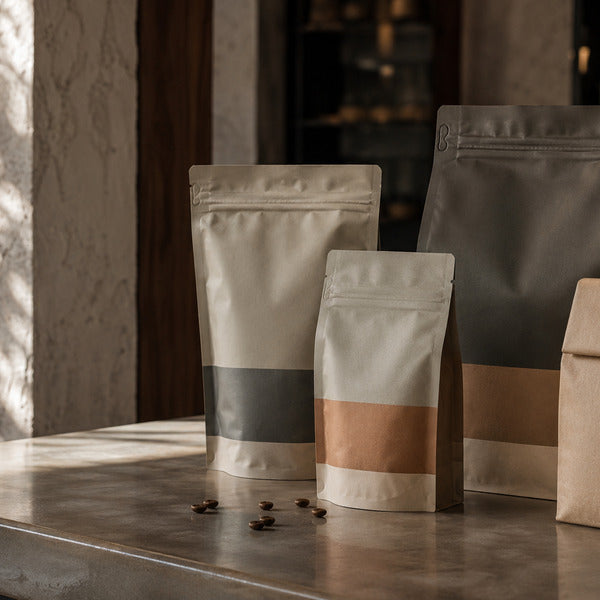
For a private label, packaging is not a container; it is the entire marketing budget. National brands spend millions on advertising to build recognition before the shelf. Private label products earn recognition at the shelf — or not at all. That means the box, the label, and the unboxing experience have to do the persuading.
The fundamentals: a consistent color system customers can spot at a distance, a logo that survives being printed small on a lid, and copy that states the spec plainly (weight, count, material, certification) because private label buyers read labels. Custom labels and stickers are the cheapest entry point — a well-designed label can turn a stock container into branded packaging for pennies per unit. For retail-ready private label food products, purposeful gift packaging elevates perceived value enough to support a premium price point.
3. Quality Control: The Non-Negotiable
Quality control is what separates a private label from a dominant brand, because a brand is simply a quality promise kept repeatedly. When a national brand ships a bad batch, its advertising cushions the blow. When your private label ships a bad batch, your brand is the batch.
A working QC program for private label products includes: a written specification sheet for every SKU (materials, dimensions, tolerances, food-contact compliance), pre-production samples approved before every run, third-party inspection for overseas manufacturing, and batch-level traceability so a problem can be isolated instead of becoming a recall of everything. For private label food products, compliance is codified in law — FDA labeling regulations require ingredient statements, nutrition facts, and allergen declarations, and since January 1, 2023, sesame is the ninth major allergen that must be declared on packaged food labels under the FASTER Act. Your manufacturer produces the product, but the brand on the label — you — owns the compliance responsibility. (Current as of July 2026.)
4. Distribution Discipline and Brand Management
Dominance is earned after launch. That means protecting price integrity (a house brand that is perpetually on clearance trains customers to see it as clearance goods), expanding the line only when the core SKUs have proven repeat-purchase rates, and marketing the brand like it deserves it. The same channels that work for any hospitality business work for a house brand — our guides to influencer marketing for restaurants and using trends to bring in business apply just as directly to promoting a private label line.
How Does Private Labeling Work in Foodservice and Hospitality?
Private labeling works in foodservice the same way it works in retail — but the shelf is your counter, your delivery bag, and your dining room. Most private label advice online is written for ecommerce sellers. In food, beverage, and restaurant supply, the mechanics are different: products touch food, packaging must perform under heat and grease, and the brand impression happens during a meal, not a browsing session.
We know because we've done it. Restaurantware's house brands were built with exactly the playbook above:
- Restpresso — our coffee and beverage service line. Naming signals the category instantly; consistent packaging across cups, lids, and accessories makes reordering effortless for cafes.
- Met Lux — our professional-grade cookware and kitchen tools line. Positioned as the durable, back-of-house workhorse tier, with specs printed plainly because chefs buy on specs.
- Bag Tek — our takeout, retail, and to-go bag line. Built around performance specs (grease resistance, handle strength) that operators can verify in one shift.
Our foodservice customers consistently tell us the same thing: they started stocking a house brand for the price, and kept it because the spec never drifted between orders. That consistency — not the discount — is what converts a private label purchase into a standing order.
Foodservice operators can run this play themselves at almost any scale. A cafe roasting its own beans (or buying private label roast) can retail them in branded coffee to go beverage bags — turning every takeout order into a shelf placement in the customer's kitchen. A restaurant with a cult-favorite hot sauce can bottle it under its own label. A hotel can private label its in-room coffee and toiletries. Packaged private label items are also natural additions to a grab-and-go program — see our guide to increasing grab-and-go sales. In every case the formula is identical: a real product your customers already love, a name and label that look deliberate, and quality that holds batch after batch.
For more strategy guides like this one, browse our restaurant advertising & marketing blog.
Frequently Asked Questions
What is meant by private label?
Private label means a product manufactured by one company but sold under another company's brand name. The seller — a retailer, restaurant, or distributor — controls the specification, packaging, and pricing, while the manufacturer remains unnamed. Private label brands are also called store brands or house brands.
Is private labeling worth it?
Private labeling is worth it when you have proven demand and enough volume to meet manufacturer minimums. Private label products typically deliver higher margins than resold national brands, plus pricing control and customer loyalty that accrues to your name. It is not worth it for unproven products — test with white label or small batches first.
What is an example of a private label brand?
Well-known private label brands include Costco's Kirkland Signature, Target's Good & Gather, and Trader Joe's house label. In foodservice supply, Restaurantware's Restpresso (beverage service), Met Lux (professional cookware), and Bag Tek (takeout bags) are private label brands built for restaurant and cafe operators.
What is the difference between private label and white label?
A private label product is made to one seller's specification and sold exclusively by that seller. A white label product is a generic, ready-made product that many different companies rebrand and sell as their own. Private label offers exclusivity and customization; white label offers speed and lower startup cost.
How do private labels become brands?
Private labels become brands through consistency: a category-focused name, packaging distinctive enough to be recognized without advertising, and quality control that makes every batch identical to the last. Dominance follows when repeat purchases compound — customers stop seeing a "store brand" and start asking for the name itself.
Is private labeling legal?
Yes — private labeling is fully legal and is standard practice across retail and foodservice. The seller must comply with labeling laws: FDA regulations govern packaged food labels (ingredients, nutrition facts, and all nine major allergens, including sesame as of January 1, 2023), and your brand name on the label carries the legal responsibility for the product's claims and safety.
Conclusion: Own the Label, Own the Customer
Private labeling is defined by a simple trade: you take on the work of naming, packaging, and quality control, and in exchange you keep the margin, the differentiation, and the customer relationship that national brands would otherwise own. The market data says the window is open — record private label sales, growth outpacing national brands, and a majority of consumers actively buying more store brands than ever. The playbook says the rest: name for the category, let packaging do the advertising, and never let a spec drift.
Ready to put your name on something? Start where every dominant private label starts — the label itself. Explore our labels and stickers collection to brand what you already sell, and our gift packaging collection to make it retail-ready.