Burger Boxes: 4 Best Take Out Boxes For Burgers
Burger boxes are grease-resistant takeout containers—typically hinged clamshells—sized to hold a single burger through delivery or carryout. Operators choose burger boxes by four criteria: grease resistance, steam venting, interior size, and material. For high-volume restaurants, a vented kraft paper clamshell offers the best balance of cost, insulation, and presentation.
A burger that leaves your pass looking perfect and arrives looking like a steamed sponge costs you the reorder. Burger boxes are the last piece of equipment your food touches before the customer does, and they decide whether a $14 smash burger travels like a $14 smash burger. The stakes keep rising: nearly 75% of all restaurant traffic now happens off-premises, according to the National Restaurant Association's 2025 Off-Premises Restaurant Trends report. In 15+ years supplying 40,000+ foodservice operations at Restaurantware, we've watched operators cut refund rates simply by switching from a foam clamshell to a vented kraft or corrugated burger box. This guide ranks the 4 best takeout burger box formats and shows you exactly how to choose between them.
TL;DR — The 4 Best Burger Boxes at a Glance
- Best all-around: Kraft paper clamshell burger boxes — low cost per unit, grease-resistant, stackable, brandable.
- Best for delivery: Corrugated (ripple-wall) burger boxes — built-in air insulation keeps patties hot through 30-minute delivery runs.
- Best eco-friendly: Bagasse (sugarcane) hinged clamshells — commercially compostable, rigid, naturally grease-resistant.
- Best premium presentation: Black paper burger boxes — matte finish that photographs well and signals a premium build.
| Burger box type | Material | Typical size | Grease resistance | Compostable? | Best for |
|---|---|---|---|---|---|
| Kraft paper clamshell | Kraft paperboard | 4"–6" square, hinged lid | High (coated board) | Recyclable; compostable options | High-volume counter service & takeout |
| Corrugated (ripple-wall) box | Corrugated kraft paper | 4" x 4" x 3.75" | High + insulating air layer | Yes (paper) | Third-party delivery, long transit times |
| Bagasse hinged clamshell | Sugarcane fiber (bagasse) | 6" x 6" x 3" | High, naturally grease- and cut-resistant | Commercially compostable | Eco-forward concepts, compost mandates |
| Black paper burger box | Black-coated paperboard | 4" x 4" x 3.75" | High | Paper-based | Premium burger bars, gourmet builds |
What Are Burger Boxes and How Are They Categorized?
Burger boxes are single-serving takeout containers engineered around the specific failure modes of a burger in transit: grease bleed-through, steam-softened buns, and crushed builds. Unlike generic to-go containers, a purpose-built box holds the sandwich snugly, vents steam, and resists grease saturation for the 20–40 minutes between the pass and the first bite.
The category splits along three lines:
- Format: hinged clamshell burger boxes (one-piece, attached lid) versus two-piece boxes with a separate lid, versus open trays for dine-in or wrapped service. The clamshell burger box dominates takeout because it closes fast on a busy line and stacks securely in delivery bags.
- Material: kraft paperboard, corrugated paper, molded fiber/bagasse, and PLA-lined kraft. Foam has been legislated out of many markets — New York, California, Washington, Colorado, and dozens of cities restrict expanded polystyrene foodservice packaging — so paper and fiber now define the category.
- Sustainability tier: conventional coated paperboard, recyclable kraft, and certified compostable boxes made of bagasse or molded fiber.
This is not a niche purchase. The global disposable food packaging market was valued at $65.60 billion in 2024 and is projected to reach $100.89 billion by 2030, a 7.4% CAGR, per Grand View Research — and burger packaging sits squarely in the fastest-growing takeout segment of that market.
What Are the 4 Best Take Out Boxes for Burgers?
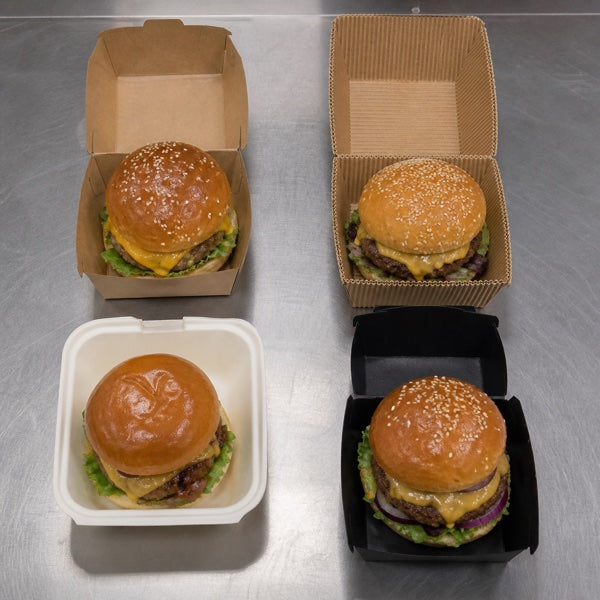
The four best takeout burger box formats are kraft paper clamshells, corrugated ripple-wall boxes, bagasse hinged clamshells, and black premium paper boxes. Each solves a different operational problem, so the right answer depends on your delivery mix, sustainability requirements, and price point.
1. Kraft Paper Clamshell Burger Boxes — Best All-Around
Kraft paper clamshells are the workhorse of hamburger packaging: a one-piece hinged box made of grease-resistant kraft paperboard that closes with a front tab lock. They assemble in one motion, stack flat in dry storage, and cost less per unit than almost any rigid alternative, which is why quick-service burger concepts standardize on them.
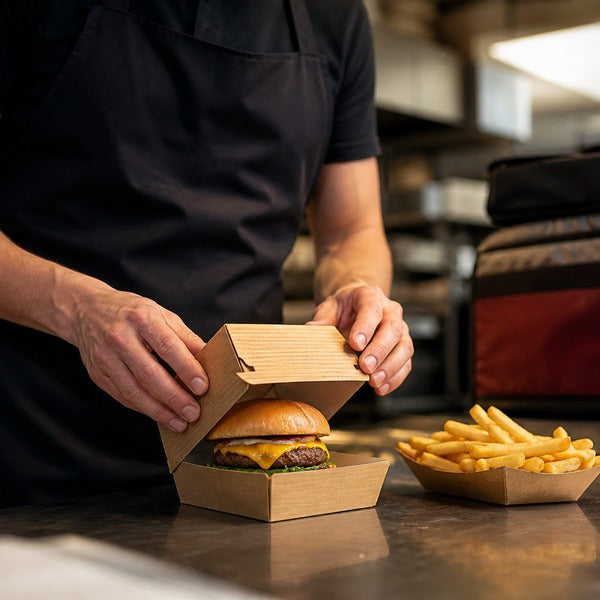
Operationally, they check every box for counter-service speed. The hinged lid means no hunting for matching lids during a rush. The kraft surface takes a custom stamp or sticker cleanly, turning every box into a branded impression. Browse kraft paper burger boxes in bulk case packs to compare sizes and wall styles.
Foodservice note: choose a coated or ripple-wall kraft box for smash burgers and anything with a buttered bun — uncoated economy board will show grease spotting within 15 minutes.
2. Corrugated (Ripple-Wall) Burger Boxes — Best for Delivery
Corrugated burger boxes use a fluted, ripple-wall construction that traps a layer of air around the burger, insulating it the way a corrugated coffee sleeve insulates a cup. That air gap is the difference-maker on third-party delivery, where the National Restaurant Association pegs average transit at roughly 30 minutes door to door.
A verified live example: the Bio Tek kraft paper burger box with ripple wall (4" x 4" x 3.75", 100-count) holds a standard 4-inch burger with a snug fit that stops the build from sliding in the delivery bag. The rigid fluted walls also resist crushing when bags get stacked — a failure point our delivery-heavy customers report constantly with flat-wall boxes.
Foodservice note: corrugated boxes cost more per unit than plain kraft, but for DoorDash- and Uber Eats-heavy operations the temperature retention pays for itself in review scores.
3. Bagasse (Sugarcane) Hinged Clamshells — Best Eco-Friendly Burger Boxes
Bagasse clamshells are molded from sugarcane fiber left over after juice extraction, making them a commercially compostable box with no plastic lining required. Bagasse is naturally grease- and moisture-resistant, rigid enough to protect a tall build, and microwave-safe for customers reheating at home.
The Pulp Tek 6" x 6" x 3" white bagasse clamshell (100-count) is our verified go-to burger size: it fits a quarter-pound build with toppings, and the fiber lid vents just enough steam to keep buns intact. For a full range of sizes and stock, see our compostable clamshell containers collection.
Foodservice note: if your city has a compost mandate (Seattle, San Francisco, Portland) or your concept markets sustainability, bagasse is the defensible choice — and increasingly, PFAS-free molded fiber options let you make the claim without the fine print.
4. Black Paper Burger Boxes — Best Premium Presentation
Black paper burger boxes are the same ripple-wall construction as option 2 with a matte black finish that reframes the unboxing as a premium moment. Gourmet burger bars and steakhouse concepts use them because the dark interior makes a brioche bun and melted cheese pop on camera — and off-premises customers eat with their phones first.
The Bio Tek black paper burger box (4" x 4" x 3.75", 100-count) is the verified live SKU here, with the same insulating ripple wall as its kraft sibling. Pair it with a gold or white custom sticker and the burger packaging itself becomes marketing.
Foodservice note: premium boxes support premium pricing. A distinctive box is one of the cheapest burger packaging ideas for making a $16 burger feel like a $16 burger at the customer's kitchen table.
👉 Ready to compare formats side by side? Shop the full range of clamshell take out containers — kraft, corrugated, and bagasse formats in wholesale case packs with live inventory.
How Do You Choose the Right Burger Box for Your Operation?
Choose a burger box by scoring four factors in order: grease resistance, venting, size fit, and material — then sanity-check the cost per unit at your real order volume. Here is the framework we walk operators through.
What Size Burger Box Do You Need?
Match interior dimensions to your assembled burger, not your patty. A standard 4-inch patty on a bun with lettuce and tomato needs a 4" x 4" box with at least 3" of height; a double or loaded build needs 6" x 6" x 3". Burger box sizes run from 4-inch sliders to 6.5-inch gourmet stackers — too big lets the burger slide and disassemble, too small crushes the bun on lid close.
Why Does Venting Matter More Than Insulation?
Venting matters because a sealed box turns bun steam into bun mush before the driver leaves the parking lot. A hot burger releases steam for 10+ minutes after boxing; vented lids or loose-fit clamshell seams let that moisture escape while keeping heat in. If you seal boxes with tamper-evident labels for delivery, choose a box with molded vents — do not tape over the airflow.
How Should You Evaluate Cost at Volume?
Evaluate cost per unit at case-pack scale, not sticker price. Burger takeout containers typically ship in 100-count cases; wholesale burger boxes at 10+ case volume commonly land between $0.15 and $0.45 per unit depending on material, with bagasse and printed boxes at the top of the range. Our foodservice customers consistently tell us the same thing: the box that prevents one remake or one refund per case has already paid for itself. Budget packaging that generates 1-star "arrived cold and soggy" reviews is the most expensive packaging you can buy.
Compostable or Conventional?
Compostable burger boxes win when local regulation, brand positioning, or customer base demands it; conventional coated kraft wins on pure unit cost. The middle path most operators take: recyclable kraft for the everyday menu, bagasse for markets with foam bans or compost programs. Verify certifications (BPI, ASTM D6400/D6868) before printing "compostable" on anything customer-facing.
Which Burger Boxes Perform Best in Real Kitchens? Our Experience
Across 15+ years supplying 40,000+ foodservice operations, the pattern at Restaurantware is consistent: delivery-heavy burger concepts standardize on ripple-wall corrugated boxes, counter-service operations standardize on kraft clamshells, and fast-casual brands in coastal markets migrate to bagasse — usually right after a local foam or PFAS ordinance passes.
One pattern worth stealing: our highest-volume burger customers run a two-box system. Standard kraft clamshells for pickup orders, and insulated corrugated boxes reserved for third-party delivery, where transit time doubles. The blended cost increase is pennies per order; the review-score difference is measurable. The National Restaurant Association's 2025 off-premises research explains why it works: 90% of consumers say they would order a greater variety of items to go if the food maintained on-premises quality during delivery — and more than half would pay more for packaging that delivers it.
Add-on worth stocking: grease-resistant burger wraps or liner sheets inside the box. The liner catches sauce drip, keeps the box interior presentable, and gives the customer a clean way to hold the burger — a two-cent upgrade that reads as care.
Frequently Asked Questions About Burger Boxes
What sizes do burger boxes come in, and what size fits a standard 4-inch burger?
Burger boxes range from roughly 4" x 4" (sliders and standard singles) to 6.5" x 6.5" (doubles and loaded gourmet builds), with heights of 2.75"–3.75". A standard 4-inch burger fits a 4" x 4" x 3.75" box; size up to 6" x 6" if you stack tall toppings or serve on oversized brioche.
Clamshell vs. two-piece burger boxes — which holds up better for delivery?
Clamshell burger boxes hold up better for delivery. The hinged one-piece design cannot lose its lid in a delivery bag, closes faster on the line, and keeps top and bottom aligned when bags shift in transit. Two-piece boxes suit dine-in presentation or catering trays where lids come off at the table.
Are kraft and compostable burger boxes grease-resistant?
Yes — quality kraft burger boxes use grease-resistant coatings or dense board, and bagasse is naturally grease- and moisture-resistant without any added lining. Economy uncoated kraft will show grease spotting, so spec coated board or molded fiber for high-fat items. For customer-facing claims, look for PFAS-free grease resistance, now standard in leading compostable lines.
What are eco-friendly burger boxes made of?
Eco-friendly burger boxes are made of bagasse (sugarcane fiber), molded fiber from bamboo or wheat straw, unbleached recyclable kraft paper, and PLA-lined kraft board. Bagasse and molded fiber are commercially compostable (ASTM D6400/D6868); plain kraft is recyclable; PLA-lined kraft composts only in commercial facilities.
Can burger boxes be custom printed, and what minimum order quantities are typical?
Yes — burger boxes can be custom printed with logos and brand colors. Direct-print custom runs typically start at MOQs of 5,000–25,000 units depending on the manufacturer and print method, while custom-branded stickers and stamps let smaller operations brand stock boxes with no minimum at all. Stock boxes ship in 100-count cases with no MOQ beyond the case.
How do vented burger boxes keep buns from going soggy in delivery bags?
Vented burger boxes release the steam a hot patty gives off after boxing, so moisture escapes instead of condensing on the lid and dripping onto the bun. Vents — molded holes, raised lid channels, or loose clamshell seams — trade a small amount of heat for a large gain in texture, which is the right trade for any bread-based item in a sealed delivery bag.
Conclusion: Match the Box to the Order, Not the Other Way Around
The best burger boxes are the ones matched to how your burgers actually travel. Standardize on kraft clamshells for speed and cost, move delivery orders into corrugated ripple-wall boxes, go bagasse where sustainability drives the sale, and deploy black premium boxes where presentation justifies the spend. With three out of four restaurant orders now leaving the building, hamburger boxes are no longer an afterthought — they are the packaging spec that protects everything your kitchen got right.
👉 Stock up in wholesale case packs: shop clamshell take out containers, kraft paper burger boxes, and compostable clamshell containers at Restaurantware — live inventory, case-pack pricing, and specs verified for foodservice use.
Related reading: