Why You Should Use Disposable Wedding Plates
Disposable wedding plates are single-use dinnerware — elegant plastic, bamboo, sugarcane fiber, or premium paper — designed to look like fine china without the rentals. They eliminate rental fees, breakage charges, and dishwashing, cut post-reception cleanup dramatically, and cost a fraction of rented china, making them a smart choice for hosts, caterers, and venues.
Weddings are expensive, and the plates are one of the few line items where you can save real money without guests noticing. Modern disposable wedding plates have moved far beyond flimsy picnic paper: gold-rimmed rounds, lace-edged clear plastic, and compostable bamboo now set tables that photograph beautifully. In 15+ years supplying 40,000+ foodservice operations, we've watched disposable dinnerware go from a caterer's backup plan to a deliberate first choice for receptions, rehearsal dinners, and cocktail hours. This guide covers what these plates are, what they cost compared to china rentals, how many you need, and which styles actually hold up under a plated dinner.

TL;DR — Disposable Wedding Plates at a Glance
- Elegance: Premium plastic plates with gold, silver, or lace rims read as china from two feet away — the distance most guests and photos ever get.
- Cost: A full elegant disposable place setting typically runs $1.50–$3.00 per guest bought in bulk. Rented china place settings commonly run $4–$8+ per guest once delivery, pickup, and replacement fees land.
- Cleanup: No scraping, racking, rewashing, or counting plates back into crates at midnight. Clear, bag, done.
- Eco options: Bamboo and sugarcane fiber plates are commercially compostable alternatives to both plastic and rented china's wash cycles.
- Quantity rule: Order 10–20% over guest count per course; double appetizer and dessert plates for buffets and stations.
| Material | Look & Feel | Typical Bulk Cost/Plate | Best For | End of Life |
|---|---|---|---|---|
| Premium plastic (rimmed, textured) | Closest to china; rigid, glossy | $0.30–$0.70 | Plated dinners, formal receptions | Recyclable in some programs; check locally |
| Sugarcane fiber | Clean matte finish; very sturdy | $0.40–$0.90 | Rustic, boho, outdoor weddings | Commercially compostable |
| Bamboo | Clean natural grain | $0.40–$1.00 | Eco-forward, minimalist themes | Commercially compostable |
| Premium heavyweight paper | Matte, printable designs | $0.15–$0.40 | Cocktail hour, dessert, brunch weddings | Compostable if uncoated/certified |
| Rented china (comparison) | Real porcelain | $0.45–$0.90 rental + fees, per use | Black-tie, venue-included packages | Rewashed; breakage billed to you |
Cost ranges reflect typical wholesale and rental pricing we see across our caterer and venue customers as of August 2026; your market will vary.
What Are Disposable Wedding Plates?
Disposable wedding plates are single-use plates engineered to imitate the look of formal china while skipping the rental truck and the dish pit. Unlike everyday paper plates, they're built for weddings specifically: heavier gauges that don't flex under a knife, finished rims in gold or silver, and shapes that match real place settings — charger, dinner, salad, dessert.
Four materials dominate the category:
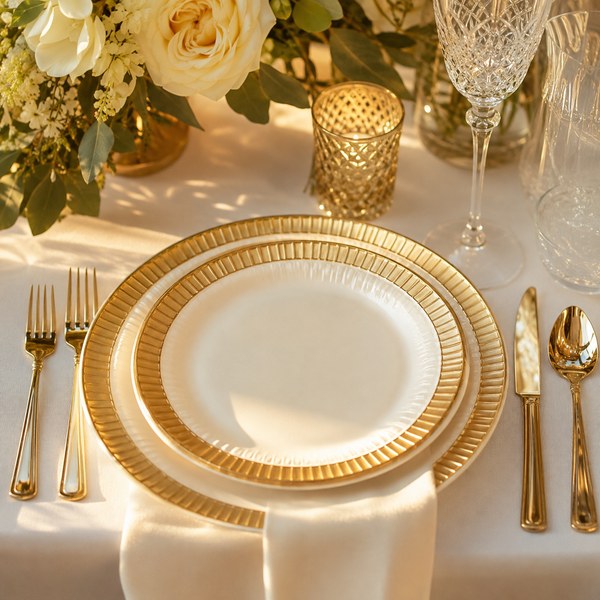
- Elegant plastic. Heavyweight polystyrene or polypropylene with decorative rims — the workhorse of the category. A round white translucent plastic gold-rimmed plate is the classic example: rippled texture, metallic edge, and enough rigidity for a plated salad course.
- Sugarcane fiber. Pressed from bagasse, the fibrous pulp left after sugarcane is milled. A clean off-white finish with a soft matte surface that suits rustic and modern tables alike. Rigid enough for barbecue and carving stations.
- Bamboo. Similar rigidity with a visible natural grain — popular for minimalist and garden weddings.
- Premium paper. Heavyweight coated or molded-fiber paper, best for dessert tables, cake service, and cocktail-style receptions rather than a knife-and-fork main course.
Hosts choose them most often for outdoor venues without dishwashing facilities, DIY and family-catered receptions, budget weddings that redirect money toward food or photography, and any event where a rental return deadline would land on the morning after.
Why Choose Disposable Wedding Plates Over China Rentals?
Disposable wedding plates win on total cost, logistics, and labor — and modern designs close most of the elegance gap. Here's the math that matters.
How much do disposable wedding plates cost in bulk vs renting china?
The average U.S. wedding cost $34,000 with 117 guests in 2025, according to The Knot Worldwide's 2026 Real Weddings Study, and catering alone averages $80 per person per The Knot's catering cost data. Against a five-figure food-and-rentals budget, tableware is one of the easiest places to claw back $500 or more.
For a 117-guest reception with a dinner plate, salad plate, and dessert plate per guest (plus a 15% buffer):
| Line Item | Elegant Disposable (bulk) | Rented China |
|---|---|---|
| ~400 plates (3 courses + buffer) | $120–$280 | $180–$360 rental |
| Delivery + pickup fees | $0 (ships with your supplies) | $75–$250 |
| Breakage/missing-item charges | $0 | Commonly $5–$15 per lost or chipped piece |
| Scraping/re-racking labor at midnight | None — clear and bag | Required by most rental contracts |
| Realistic total | $120–$280 | $300–$700+ |
In our experience supplying wedding caterers, the gap widens at scale: disposable dinnerware sets for 100 guests ship in a few cases, while 100 china place settings arrive in crates that need staging space, counting in, and counting out. Our foodservice customers consistently tell us the hidden rental costs — the fees, the breakage bills, the extra staff hour at breakdown — are what pushed them to elegant plastic plates wholesale for all but their black-tie contracts.
What do you save on cleanup and labor?
Cleanup is where disposables pay off twice. Rented china must typically be scraped and re-racked before pickup; disposables go from table to trash or compost bin in one pass. For a venue without a commercial dish room — barns, backyards, parks — disposables aren't just cheaper, they're the only practical option. And every plate that skips the dish pit also skips hot water, detergent, and staff time, which matters to caterers running three events on a Saturday.
Shop the full range: browse our disposable tableware collection for plates, flatware, and cups that match.
Do Disposable Wedding Plates Look Cheap? What Real Hosts Say
No — not if you buy the right ones, and real hosts back this up. Budget-wedding communities like r/Weddingsunder10k's disposable plates discussions keep landing on the same conclusions we hear from our own customers: guests notice the food and the table styling, not the plate's material; bamboo plates get complimented as a design choice; and clear or gold-rimmed plastic paired with real or metallic flatware reads as intentional, not thrifty.
Three styling rules keep your table looking deliberate:
- Buy heavyweight. The single biggest "cheap" tell is a plate that flexes. Heavy duty plastic plates for wedding service should hold a full entrée one-handed without bowing.
- Match the rim to your palette. A gold-rimmed plate on a table with gold flatware and amber glassware looks curated. A random assortment looks like a supply run.
- Upgrade the anchor pieces. Pair disposable plates with cloth napkins or real goblets — one tactile "real" element per setting resets guest perception of the whole table.
How Do You Choose Disposable Wedding Plates? A Buyer's Checklist
Choose disposable wedding plates by weight, size, color, and quantity — in that order. This is the same checklist our team walks caterers through.
1. Weight and rigidity
Full dinner service demands heavyweight plates that survive a steak knife. If the product page doesn't emphasize rigidity or heavy-duty construction, assume it's a cocktail-tier plate. For plated mains, look at options like our Maxi Serve round clear plastic plate with lace rim — at 11 3/4 inches it doubles as a charger or a generous dinner plate.
2. Size by course
- Charger/dinner: 10–12 inches
- Salad/appetizer: 7–8 inches — the 7 1/4-inch gold-rimmed round is sized exactly for this slot
- Dessert/cake: 6–7 inches
- Passed appetizers: 4-inch minis and tasting plates
3. Color and finish
White with metallic rim is the safest formal choice; clear plastic disappears into any tablescape and shows off linens; black turns dramatic for evening receptions — a black plastic mini triangolo appetizer plate makes passed hors d'oeuvres look gallery-styled during cocktail hour.
4. Quantity — how many disposable plates per wedding guest?
Plan per course, then buffer. For disposable wedding plates bulk orders, this table is the standard we recommend:
| Service Point | Plates per Guest | For 100 Guests (with buffer) |
|---|---|---|
| Cocktail hour (passed/stations) | 2–3 small plates | 250–300 |
| Plated dinner | 1 per course | 110–115 per course |
| Buffet dinner | 1.5–2 dinner plates | 175–200 |
| Dessert/cake | 1–1.5 | 125–150 |
| Late-night snack | 0.75–1 | 75–100 |
Buffets always run higher because guests take fresh plates on return trips — a food-safety best practice, not a flaw. Round up to full case counts; leftover sleeves store indefinitely and cover the anniversary party.
Are There Eco-Friendly Disposable Wedding Plates?
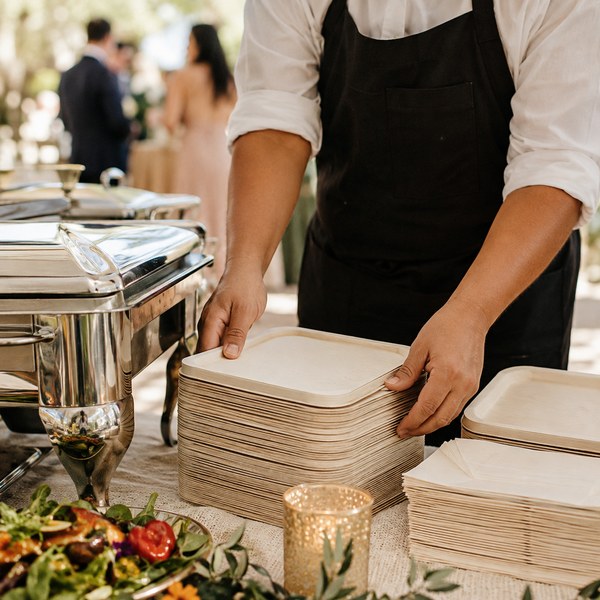
Yes — bamboo, sugarcane fiber, and certified-compostable fiber plates are the eco-friendly tier of disposable wedding plates, and they've become a first-choice aesthetic rather than a compromise. Sugarcane fiber plates are pressed from bagasse, the pulp left after milling, with no added binders; bamboo plates offer the same compostability with a visible natural grain. Both are certified for commercial composting under standards like ASTM D6400/D6868 when marked accordingly — look for BPI certification on the case.
Context matters here: containers and packaging made up 82.2 million tons of U.S. municipal solid waste in 2018 — 28.1% of total generation — with a 53.9% recycling rate, per the U.S. EPA's containers and packaging data. Choosing compostable plates and actually routing them to a commercial composter (ask your venue or hauler — backyard piles won't process most certified items) keeps your reception's tableware out of that stream. If you're weighing claims on a label, our guide to biodegradable vs compostable breaks down what the terms legally mean, and our eco-friendly disposables collection carries the certified options.
One honest note from our side of the industry: a compostable plate sent to a landfill behaves much like any other plate. The eco win comes from pairing the product with the right disposal stream — something we now flag to every caterer who asks us for "green" wedding packages.
How Caterers and Venues Use Disposable Wedding Plates
For foodservice operators, disposables are an operations decision before they're a style decision. In 15+ years supplying 40,000+ foodservice operations, we've seen the same playbook emerge among high-volume wedding caterers:
- Cocktail hour runs entirely disposable, even at china dinners. Passed appetizers on 4-inch minis like the black triangolo mean no tray of dirty china circulating during photos, and no dish crew tied up before dinner service even starts.
- Stations and buffets use heavyweight plastic. A rectangle white plastic plate with silver ruffled rim gives carving and pasta stations a composed, restaurant-plated look while guests serve themselves one-handed.
- Off-site venues get a fully disposable spec. Barns, beaches, and backyards lack dish rooms; disposables remove the rental-logistics chain (delivery windows, crate staging, scrape-and-rack, pickup) that otherwise adds staff hours to a 14-hour event day.
- Dessert and late-night service doubles as branding. Caterers standardize on one rim style across courses so every photographed plate looks like part of a set.
Our foodservice customers consistently tell us the switch shows up in their labor line first: breakdown crews finish an hour or more earlier when nothing has to be counted back into a rental crate. Stocking disposable plastic dinnerware in one or two signature styles — rather than re-renting to match each client's china — also lets smaller caterers quote weddings more competitively. It's a real slice of a big market: The Knot Worldwide pegs the U.S. wedding industry at roughly $100 billion annually (current as of August 2026).
If you're building out a wedding program, pair this guide with our posts on indoor vs outdoor catering and how to plan a wedding reception.
Frequently Asked Questions
What are the most elegant disposable plates for a wedding?
The most elegant disposable wedding plates are heavyweight plastic with metallic or textured rims — gold-rimmed white, lace-edged clear, and silver-ruffled white read closest to fine china. Bamboo plates are the elegant pick for rustic and outdoor themes. Whatever the material, weight is what sells the effect: rigid plates photograph and handle like china; flimsy ones never do.
Are plastic or bamboo plates better for a wedding reception?
Plastic is better for formal receptions and plated dinners: it mimics china, resists sauces, and costs slightly less per plate. Bamboo is better for rustic, boho, and eco-focused weddings: it's compostable, extremely rigid, and doubles as decor. Many couples split the difference — bamboo for a barbecue buffet, elegant plastic for the dessert table.
How many disposable plates do you need per wedding guest?
Plan one plate per guest per plated course, 1.5–2 dinner plates per guest for buffets, 2–3 small plates per guest for cocktail hour, and 1–1.5 dessert plates per guest — then add a 10–20% buffer on every count. For 100 guests with cocktail hour, buffet dinner, and cake, that's roughly 550–650 total plates across sizes.
Do disposable wedding plates look cheap?
Modern heavyweight disposable wedding plates don't look cheap — thin, flexing plates do. Choose heavy-duty plates with a finished rim, keep colors matched to your palette, and pair them with cloth napkins or real flatware. Hosts in budget-wedding communities consistently report that guests never commented on the plates — except to compliment the bamboo ones.
Are there eco-friendly disposable wedding plates?
Yes. Bamboo and certified-compostable sugarcane fiber plates are both eco-friendly picks, compostable in commercial facilities when certified to ASTM D6400/D6868 (look for BPI certification). Confirm your venue or hauler can route them to commercial composting — that final step is what delivers the environmental benefit.
How much do disposable wedding plates cost in bulk vs renting china?
Bought in bulk, elegant disposable plates run roughly $0.30–$0.90 per plate — about $120–$280 for a three-course, 117-guest reception. Rented china for the same event typically totals $300–$700+ after rental rates, delivery and pickup fees, and any breakage charges. Disposables usually save 50–70% on the tableware line.
The Bottom Line on Disposable Wedding Plates
Disposable wedding plates earn their place at the table on every axis that matters: they deliver the look of china at a fraction of the cost, erase rental logistics and breakage risk, collapse cleanup into a single pass, and — in bamboo and sugarcane fiber — offer an eco story rented china can't match. Whether you're a couple stretching a budget toward better food, or a caterer shaving an hour off every breakdown, the modern version of this category is a genuine upgrade, not a concession.
Ready to set the table? Shop our disposable tableware collection — including plastic disposable plates in wedding-ready styles, in stock and shipping today.