How To Prepare Your Restaurant For Winter
To prepare a restaurant for winter, schedule professional HVAC and heating service, insulate pipes and exterior-wall plumbing, winterize or enclose the patio, place absorbent entrance mats, stock storm and emergency supplies, build a winter staffing and closure plan, and gear up packaging for higher delivery demand. Start in early fall, before the first freeze.
The smartest time to prepare your restaurant for winter is while it's still warm enough to fix what you find. Restaurants use about five to seven times more energy per square foot than other commercial buildings — and high-volume quick-service restaurants can use up to 10 times more — according to ENERGY STAR, so a neglected heating system doesn't just risk a cold dining room; it inflates your single most lopsided utility bill of the year. In 15+ years supplying 40,000+ foodservice operations, we've seen the same pattern every winter: the operators who winterize in September and October sail through the season, while the ones who wait for the first cold snap end up paying emergency HVAC rates and closing dining rooms mid-service. This restaurant winter preparation checklist covers the whole operation — building, patio, plumbing, entryways, staffing, storm readiness, and delivery — so nothing catches you off guard.
TL;DR: Winterize the building first (HVAC service, pipe insulation, door seals, entrance mats), then the revenue spaces (patio heaters or enclosures), then operations (warm-holding, delivery packaging, hot beverage program), and finally the contingency layer (storm supplies, staffing plan, closure protocol). Every task below fits into a September-to-November timeline.
Why Does Winter Preparation Matter for Restaurants?
Winter preparation matters because cold weather attacks a restaurant on three fronts at once: physical risk, energy cost, and traffic disruption. Since 1980, the United States has sustained 438 separate billion-dollar weather and climate disasters — $3.2 trillion in CPI-adjusted losses — and winter storms are one of the seven disaster categories tracked in the billion-dollar disaster dataset now maintained by Climate Central (originally built by NOAA's National Centers for Environmental Information). A single burst pipe or downed power line doesn't need to make national news to wipe out a week of your revenue.
The safety exposure is just as real. The U.S. Bureau of Labor Statistics recorded 42,480 workplace injuries involving ice, sleet, or snow in a single year — each one requiring at least a day away from work. For a restaurant, that risk concentrates at two spots you control completely: the sidewalk outside your door and the six feet of floor just inside it.
And then there's demand. Winter doesn't eliminate restaurant traffic — it relocates it. Nearly 75% of all restaurant traffic now happens off-premises, according to the National Restaurant Association's 2025 Off-Premises Restaurant Trends report, and cold, dark evenings push even more guests toward delivery and takeout. Operators who prepare their restaurant for winter on both fronts — a warm, dry dining room and a delivery program that lands food hot — capture the season instead of surviving it.
Your Winter Prep Timeline at a Glance
| When | Building & Equipment | Operations |
|---|---|---|
| September | Book HVAC/heating service; inspect roof, gutters & weatherstripping; order patio heaters before the rush | Audit delivery packaging; plan hot beverage program; review winter labor budget |
| October | Insulate exposed pipes; seal drafts; install entrance mats; test patio heaters & enclosures | Train staff on warm-holding & snow protocols; stock ice melt, shovels & storm supplies |
| November | Final furnace filter change; verify thermostat schedules; confirm emergency contacts | Launch winter service adjustments; finalize closure/communication protocol before the first storm |
How Do You Winterize a Restaurant Building?
You winterize a restaurant building by working from the mechanical systems outward: service the HVAC first, protect the plumbing second, seal the envelope third, and convert the entryway and patio last. Here is how to winterize a restaurant step by step.
Schedule Restaurant HVAC Maintenance for Winter — Early
Restaurant HVAC maintenance for winter means a professional inspection and tune-up of your heating system before you actually need it. Book a licensed commercial HVAC technician in September or early October — once the first freeze hits, service calendars fill and emergency rates apply. A proper pre-season visit should include:
- Heat exchanger inspection — cracks leak carbon monoxide into dining rooms and kitchens.
- Filter replacement — kitchen grease and dust load filters faster than in any office building; plan on monthly changes through winter.
- Thermostat calibration and scheduling — program setbacks for closed hours, but never below 55°F (more on why in the plumbing section).
- Makeup air and exhaust balance — hood exhaust pulls heated air out of the building; an unbalanced system in January means cold drafts at every door and a furnace running nonstop.
- Ductwork and vent check — clear blockages and confirm dampers open fully so the dining room heats evenly.
Because restaurants carry that five-to-seven-times energy intensity, every efficiency point you recover in a fall tune-up compounds across the entire heating season. Pair the service visit with portable or supplemental units from a heating, cooling & air quality lineup so you can spot-heat problem zones — vestibules, window seats, host stands — instead of overdriving the central system to satisfy the coldest corner of the room.
Prevent Frozen Pipes in a Restaurant
To prevent frozen pipes in a restaurant, insulate every water line that runs through an unheated or exterior-wall space, and never let the building's interior temperature fall below 55°F — the minimum the American Red Cross recommends for freeze prevention, even overnight and on closed days. Water expands as it freezes, and that expansion will split copper, PEX, and PVC alike. In a restaurant, the highest-risk lines are:
- Outdoor lines: hose bibs, irrigation lines, and patio beverage or misting lines — drain and shut them off at the interior valve, then leave the exterior valve open so trapped water can expand harmlessly.
- Back-of-house lines in unheated zones: dry storage, basements, crawl spaces, and the plumbing behind walk-in compressors. Wrap them in foam pipe sleeves or heat tape.
- Equipment supply lines: ice machines, dish machines, coffee brewers, and steamers plumbed along exterior walls. On extreme nights, open cabinet doors so warm air reaches the lines, and let the most vulnerable faucet drip.
- Grease trap and drain lines: exterior grease traps and vent stacks can freeze too — keep interceptors pumped before deep cold so standing grease doesn't solidify into a blockage.
Walk the building with your plumber once, mark every at-risk line, and turn that map into a laminated cold-snap checklist your closing manager can run in five minutes.
Seal the Envelope and Winterize the Entryway
Drafts are money leaking out of the building — and slush tracked in is a lawsuit waiting on the floor. Before November:
- Weatherstrip doors and windows. Replace cracked door sweeps and seals; a visible gap under a service door is the equivalent of a fist-sized hole in the wall.
- Fix the door-propping habit. Delivery doors left open during morning receiving can drop back-of-house temperatures enough to strain both the furnace and your refrigeration compressors.
- Build a mat system, not a single mat. The BLS ice-sleet-snow injury data is exactly why safety pros recommend layered matting: a scraper mat outside the door to strip snow and grit, then 10–15 feet of absorbent entrance floor mats inside so shoes are actually dry by the time they reach your tile. Rotate wet mats out mid-shift on storm days.
- Stage wet-floor signs and a dedicated entry mop at the host stand so the response to slush is seconds, not minutes.
- Stock ice melt and shovels in October — and use rounded-edge shovels plus concrete-safe melt so you're not repairing your own sidewalk in spring. Log every exterior de-icing pass; that record is your first defense in a slip-and-fall claim.
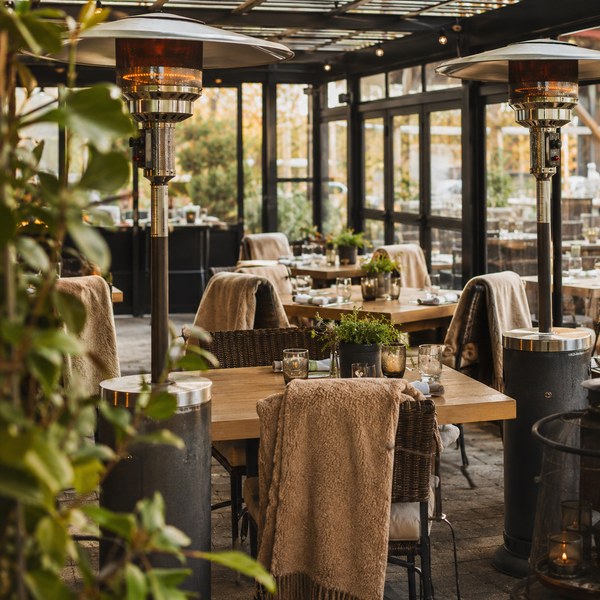
Winterize the Restaurant Patio — or Convert It Into Winter Revenue
You have two ways to winterize a restaurant patio: shut it down properly, or winterize it for service and keep the seats earning.
If you're closing the patio: deep-clean and dry furniture before storing it (trapped moisture means mildew in April), stack and cover anything that stays outside with waterproof furniture covers, drain water features and exterior lines, take down umbrellas and shade sails before the first heavy snow load, and store cushions indoors. Move planters with breakable pots inside or empty them — soil expands when it freezes just like pipes do.
If you're running winter patio service: the formula is heat + wind block + warmth cues. Position propane or electric patio heaters to cover seating zones (roughly one heater per 2–4 tables depending on output and exposure), add windbreak panels or a partial enclosure on the prevailing-wind side, and layer in blankets, warm lighting, and hot drinks to make cold-weather dining feel intentional rather than endured. Check your local fire code for clearance rules on propane heaters near awnings and enclosures, and never run propane units inside a fully enclosed space. If your patio program is worth serious money, our guide on how to implement outdoor dining in your restaurant covers layout, permitting, and furniture choices in depth.
How Should You Adjust Service and Operations for Winter?
Adjust winter service around one operational truth: everything you serve is fighting the cold from the moment it leaves the pass. The menu side of that fight — soups, braises, seasonal LTOs, hot desserts — deserves its own playbook, and we've written it: see our full guide to winter menu ideas for restaurants. Operationally, here's what changes:
- Warm-holding capacity. Soup wells, holding cabinets, and heat lamps become bottlenecks when half your menu ships hot. Test capacity at projected winter volume in October, not during the first December rush.
- Hot beverage throughput. Coffee, tea, cider, and cocoa orders spike all season. Descale brewers, service urns and airpots, and stock double-wall cups, lids, and sleeves from a dedicated coffee service program so the espresso machine isn't your only hot-drink engine on a Saturday night.
- Table-turn realism. Guests linger longer in winter. Adjust reservation pacing and staffing so lingering reads as hospitality, not lost covers.
- Coat and boot logistics. Coat hooks, umbrella stands, and a plan for dripping outerwear keep aisles clear and chairs dry.
Gear Up for Winter Delivery Demand
Winter is delivery season. With nearly 75% of restaurant traffic already off-premises per the National Restaurant Association, every snowy Friday shifts even more of your covers to the curb — and cold air is brutal on food quality. Prepare the program like it's a second dining room:
- Insulated transport. Route every delivery order through insulated food delivery bags — in winter conditions, an uninsulated 15-minute drive can drop food out of appetizing range before it reaches the door.
- Heat-holding packaging. Vented containers for fried items (steam kills crispness), and leak-proof, double-wall disposable soup containers for the season's best-selling category. Nothing torches a delivery rating like lukewarm soup in a leaking cup.
- Separate hot and cold. Pack hot entrées and cold sides in separate bags so neither ruins the other.
- Driver safety rules. Set weather thresholds for in-house drivers, build extra delivery-time padding into storm-day quotes, and communicate delays proactively in the app.
Our foodservice customers consistently tell us the winter packaging upgrade pays for itself in review scores alone — a hot, intact delivery in January earns loyalty that a fair-weather order never has to.
Winter Storm and Emergency Readiness for Restaurants
Winter storm prep for restaurants means deciding before the forecast turns how you'll protect people, product, and revenue. Build the plan around three layers:
Stock the Storm Kit
- Ice melt, snow shovels, and a snow-removal service contract signed in the fall
- Flashlights, headlamps, batteries, and portable phone chargers
- First-aid kit and blankets
- Appliance thermometers in every cooler and freezer, plus coolers and ice packs for triaging product in an outage
- Printed emergency contact list: utility providers, HVAC and plumbing contractors, landlord, insurance agent, and your manager phone tree
Protect the Product in a Power Outage
Know the food-safety clock cold: an unopened refrigerator keeps food safe for about 4 hours, a full freezer for about 48 hours (24 if half full), per FoodSafety.gov. Tape that rule inside the office door, keep cooler doors shut during an outage, and log temperatures the moment power returns — when in doubt, throw it out. If outages are common in your area, price a generator against the value of one full walk-in of product; the math usually favors the generator.
Set the Staffing and Closure Protocol
- Decide the closure trigger in advance — a specific weather-service warning level or travel ban, not a morning-of debate. No plate of food is worth a staff member's car in a ditch.
- Build a storm-day roster: who lives walkable or close, who opens if the opening manager can't get in, and who owns exterior de-icing on each shift.
- Communicate early and everywhere: update Google Business hours, social channels, delivery apps, and your voicemail the moment you decide — a guest who drives through snow to a dark restaurant rarely comes back.
- Pre-plan the reopening: line checks, temperature logs, sidewalk clearing, and a supplier call sheet for post-storm restocking.
The Foodservice Angle: Equipping Your Restaurant for Winter
Most winterization advice stops at the building. In 15+ years supplying 40,000+ foodservice operations, we've seen that the operators who win the season also winterize their smallwares and supplies — the everyday equipment that touches every winter order:
- Entry and floor protection: layered entrance floor mats sized to your actual vestibule, swapped and dried on rotation during storms.
- Spot heating and air quality: supplemental units from our heating, cooling & air quality collection for patios, vestibules, and drafty dining zones.
- Soup and hot-food packaging: vented, double-wall disposable soup containers that survive a snowy delivery route.
- Hot beverage program: cups, lids, sleeves, airpots, and carafes from the coffee service collection to handle the seasonal spike.
- Delivery transport: insulated food delivery bags in enough quantity that bags are never the bottleneck on a storm-night rush.
Winter is also the front edge of the holiday rush — if you're building your Q4 order anyway, our checklist of restaurant supplies you need this holiday season and our guide to hosting holiday parties at your restaurant pair naturally with this one.
Frequently Asked Questions
How do you winterize a restaurant?
Winterizing a restaurant means servicing the heating/HVAC system before the first freeze, insulating pipes in unheated and exterior-wall spaces, sealing doors and windows, installing absorbent entrance mats, winterizing or enclosing the patio, stocking storm supplies, and setting a staffing and closure protocol. Start in September; finish before the first hard freeze.
What is the 30/30/30 rule for restaurants?
The 30/30/30 rule is a rough budgeting framework: keep food costs near 30% of sales, labor near 30%, and overhead (rent, utilities, supplies) near 30%, leaving roughly 10% as pre-tax margin. Winter stresses the overhead third — heating drives utilities up — which is exactly why fall HVAC maintenance and draft sealing protect profitability, not just comfort.
What are the 4 P's of winter storm preparation?
The 4 P's are People, Pets, Pipes, and Plants — a cold-weather memory aid used by meteorologists and emergency managers. Translated for a restaurant: protect staff and guests (safe entryways, sensible closure triggers), protect plumbing (insulate lines, hold the building at 55°F or above), and protect exterior plants and patio landscaping by moving or covering them before a hard freeze.
What food items should a restaurant stock up on for winter?
Stock shelf-stable, high-demand winter staples: soup and stock bases, root vegetables, dried grains and pasta, coffee, tea, and cocoa, plus extra hot-beverage and soup packaging. Storm-prone regions should carry an extra buffer of core ingredients and disposables so a missed delivery doesn't close the kitchen. Balance the buffer against your normal inventory turns — winter prep is not an excuse for dead stock.
What is the 80/20 rule in restaurants?
The 80/20 rule (Pareto principle) observes that roughly 80% of sales come from about 20% of menu items. In winter it's an operations tool: identify your handful of cold-weather bestsellers — usually soups, braises, and hot drinks — and concentrate warm-holding capacity, packaging inventory, and prep labor on those items first.
Winter Rewards the Prepared Operator
Preparing your restaurant for winter isn't one big project — it's a September-to-November sequence of small, cheap fixes that prevent expensive emergencies: a serviced furnace instead of a dead dining room, insulated pipes instead of a flooded kitchen, layered mats instead of an injury claim, and delivery packaging that turns a snowstorm into your busiest revenue night of the month. Work the timeline in this guide and the first freeze becomes a non-event.
Ready to winterize? Shop heating, cooling & air quality equipment and insulated delivery bags at Restaurantware, and get your operation cold-proofed before the season's first storm.