Cost-Effective Food and Beverage Marketing Strategies for Your Beverage Program
Cost-effective food and beverage marketing strategies are low-budget tactics — happy hour promotions, social media featuring signature drinks, email campaigns, and loyalty rewards — that grow beverage sales without heavy ad spend. The most profitable beverage programs start with channels operators already own: the menu, the staff, and the existing customer list.
Your beverage program is the highest-margin section of your operation, yet most marketing budgets treat it as an afterthought. That is a mistake. The food and beverage marketing strategies that move the needle for a beverage program rarely require a media buy — they require discipline with the assets you already control. In 15+ years supplying 40,000+ foodservice operations, we've watched independent operators outdraw chains with ten times their budget simply by marketing drinks through their menu design, their staff, and their glassware. This guide covers the cost-effective marketing strategies for your beverage program that our customers tell us actually pay for themselves.

TL;DR — Beverage Program Marketing at a Glance
- Beverage marketing is defined by margin math: drinks typically carry lower food-cost percentages than plates, so every incremental beverage sale outperforms an equivalent food sale in profit.
- Owned channels first: menu design, staff scripting, email, and loyalty cost little and drive repeat visits. Email marketing returns an average of $36 for every $1 spent (Litmus).
- Happy hour marketing fills your slowest dayparts — price it to protect margin, then promote it where guests already look: Google Business Profile, Instagram, and your door.
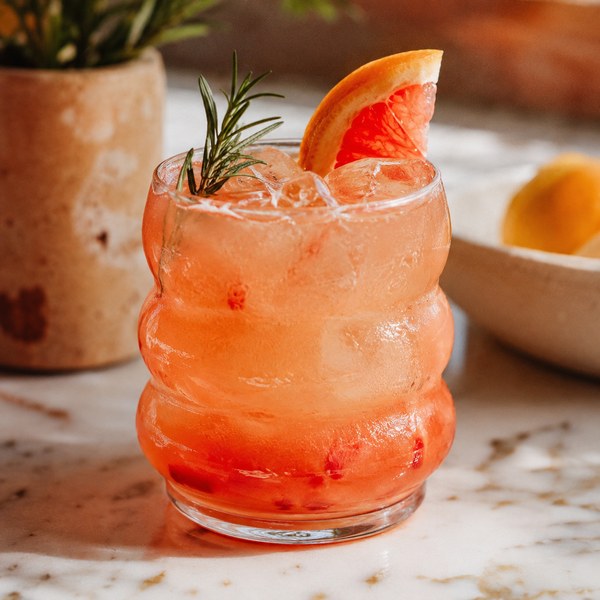
- Presentation is marketing: a signature drink served in distinctive drinkware gets photographed and shared for free. Guests do the advertising.
- Track everything through your POS. A promotion you can't measure is a discount, not a strategy.
| Strategy | Typical Cost | Effort | Best For | How You Measure It |
|---|---|---|---|---|
| Menu engineering & drink placement | $ (design time only) | Low | Every operation | Beverage attach rate, item mix in POS |
| Happy hour marketing | $ (margin trade-off) | Low–Medium | Bars, casual dining, hotels | Covers and beverage sales, 3–6 p.m. |
| Social media (organic) | $ (staff time) | Medium | Visually strong drink programs | Follower-to-visit redemptions, tagged posts |
| Email & SMS campaigns | $–$$ (platform fee) | Low | Operators with a guest list | Open rate, redemption codes |
| Loyalty & rewards | $$ (program cost) | Medium | High-frequency concepts | Repeat-visit rate, member spend |
| Staff-driven upselling | $ (training time) | Medium | Full-service, catering | Average check, beverage per cover |
| Signature drinks & presentation | $$ (drinkware, garnish) | Medium | Concepts chasing social reach | Signature-item sales, UGC volume |
| Local partnerships & events | $–$$ (product trade) | Medium–High | Neighborhood operators | Event covers, new-customer sign-ups |
What Makes a Food and Beverage Marketing Strategy Cost-Effective for a Beverage Program?
A marketing strategy is cost-effective for a beverage program when the incremental beverage profit it generates exceeds its total cost — money and labor — and when the result can be verified in your POS data. That definition matters because beverage margins do the heavy lifting: because drinks generally carry a lower cost percentage than food, a tactic that lifts beverage sales even modestly can outperform a much larger investment aimed at food covers.
The scale of the opportunity is real. The National Restaurant Association projected the U.S. restaurant and foodservice industry to reach $1.5 trillion in sales with 15.9 million employees in 2025, and the same report found operators expecting competitive pressure to intensify — meaning the operators who market smartest, not loudest, win share. (Current as of August 2026.)
Three tests separate genuinely cost-effective marketing from budget leaks:
- The ownership test. Does the tactic run on a channel you own (menu, email list, staff, signage, in-house presentation) or one you rent (paid ads, third-party platforms)? Owned channels compound; rented ones stop the moment you stop paying.
- The margin test. Does the promotion protect drink margin? A half-price well-drink happy hour that fills seats at 4 p.m. can still be profitable; a blanket 50%-off-everything promo usually isn't.
- The measurement test. Can your POS attribute the result — a promo code, a button, an item mix shift? If not, you're guessing.
Which Cost-Effective Marketing Strategies Deliver the Most for a Beverage Program?
The highest-return beverage program marketing tactics are menu engineering, happy hour promotion, organic social media, email and loyalty campaigns, staff-driven selling, and signature-drink presentation — in roughly that order of cost-efficiency. Here is how each works in a real operation.
1. Engineer the Drink Menu Like a Salesperson
Your menu is the one advertisement every single guest reads. Place your highest-margin signature drinks in the visual "sweet spots" — top-right of a two-panel menu, first and last positions in a list — and give them two-line descriptions with named ingredients ("Luxardo cherry," "house-made ginger syrup"), which consistently outsell generic listings. Box or highlight one featured cocktail or mocktail per season. Menu engineering costs nothing beyond design time, and item-mix reports in your POS will show the shift within weeks. The same logic applies across dayparts — the operators we supply who treat coffee and juice service as seriously as the bar see it pay off in the morning too, a topic we cover in crafting a breakfast menu to increase morning traffic.
2. Run Happy Hour Marketing That Protects Margin
Happy hour marketing works because it converts your emptiest hours into beverage revenue without discounting your peak. Structure it in three layers: a small set of reduced-price drinks built on lower-cost pours, one full-margin signature feature that staff push, and a food pairing that lifts the check. Then promote it where thirsty locals actually look — your Google Business Profile hours and posts, a pinned Instagram story highlight, a sidewalk sign, and a line in your email footer. One caution from our customer base: never let happy hour pricing bleed past its window in the POS. The discipline is where the margin lives.
3. Use Social Media Where Drinks Have an Unfair Advantage
Social media marketing is cost-effective for beverage programs because drinks are the most photogenic items in the house — color, glassware, garnish, and motion (pours, flames, smoke) stop the scroll in a way a plated entrée rarely does. The audience is there: half of U.S. adults use Instagram and 37% use TikTok, according to the Pew Research Center's Americans' Social Media Use 2025 report. (Current as of August 2026.) A sustainable organic cadence for a small operation is three posts a week: one signature drink beauty shot, one behind-the-bar process clip, one guest-facing moment. Encourage user-generated content by making one drink unmistakably yours — served in distinctive drinkware with a signature garnish — and reposting every tag. If you want to amplify further without an ad budget, micro-influencer trades (a comped tasting for a post) are the cheapest reach in hospitality; our guide to what influencer marketing for restaurants really involves covers how to structure those deals.
4. Send Email Campaigns to the List You Already Own
Email marketing is cost-effective because the audience is pre-qualified — everyone on your list has already bought from you. Across industries, email returns an average of $36 for every $1 spent, per Litmus — a higher return than any other channel. (Current as of August 2026.) For a beverage program, the plays are simple: a monthly "new on the menu" feature, a happy hour reminder timed for Thursday afternoons, a birthday drink offer, and an early invitation to tastings or release nights. Collect addresses at every touchpoint — Wi-Fi login, reservation, receipt QR code — and attach a unique redemption code to every offer so the POS tells you exactly what each send earned.
5. Build Loyalty Around Beverages, Not Just Meals
Loyalty programs are beverage-friendly because drinks are the natural repeat purchase — a guest may not order the braised short rib weekly, but a regular will buy coffee, beer, or a cocktail on every visit. Structure rewards so beverages are both the earn and the burn: points on every drink, a free signature beverage as the redemption. Free-drink rewards cost you the pour cost, not the menu price, which makes them one of the cheapest incentives you can offer relative to their perceived value.
6. Turn Your Staff into the Marketing Channel Chains Can't Copy
Staff-driven beverage selling is the most underrated cost-effective marketing strategy in foodservice. Our foodservice customers consistently tell us the same thing: a two-minute pre-shift tasting of the featured drink outperforms any table tent, because servers sell what they can describe. Give every server one scripted, natural suggestion per table stage — a specific aperitif at greeting, a wine pairing at order, a dessert cocktail or specialty coffee at clear — and track beverage-per-cover by server. Recognize the leaders. Training time is the entire cost.
7. Ride Beverage Trends While They're Cheap
Trend-driven menu additions are cost-effective marketing because the demand already exists — you're capturing search and social interest rather than creating it. The clearest current example is moderation: NIQ reports non-alcoholic beer, wine, and spirits surpassed $1 billion in sales in 2025 as moderation behaviors gained momentum. (Current as of August 2026.) A two-item mocktail feature served with full cocktail presentation — proper glassware, garnish, and menu placement — lets you charge cocktail-adjacent prices with no alcohol cost. For a deeper framework on converting trends into check growth, see our guide to leveraging beverage trends to increase customer spend.
8. Partner Locally Instead of Buying Reach
Local partnerships trade product for audience, which is why they suit small budgets. Co-host a tasting with a nearby brewery, roaster, or distillery: they bring their following, you supply the venue and service, and both sides collect email sign-ups. Offer your space for a community group's monthly meetup on your slowest night with a drink-minimum instead of a room fee. Cater a local business's happy hour at cost once — with dispensers of a signature batch drink and branded service — and you've sampled fifty potential regulars for the price of ingredients.
Outfitting a promotion? Batch cocktails, infused waters, and agua frescas for events and happy hours pour faster and look better from beverage dispensers designed for front-of-house display.
How Do You Choose the Right Beverage Marketing Tactics for Your Operation?
Choose beverage marketing tactics by matching them to your daypart gaps, your concept's strengths, and a budget rule that caps experimentation. Working through those three filters in order prevents the most common failure we see — operators copying a tactic that fits someone else's concept.
Start with your daypart gaps. Pull 90 days of POS data by hour. If 3–6 p.m. is dead, happy hour marketing is your first move. If weekday lunch beverage attach is weak, staff scripting and menu placement come first. If traffic is fine but checks are flat, signature drinks and upselling matter more than promotions.
Then match tactics to concept strengths. A craft cocktail bar should lead with social and presentation; a family restaurant gets more from loyalty and email; a caterer or hotel banquet operation wins on batch-beverage presentation and partnership events. There is no universal ranking — only fit.
Then apply a budget rule. The classic 70/20/10 allocation adapts well to beverage program marketing: put 70% of your budget and effort into proven owned channels (menu, email, staff training, happy hour), 20% into promising channels you're scaling (social content, loyalty), and 10% into experiments (a new platform, an event format, an influencer trade). Review the split quarterly against POS results and promote what earns it.
Finally, instrument everything. Every offer gets a code, every campaign gets a POS button or modifier, and every month gets a 30-minute review of beverage sales by daypart, item mix, and attach rate. Cost-effective marketing stays cost-effective only when measurement kills the losers early. For broader channel-by-channel guidance, our restaurant advertising and marketing library goes deeper on each.
How Does Presentation Turn Beverage Service Into Marketing?
Presentation is marketing because every drink you serve is seen by the table that ordered it and every table around it — and increasingly by everyone who follows those guests online. In 15+ years supplying 40,000+ foodservice operations, we've seen this pattern repeatedly: when an operator moves a signature drink from a standard pint glass into distinctive glassware with deliberate garnish, that item's sales climb and tagged social posts follow, with no ad spend at all. The drink becomes the ad.
Four presentation investments consistently earn their keep:
- Signature glassware. One unmistakable vessel — a copper mug, a coupe, a smoked-glass tumbler — reserved for your flagship drink makes it recognizable across the room and in photos. Guests order what they see.
- Batch and display service. Infused waters, sangria, cold brew, and agua frescas served from glass beverage dispensers at the host stand or buffet line advertise themselves to every guest who walks past — free sampling optics with zero media cost.
- Consistent back-of-bar execution. Reliable beverage equipment — shakers, strainers, pour spouts, mixing glasses — keeps speed and consistency high so the drink that gets photographed Tuesday looks identical Saturday. Inconsistency quietly un-sells your marketing.
- The finishing details. Garnish picks, stirrers, coasters, and eco-friendly straws from a well-stocked bench of beverage service supplies cost cents per drink and are precisely what separates a shareable presentation from a forgettable one.
Presentation also scales down the marketing funnel: the same signature-serve discipline applied to a catering gig or private event turns every function into a sampling event for your core concept. And if your program grows into bottled house syrups, cold brew, or canned cocktails to-go, branded packaging extends the strategy — our piece on empowering private labels to become dominant brands shows how operators take that step.
Frequently Asked Questions
What is a cost-effective marketing strategy?
A cost-effective marketing strategy is a promotional tactic whose measurable return exceeds its total cost in money and labor. For beverage programs, the most cost-effective strategies use owned channels — menu design, staff recommendations, email lists, happy hour promotion, and social media — because they require time and discipline rather than ad spend.
What is the 3-3-3 rule in marketing?
The 3-3-3 rule in marketing is a messaging framework that assumes you have about 3 seconds to catch attention, 3 sentences (or roughly 30 seconds) to hold interest, and 3 key points a reader will remember. For a beverage program, it means drink promotions should lead with one vivid hook — the drink's name and image — deliver the offer in a sentence, and never bury the call to action.
What are the 5 main marketing strategies?
The 5 main marketing strategies are commonly framed as the 5 P's: product, price, place, promotion, and people. Applied to food and beverage marketing strategies, product is your drink menu and presentation, price covers happy hour and bundle structures, place is your venue plus digital storefronts, promotion spans social, email, and events, and people means the trained staff who sell every table.
What is the 70/20/10 rule for marketing budget?
The 70/20/10 rule for marketing budgets allocates 70% to proven tactics, 20% to emerging tactics you're scaling, and 10% to experiments. A beverage program applying this rule would put 70% of effort into menu engineering, email, staff training, and happy hour; 20% into social content and loyalty; and 10% into tests like an influencer trade or a new event format.
What are some examples of cost-effective strategies?
Examples of cost-effective marketing strategies for a beverage program include happy hour promotions during slow dayparts, a signature drink served in distinctive glassware to drive social sharing, monthly email features with trackable redemption codes, beverage-focused loyalty rewards, pre-shift staff tastings that improve upselling, mocktail features that capture the moderation trend, and local partnership events that trade product for a new audience.
Conclusion: Market the Margin You Already Have
Cost-effective food and beverage marketing strategies come down to one principle: your beverage program already contains the margin, the visuals, and the repeat-purchase behavior that expensive campaigns try to manufacture. Engineer the menu, protect the happy hour math, feed the channels you own, train the people who sell, and serve every drink like it's going to be photographed — because it is. Start with one daypart gap, one measurable promotion, and one signature serve, and let the POS data tell you what to scale.
When you're ready to give your program the presentation layer it deserves, explore our beverage service supplies, front-of-house beverage dispensers, and professional beverage equipment — everything the drinks that market themselves are served with.