Corpse Reviver Cocktail Recipe
A Corpse Reviver No. 2 combines equal parts (¾ oz each) gin, Cointreau, Lillet Blanc, and fresh lemon juice, shaken with ice and strained into an absinthe-rinsed coupe or Nick & Nora glass. This 1930s Savoy Cocktail Book classic is the most-ordered of the Corpse Reviver "hair of the dog" family.
Guests rarely forget the first time a bartender rolls absinthe around a chilled coupe in front of them. This corpse reviver cocktail recipe guide gives you the classic Corpse Reviver No. 2 spec, the lesser-known No. 1 and No. 3 variations, and the glassware, batching, and buying guidance to run the drink profitably behind a commercial bar. In 15+ years supplying 40,000+ foodservice operations, we've watched the cocktail corpse reviver go from bartender in-joke to a reliable seasonal seller — especially every October, when its name alone earns a spot on Halloween menus.
TL;DR — The Corpse Reviver Family at a Glance
- Corpse Reviver No. 2 is the one guests order: equal parts gin, Cointreau, Lillet Blanc, and lemon juice with an absinthe rinse. It dates to Harry Craddock's 1930 Savoy Cocktail Book.
- Corpse Reviver No. 1 is a stirred-style brandy drink: 2 parts cognac, 1 part apple brandy (Calvados), 1 part sweet vermouth.
- Corpse Reviver No. 3 most often refers to a later Savoy variation with Fernet-Branca, brandy, and white crème de menthe (circa 1948).
- Serve straight up in a 7–8 oz Nick & Nora or coupe; the absinthe rinse is the signature move.
| Version | Base | Character | Best Use on a Menu |
|---|---|---|---|
| No. 1 | Cognac + Calvados | Boozy, stirred-style, vermouth-rounded | Fall/winter menus, brandy programs |
| No. 2 | Gin | Bright, citrusy, anise-kissed | Year-round classic; Halloween feature |
| No. 3 | Brandy + Fernet-Branca | Bitter, mentholated, bracing | Amaro-forward lists, digestif slot |
What Is a Corpse Reviver Cocktail?
A Corpse Reviver cocktail is a member of a family of pre-Prohibition "hair of the dog" drinks, named for their tongue-in-cheek power to revive even a dead person after a long night. The term appears in print as early as an 1861 issue of Punch, and an 1871 recipe in the Gentleman's Table Guide mixed brandy, maraschino, and Boker's bitters. The versions bartenders make today were codified by Harry Craddock at the American Bar at London's Savoy Hotel in The Savoy Cocktail Book (1930), which lists the No. 1 and No. 2 — history documented in detail on Wikipedia's corpse reviver entry (current as of July 2026).
Craddock had a sense of humor about his creations. His note on the No. 1 reads "to be taken before 11AM, or whenever steam or energy is needed," and his warning on the No. 2 is one of the most quoted lines in cocktail literature: "Four of these taken in swift succession will unrevive the corpse again."
Of the corpse reviver cocktails still in circulation, the No. 2 dominates modern menus — it also earns a mention in our guide to the 10 most popular cocktails, where classics with strong stories consistently outsell trend-chasing builds.
Corpse Reviver No. 2 Ingredients
The corpse reviver 2 cocktail recipe uses five ingredients in a strict equal-parts build, plus an absinthe accent:
| Ingredient | Amount | Notes for Operators |
|---|---|---|
| London dry gin | ¾ oz (22 ml) | A juniper-forward gin holds up against the citrus and Lillet. |
| Cointreau (or quality triple sec) | ¾ oz (22 ml) | The Savoy spec called for curaçao; Cointreau is today's standard. |
| Lillet Blanc | ¾ oz (22 ml) | The original Kina Lillet was discontinued; many bars use Cocchi Americano as a closer, more bitter match. |
| Fresh lemon juice | ¾ oz (22 ml) | Fresh-squeezed only — bottled juice flattens the drink. |
| Absinthe | 1 dash / rinse | Rinse the glass or add a dash to the shaker. A little goes a long way. |
| Orange twist or brandied cherry | 1 | Garnish. An expressed orange twist is classic. |
Why equal parts matter: the corpse reviver drink recipe is self-balancing. The gin brings backbone, Cointreau brings sweetness, lemon brings acid, and Lillet bridges them with light aromatized-wine bitterness. Change one pour and the whole structure tilts — which is exactly why jiggered accuracy (not free-pouring) is non-negotiable for this drink in a high-volume bar.
How Do You Make a Corpse Reviver No. 2?
To make a Corpse Reviver No. 2, rinse a chilled glass with absinthe, shake equal parts gin, Cointreau, Lillet Blanc, and lemon juice with ice, then fine-strain into the glass. Full steps:
- Chill the glass. Place a 7–8 oz Nick & Nora or coupe in the freezer, or fill it with ice water while you build the drink.
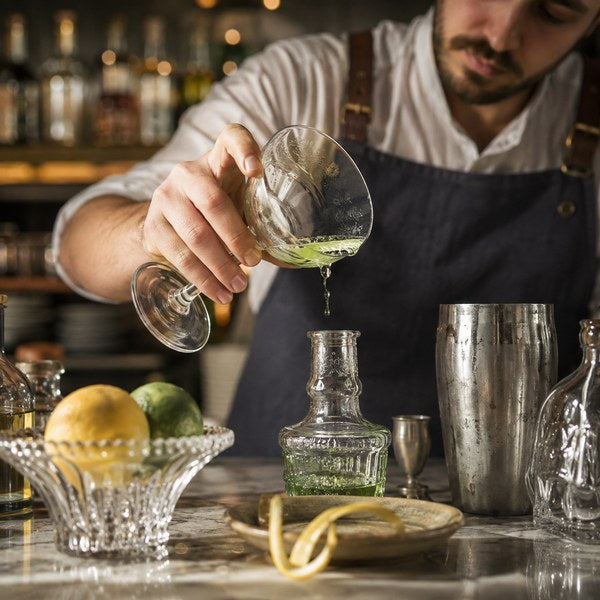
- Rinse with absinthe. Empty the glass, add a dash (about ⅛ oz) of absinthe, and roll it around to coat the interior. Discard the excess — or leave it in for a more assertive anise note.
- Build the shake. In a shaker tin, combine ¾ oz gin, ¾ oz Cointreau, ¾ oz Lillet Blanc, and ¾ oz fresh lemon juice.
- Shake hard with ice for 10–12 seconds, until the tin frosts. This drink wants real dilution and a bright chill.
- Double strain into the absinthe-rinsed glass to catch ice shards and lemon pulp.
- Garnish with an expressed orange twist or a brandied cherry, and serve immediately.
Prep time: 5 minutes. Yield: one 3.5–4 oz cocktail after dilution. ABV: roughly 20–23% as served.
Corpse Reviver No. 1 vs No. 2 vs No. 3 — What's the Difference?
The difference is the base spirit and intent: the Corpse Reviver No. 1 is a stronger, stirred-style cognac and Calvados drink; the No. 2 is the bright, gin-and-citrus crowd-pleaser; and the No. 3 usually refers to a later, bitter Fernet-Branca variation from the Savoy (circa 1948, often credited to Johnny Johnson).
| Corpse Reviver No. 1 | Corpse Reviver No. 2 | Corpse Reviver No. 3 | |
|---|---|---|---|
| First appeared | Savoy Cocktail Book, 1930 | Savoy Cocktail Book, 1930 | Savoy American Bar, circa 1948 |
| Spec | 2 parts cognac, 1 part apple brandy/Calvados, 1 part sweet vermouth | Equal parts gin, Cointreau, Lillet Blanc, lemon juice + absinthe rinse | Equal parts brandy, Fernet-Branca, white crème de menthe |
| Method | Shake (per Savoy) and strain; many modern bars stir it | Shake and double strain | Shake and strain |
| Flavor profile | Rich, fruity, spirit-forward | Bright, tart, floral with anise finish | Bitter, minty, medicinal — a true morning-after drink |
| Glass | Coupe or Nick & Nora | Coupe or Nick & Nora | Coupe or small rocks glass |
Two footnotes worth knowing before a guest quizzes your bar team: Trader Vic's guides made the No. 2 with Swedish punsch instead of Kina Lillet — a build now usually labeled the No. 2A — and the Fernet version is sometimes numbered No. 4 instead of No. 3. The numbering was never standardized, which is half the fun of corpse reviver recipes.
How Should Bars Serve a Corpse Reviver?
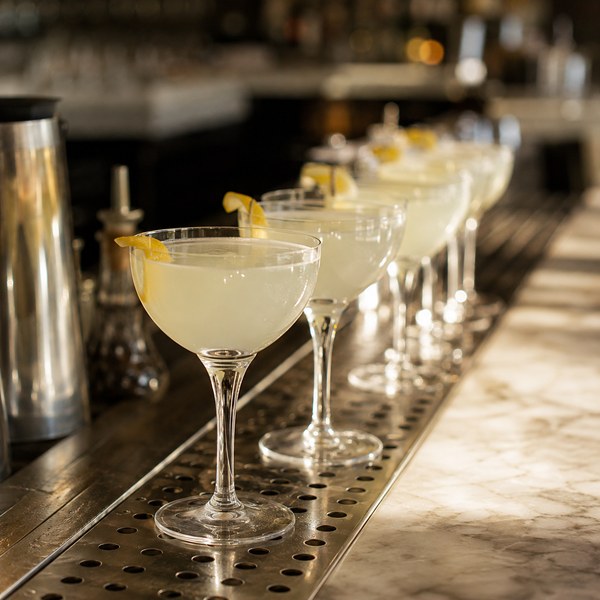
Bars should serve a Corpse Reviver No. 2 straight up, well chilled, in a 7–8 oz stemmed glass — and treat the absinthe rinse as theater. Presentation is a measurable revenue lever: 76% of consumers say they value heightened, memorable drinking experiences, according to the 2026 Bacardi Cocktail Trends Report (current as of July 2026), which flags dramatic glassware and showpiece serves as a defining bar trend.
Practical service notes from the floor:
- Glassware: A Nick & Nora glass is ideal — its inward-curved bowl holds aroma, resists sloshing on trays, and its 7–8 oz capacity fits the drink's post-dilution volume with proper headspace. The Vetri 8 oz Nick and Nora glass gives the pour room for a generous rinse, while the Vetri 7 oz Nick and Nora glass frames a tighter classic spec.
- Keep glasses frozen. A room-temperature coupe kills a straight-up drink in under five minutes. Dedicate freezer or ice-well space during service.
- Batching for volume: the equal-parts build makes the corpse reviver cocktail one of the easiest classics to batch. Pre-mix the four main ingredients in equal volumes (lemon juice added day-of), refrigerate, then shake 3 oz of batch per serve with ice and strain into rinsed glasses. One liter of batch yields roughly 11 cocktails and cuts service time to under 30 seconds a drink.
- Absinthe control: use an atomizer or dasher bottle for the rinse. Free-pouring absinthe is the #1 way we see this drink ruined — and over-pouring a $40+ bottle erodes margin fast.
How Do You Choose Glassware and Tools for a Corpse Reviver Program?
Choose glassware by capacity, durability, and stackable storage — then match your tools to the drink's precision demands. The stakes are real: the restaurant industry is projected to reach $1.5 trillion in sales in 2025 with competition intensifying, per the National Restaurant Association's 2025 State of the Restaurant Industry (current as of July 2026), and a polished classic-cocktail serve is one of the cheapest ways to differentiate.
- Capacity: 7 oz for a strict classic spec; 8 oz if you batch, up-spec to 1 oz pours, or want more headspace for trays.
- Durability: stemmed glasses take the most breakage in a commercial bar. Look for reinforced stem joints and order 10–15% overage per season.
- Precision tools: an equal-parts drink lives or dies on measurement. Stock double-sided jiggers with ¾ oz markings and weighted cocktail shakers at every well.
- The trend context: guest expectations have moved a long way since our top 7 cocktail trends for 2020 roundup — revived classics with a story now anchor most serious lists.
Why the Corpse Reviver Earns Its Menu Slot (The Foodservice Angle)
The Corpse Reviver No. 2 is a high-margin drink dressed as a premium one. Its ingredient cost runs $2.50–$3.50 per serve at typical wholesale pricing, yet the absinthe-rinse ritual and Savoy backstory justify a $15–$17 menu price in most metro markets. The demand backdrop supports it: CGA by NIQ's Consumer Pulse found 80% of consumers had visited a bar or restaurant to eat in the past month and 46% had gone out to drink, with US on-premise drink occasions ticking upward, per NIQ's 2025 global on-premise analysis (current as of July 2026).
Our foodservice customers consistently tell us the same thing about classic cocktails: the drink sells the second time because of the liquid, but it sells the first time because of the glass and the story. Operations that pair the corpse reviver with proper stemware, a tableside absinthe rinse, and a one-line menu blurb about Harry Craddock's "unrevive the corpse" warning report noticeably better attachment than those pouring it into a generic martini glass. That's also why we stock deep inventories of Nick & Nora and coupe styles in our cocktail glasses collection and full bartending supplies — the presentation layer is the moat around a classic-cocktail program.
Seasonal play: the name does free marketing every October. Feature the corpse reviver on Halloween menus with dry-ice service or a blood-orange twist variation, and cross-sell it alongside your other classics — see where it fits among the 10 most popular cocktails guests actually order.
Frequently Asked Questions
What is the difference between Corpse Reviver #1 and #2?
The Corpse Reviver No. 1 is a brandy-based drink — 2 parts cognac, 1 part apple brandy or Calvados, 1 part sweet vermouth — that drinks rich and spirit-forward. The Corpse Reviver No. 2 is gin-based, built from equal parts gin, Cointreau, Lillet Blanc, and lemon juice with an absinthe rinse, and tastes bright and citrusy. Both appear in the 1930 Savoy Cocktail Book.
What is a Corpse Reviver made of?
The standard Corpse Reviver (the No. 2) is made of gin, Cointreau, Lillet Blanc, fresh lemon juice, and a dash or rinse of absinthe, garnished with an orange twist. The No. 1 variation is made of cognac, apple brandy, and sweet vermouth.
What is a Corpse Reviver #2?
A Corpse Reviver No. 2 is the most popular member of the corpse reviver family: an equal-parts gin sour from Harry Craddock's 1930 Savoy Cocktail Book, served straight up in an absinthe-rinsed coupe or Nick & Nora glass. It was originally conceived as a morning-after "hair of the dog" drink.
What is the ratio for Corpse Reviver No 2?
The ratio is 1:1:1:1 — equal parts (¾ oz each) gin, Cointreau, Lillet Blanc, and fresh lemon juice, plus a dash of absinthe as a glass rinse. The equal-parts ratio makes the drink easy to scale and batch for high-volume service.
What is the original recipe for Corpse Reviver No 2?
The original Savoy Cocktail Book recipe called for equal parts dry gin, lemon juice, curaçao (Cointreau), and Kina Lillet, with a dash of absinthe. Kina Lillet was discontinued, so modern bars substitute Lillet Blanc — or Cocchi Americano, which better matches the original's quinine bitterness.
Conclusion: Revive Your Bar Program
This corpse reviver cocktail recipe rewards precision: equal parts, a hard shake, a frozen glass, and a disciplined absinthe rinse. Master the No. 2, keep the No. 1 and No. 3 in your back pocket for curious guests, and let the Savoy backstory do your menu marketing — especially in October. When you're ready to build out the presentation layer, outfit your bar with proper stemware from our cocktail glasses collection and precision tools from our bartending supplies — because a 90-year-old classic deserves better than a generic glass. Building drinks at home or from a rolling setup instead? Our guide on how to stock a bar cart covers the essentials.