10 Most Popular Cocktails
The 10 most popular cocktails are the Margarita, Old Fashioned, Espresso Martini, Mojito, Martini, Negroni, Moscow Mule, Whiskey Sour, Daiquiri, and Piña Colada. This guide covers each recipe, the correct glass for every drink, plus batching, food pairings, and profitability tips for bars and restaurants.
Ask ten bartenders to name the 10 most popular cocktails and you will hear the same names again and again — because the data backs them up. According to NIQ's 2025 on-premise analysis, mixed drinks account for 34% of total spirits value in U.S. bars and restaurants, and cocktails deliver the highest revenue per serve of any drink category at an average of $13.75 — nearly double the price of a beer. In 15+ years supplying 40,000+ foodservice operations, we have watched these ten drinks anchor nearly every successful bar program we serve. Below is the full ranked list, followed by everything a bar or restaurant operator needs to run it profitably: glassware sizes, batching methods, food pairings, and to-go programs.
TL;DR: The Margarita is America's most-ordered cocktail, the Old Fashioned is the most consistent performer across every sales metric, and the Espresso Martini is the fastest riser — up 164% on U.S. menus over four years. Serve each drink in its proper glass, batch the big sellers for volume nights, and pair them with food to lift check averages.
| Rank | Cocktail | Base Spirit | Correct Glass | Typical Glass Size |
|---|---|---|---|---|
| 1 | Margarita | Tequila | Margarita or rocks glass | 10–12 oz |
| 2 | Old Fashioned | Bourbon or rye | Rocks (old fashioned) glass | 8–10 oz |
| 3 | Espresso Martini | Vodka | Martini glass or coupe | 6–8 oz |
| 4 | Mojito | White rum | Highball glass | 10–12 oz |
| 5 | Martini | Gin or vodka | Martini glass | 6–8 oz |
| 6 | Negroni | Gin | Rocks glass | 8–10 oz |
| 7 | Moscow Mule | Vodka | Copper mug | 12–16 oz |
| 8 | Whiskey Sour | Whiskey | Rocks glass or coupe | 8–10 oz |
| 9 | Daiquiri | White rum | Coupe | 5–7 oz |
| 10 | Piña Colada | Rum | Hurricane glass | 12–16 oz |
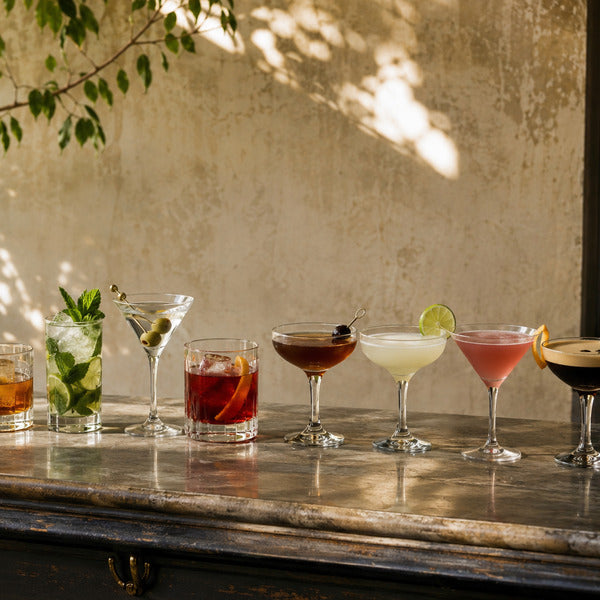
The 10 Most Popular Cocktails
These ten drinks dominate cocktail sales in the United States. Each entry below includes the standard recipe and the glass that presents it best — because our foodservice customers consistently tell us that serving each classic in its proper glass measurably lifts perceived drink value and check averages.
1. Margarita
The Margarita is the most popular cocktail in America. NIQ's 2025 on-premise research calls it "the undisputed champion across all age groups," with 55% of over-55 guests choosing it when drinking out — and tequila is now the preferred base spirit for 46% of cocktail drinkers.
- Recipe: 2 oz blanco tequila, 1 oz fresh lime juice, ¾ oz orange liqueur. Shake with ice, strain over fresh ice, garnish with a lime wheel and optional salt rim.
- Glass: Margarita glass or double rocks glass, 10–12 oz.
2. Old Fashioned
The Old Fashioned is the most consistent performer in the cocktail category. It rarely tops any single sales metric, but NIQ data shows it performs strongly across volume, check value, and price per serve — the reliable anchor of any menu.
- Recipe: 2 oz bourbon or rye, 1 sugar cube (or ¼ oz simple syrup), 2–3 dashes Angostura bitters. Stir with ice in the glass, garnish with an orange peel.
- Glass: Rocks (old fashioned) glass, 8–10 oz, over one large cube.
3. Espresso Martini
The Espresso Martini is the fastest-growing cocktail on this list. Datassential reports the drink appears on 5% of U.S. menus, up 164% over four years, as covered by Nation's Restaurant News. Serving it in a double-wall glass, such as our Forma 10 oz double-wall beverage glass, keeps the drink cold without diluting the crema.
- Recipe: 2 oz vodka, 1 oz fresh espresso, ½ oz coffee liqueur, ¼ oz simple syrup. Shake hard with ice, double-strain, garnish with three coffee beans.
- Glass: Martini glass or coupe, 6–8 oz.
4. Mojito
The Mojito is the definitive summer cocktail and a fixture on any top 10 cocktails list. Its mint-lime-soda build makes it one of the 10 best summer cocktails for patios and pool bars.
- Recipe: 2 oz white rum, 1 oz fresh lime juice, 2 tsp sugar, 8 mint leaves, soda water. Gently muddle mint with sugar and lime, add rum and ice, top with soda.
- Glass: Highball glass, 10–12 oz.
5. Martini
The Martini is the icon of the cocktail world and the drink that gave its glass a name. Gin is traditional; vodka is the more common call in American bars.
- Recipe: 2½ oz gin (or vodka), ½ oz dry vermouth. Stir with ice until well chilled, strain up, garnish with a lemon twist or olives.
- Glass: Martini glass, 6–8 oz.
6. Negroni
The Negroni is the bartender's favorite and one of the most profitable drinks you can pour. NIQ's on-premise data shows the Negroni and Manhattan command the highest prices per serve of any classic cocktails — nearly double a Sex on the Beach.
- Recipe: 1 oz gin, 1 oz Campari, 1 oz sweet vermouth. Stir with ice, strain over a large cube, garnish with an orange peel.
- Glass: Rocks glass, 8–10 oz.
7. Moscow Mule
The Moscow Mule is the drink guests order with their eyes. The signature copper mug keeps the ginger beer icy and makes the drink instantly recognizable across the room — a free marketing asset on every table.
- Recipe: 2 oz vodka, ½ oz fresh lime juice, 4–6 oz ginger beer. Build over ice, stir briefly, garnish with a lime wedge and mint sprig.
- Glass: Copper mug, 12–16 oz.
8. Whiskey Sour
The Whiskey Sour is the template for the entire sour family. Master its spirit-citrus-sweet ratio and you can build a Daiquiri, Margarita, or Gimlet without a recipe card.
- Recipe: 2 oz bourbon, ¾ oz fresh lemon juice, ¾ oz simple syrup, optional egg white. Shake with ice (dry shake first if using egg white), strain over fresh ice or serve up.
- Glass: Rocks glass or coupe, 8–10 oz.
9. Daiquiri
The Daiquiri is the purest test of a bartender's technique: three ingredients, no place to hide. NIQ's 2025 research names it a favorite among under-35 guests, alongside the Piña Colada and Mimosa.
- Recipe: 2 oz white rum, 1 oz fresh lime juice, ¾ oz simple syrup. Shake hard with ice, double-strain, serve up with a lime wheel.
- Glass: Coupe, 5–7 oz.
10. Piña Colada
The Piña Colada is the highest-margin frozen drink on most menus. Coconut cream and pineapple juice cost pennies per serving relative to the menu price, and the drink batches beautifully for volume service.
- Recipe: 2 oz rum, 1½ oz coconut cream, 1½ oz pineapple juice. Blend with ice until smooth, garnish with a pineapple wedge and cherry on a reusable cocktail pick.
- Glass: Hurricane glass, 12–16 oz.
What Makes a Cocktail One of the Most Popular?
A cocktail becomes one of the most popular when it combines a recognizable name, a balanced flavor profile, and a recipe bartenders can execute consistently at speed. NIQ's 2025 consumer research found taste is the top driver of cocktail choice for 71% of drinkers, while nearly half weigh quality and over a quarter are swayed by the specific brands listed on the menu.
Popularity also compounds through visibility. Guests order what they see: a copper Moscow Mule mug or a frothy Espresso Martini crossing the dining room sells the next round without a word. That is why proper glassware and garnish presentation — a polished coupe, a fine strainer from our cocktail strainers collection for a crystal-clear pour — is a revenue decision, not a styling one.
Premiumization keeps the trend moving upward. IWSR data shows that volume and value in the super-premium-and-above spirits tier (bottles above $30.50 retail in the U.S.) have grown persistently for the last 20 years, pausing only briefly in 2009 and 2020. Guests are drinking less but better — and a well-made classic in the right glass is exactly what "better" looks like. Revival-era classics ride the same wave — our corpse reviver cocktail recipe is a pre-Prohibition original that premium menus still love.
Which Glass Should You Use for Each Cocktail?
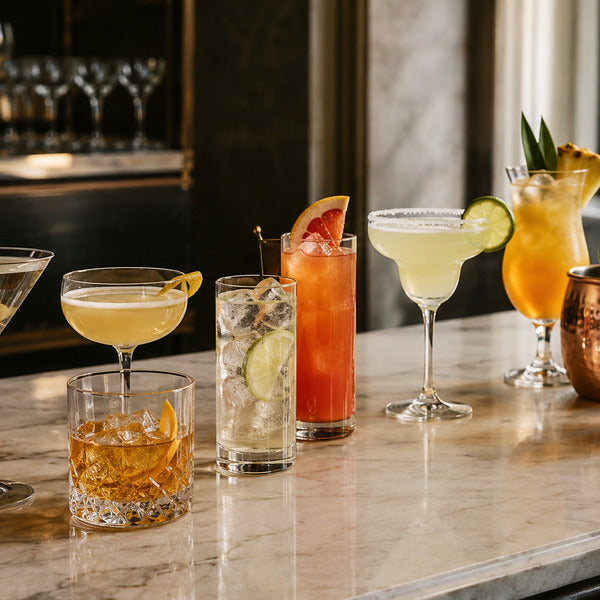
The right cocktail glass is the one that matches the drink's serving style: stemmed glasses (martini, coupe) for drinks served "up" without ice, rocks glasses for spirit-forward drinks over ice, and tall highball or hurricane glasses for long drinks with mixers. Choosing correctly controls portion cost, temperature, and presentation at the same time.
How Many Ounces Are in a Martini Glass?
A standard martini glass holds 6 to 8 ounces, with oversized designs reaching 10 to 12 ounces. The classic mid-century martini glass held just 4 to 5 ounces — a useful benchmark, because a stirred martini with dilution measures roughly 4 ounces of liquid. Pouring that serve into an oversized 10-ounce bowl makes the drink look undersized, while a 6–8 oz glass presents it perfectly. For high-volume or outdoor service, aluminum and other metal martini glasses offer the same silhouette with far better durability than glass stemware — a practical swap for pool decks, patios, and catered events.
Standard Cocktail Glass Sizes at a Glance
| Glass Type | Standard Size | Best For |
|---|---|---|
| Martini glass | 6–8 oz | Martini, Espresso Martini, Cosmopolitan |
| Coupe | 5–7 oz | Daiquiri, Whiskey Sour (up), champagne cocktails |
| Rocks / old fashioned | 8–10 oz | Old Fashioned, Negroni, Whiskey Sour |
| Double rocks | 12–14 oz | Margarita on the rocks, oversized pours |
| Highball | 10–12 oz | Mojito, Tom Collins, spirit-and-soda drinks |
| Collins | 12–14 oz | Taller long drinks with more mixer |
| Hurricane | 12–16 oz | Piña Colada, frozen and tiki drinks |
| Copper mug | 12–16 oz | Moscow Mule and mule variations |
| Margarita glass | 10–12 oz | Margaritas, frozen fruit cocktails |
How Do You Select the Perfect Cocktail Glass?
Select a cocktail glass by answering three questions: Is the drink served up or over ice? How much total volume does the recipe yield after dilution? And what will the glass endure in your operation? Drinks served up need a stem so hands never warm the liquid. Drinks over ice need thick-bottomed rocks or highball glasses that survive muddling and commercial dishwashing. If you are asking "what glassware should I use to serve this drink," the table above answers it for the ten classics; when in doubt, size the glass so the finished drink fills 80–90% of its capacity. Browse our full glassware collection to match every drink on your menu.
How Do You Batch Cocktails for a Party or Event?
Batching cocktails means pre-mixing the shelf-stable ingredients — spirits, liqueurs, syrups, and bitters — in bulk before service, then adding citrus, dilution, and garnish at serve time. Batching is how bars survive Friday nights and how caterers pour 200 consistent drinks in an hour.
How Do You Pre-Batch Cocktails?
To pre-batch cocktails, multiply your recipe by the number of servings, combine all spirits and syrups in a sealed container, and refrigerate. Follow these rules:
- Scale by ratio, not by taste. A Negroni is 1:1:1 at any volume; measure precisely and the hundredth pour tastes like the first.
- Hold the citrus. Add fresh lime or lemon juice the day of service — never earlier.
- Plan dilution. Shaking or stirring adds roughly 20–25% water. For batches served straight from the bottle or pitcher, add that water up front and chill thoroughly.
- Label everything. Batch name, date mixed, and use-by date on every container.
How Long Do Batched Cocktails Last?
Batched cocktails made only from spirits, liqueurs, and bitters last one to three months refrigerated, because high-proof alcohol preserves the mix. Once you add fresh citrus juice, the window drops to 24–48 hours, and dairy or egg white batches must be used the same day. Spirit-only batches like Negronis, Manhattans, and Old Fashioneds are therefore the safest candidates for pre-bottling; sours and Margaritas should be batched as a spirit base with citrus added at service.
Pitcher, Bottled, and Seasonal Batch Cocktails
Bottled cocktails work for sharing and group service because each guest pours a perfectly proportioned, pre-diluted drink — the format behind bottled-cocktail programs at bars and the pitcher on a holiday table. For Easter and spring brunches, a pitcher of Mimosa punch or a lightly diluted Paloma batch serves a table in one trip. The same logic drives seasonal top-10 lists: the most popular summer cocktails to batch are the Margarita, Mojito, Daiquiri, Paloma, and sangria, while holiday crowd-pleasers lean toward batched Old Fashioneds, cranberry Moscow Mules, spiced punches, and Espresso Martinis for dessert. Batch the base, chill it, and your holiday service becomes a pour-and-garnish operation.
Are Cocktail Bars Profitable?
Yes — cocktail bars are among the most profitable formats in foodservice when managed well. Beverage alcohol typically carries a 75–80% gross margin, meaning a drink with $2.75 in ingredient cost sells for $13–14. NIQ's BeverageTrak data shows cocktails command the highest revenue per serve of any on-premise drink category at an average of $13.75, and mixed drinks generate over $14,000 in average outlet revenue over a 12-week period.
The most profitable cocktails share three traits: low-cost ingredients (rum, sugar, citrus), fast build times, and premium perceived value. The Piña Colada and Daiquiri excel on ingredient cost; the Negroni and Manhattan command the highest prices per serve; the Old Fashioned performs consistently across every metric. Three levers move margins most:
- Pour cost discipline. Jiggering every pour keeps liquor cost near the 18–22% target; free-pouring quietly adds 10–15% waste.
- Menu engineering. List high-margin drinks first and describe them with named premium brands — NIQ found over a quarter of guests are brand-sensitive, and two-thirds read the menu before ordering.
- Staff recommendations. NIQ's 2025 Global Bartender Report found 79% of bartenders suggest specific drinks on every shift, making trained staff one of the strongest upselling tools in the building.
How Do You Pair Cocktails With Food?
Pair cocktails with food the same way you pair wine: match intensity, then either complement or contrast flavors. A delicate drink disappears next to a rich dish, and a boozy stirred cocktail steamrolls a light appetizer. Acidic, effervescent, and bitter drinks cut through fat; sweet and fruity drinks tame spice.
Which Aperitif Drinks Pair Well With Light Appetizers?
The best aperitif drinks for light appetizers are low-alcohol, dry, and bitter or bubbly: the Aperol Spritz, Americano, dry Martini, and Champagne cocktails. Bitterness and carbonation stimulate the appetite — the entire purpose of the aperitivo hour. Pair a spritz with antipasti, olives, and cured meats; a dry Martini with oysters or smoked salmon; an Americano with bruschetta and light summer dishes. Save cream- or dessert-style drinks for after the meal.
Classic Cocktail and Cuisine Pairing Guide
| Cocktail | Pairs Best With | Why It Works |
|---|---|---|
| Margarita | Tacos, ceviche, grilled shrimp | Lime acidity cuts richness; salt rim echoes seasoning |
| Old Fashioned | Steak, BBQ ribs, aged cheddar | Whiskey's caramel notes match char and smoke |
| Espresso Martini | Chocolate desserts, tiramisu | Coffee bitterness balances sweetness |
| Mojito | Cuban sandwiches, ceviche, jerk chicken | Mint and lime refresh against spice and fat |
| Martini | Oysters, caviar, smoked salmon | Dry, briny profile mirrors delicate seafood |
| Negroni | Charcuterie, pizza, hard cheeses | Bitterness cleanses the palate between rich bites |
| Moscow Mule | Sushi, Thai noodles, spicy wings | Ginger heat complements Asian spice |
| Whiskey Sour | Fried chicken, pork belly, burgers | Lemon acidity slices through fried richness |
| Daiquiri | Fish tacos, grilled white fish, fresh fruit | Clean rum-lime profile keeps light dishes bright |
| Piña Colada | Coconut shrimp, jerk chicken, tropical desserts | Sweetness cools spice; coconut echoes the dish |
What Should You Serve With Cocktails?
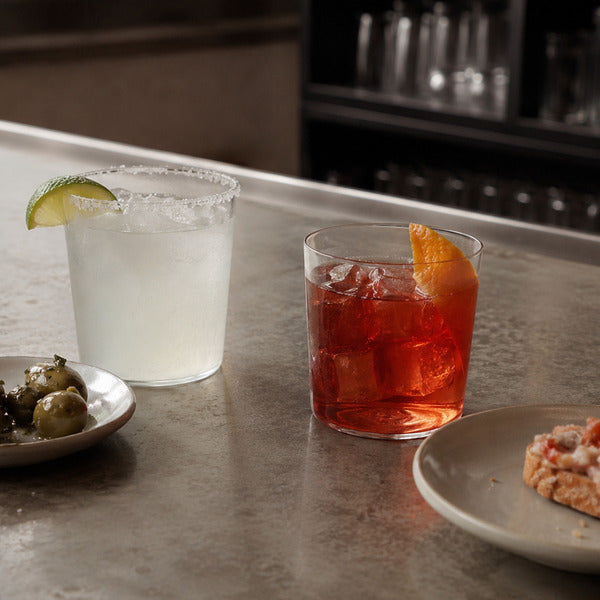
Serve salty, fatty, and acidic small plates with cocktails: olives, nuts, charcuterie, fried appetizers, sliders, and raw-bar items. Salt and fat make guests thirsty and flatter the next sip, which is why the pairing works commercially as well as gastronomically — an appetizer course alongside a second cocktail round is one of the simplest check-average lifts available. Across full meal courses, sequence drinks from light to strong: a spritz or Daiquiri with starters, a Margarita or Mojito with mains, and an Espresso Martini or Old Fashioned with dessert.
What Goes Into a DIY Cocktail Kit or To-Go Cocktail Program?
A DIY cocktail kit contains pre-measured spirits (where law allows), batched mixers or syrups, garnishes, instructions, and serviceware for two to six drinks. To-go cocktail programs took hold during the pandemic and remain legal in many U.S. states, giving bars and restaurants a packaged-beverage revenue stream that travels. Stocking drinks service at home or on a rolling setup instead? See our guide on how to stock a bar cart.
The formats that work:
- Cocktail bucket kits — an ice bucket packed with a batched base, mixers, garnish, and cups; built for backyard parties and beach rentals.
- Cocktail bags to go — sealed single-serve pouches with a straw, the fastest-moving to-go format for walk-up windows and festivals.
- Boxed craft kits — premium presentation boxes with mini bottles, house syrup, dehydrated garnish, and recipe cards; strong gift and e-commerce sellers.
- Virtual happy hour kits — shipped or picked-up kits with everything a remote team needs to build the same drink together on a video call; a durable corporate-events product.
Presentation and transport hardware decide whether these programs feel premium or improvised. Sealed tamper-evident lids, sturdy cups, and organized carriers — like our Bev Tek clear serving tray for 5 oz cocktail glasses, which holds pre-poured drinks steady for catering and event service — keep drinks upright and portions consistent from bar to doorstep. Always check state and local law before launching any off-premise alcohol program.
How Restaurantware Supports Your Cocktail Program
Restaurantware supplies the glassware, bar tools, and serviceware behind cocktail programs at more than 40,000 foodservice operations. In 15+ years of supplying bars, hotels, and caterers, the reorder pattern is unmistakable: as cocktail menus expand, operators come back first for coupes and rocks glasses, then shakers and strainers, then garnish picks and to-go serviceware — the exact sequence this guide follows.
- Cocktail glasses — martini glasses, coupes, and specialty stemware for every drink on the top-10 list.
- Cocktail shakers — Boston and cobbler shakers built for high-volume service.
- Cocktail strainers — Hawthorne, julep, and fine-mesh strainers for a polished, sediment-free pour.
- Reusable cocktail picks — garnish picks that elevate presentation and survive commercial washing.
Frequently Asked Questions
What are the 10 classic cocktails?
The 10 classic cocktails are the Margarita, Old Fashioned, Martini, Negroni, Mojito, Daiquiri, Whiskey Sour, Manhattan, Moscow Mule, and Piña Colada. These drinks appear on more menus than any others because each is built on a simple, balanced formula bartenders can reproduce anywhere in the world.
What are the 12 classic cocktails?
The 12 classic cocktails add the Manhattan and Gin & Tonic (or Tom Collins, by some counts) to the ten above. Cocktail historians often trace the "12 classics" framing to the foundational drinks of pre-Prohibition bartending guides: sours, old fashioneds, martinis, and highballs in their canonical forms.
What are the top 20 cocktails?
The top 20 cocktails extend this list with the Manhattan, Aperol Spritz, Cosmopolitan, Long Island Iced Tea, Mai Tai, Paloma, Gin & Tonic, Bloody Mary, Mimosa, and Sex on the Beach. Rankings shift by season and region, but these twenty account for the overwhelming majority of U.S. on-premise cocktail orders.
What is the best cocktail for a diabetic?
The best cocktail options for someone managing diabetes are low-sugar builds: a vodka soda with fresh lime, a dry Martini, or a skinny Margarita made with fresh lime and no syrup or agave. Avoid frozen drinks, cream liqueurs, and juice-heavy recipes, and consult a healthcare provider about alcohol and blood-sugar management before drinking.
What is the #1 cocktail in the world?
The Margarita is the #1 cocktail in the United States by sales volume, per NIQ on-premise data, while global bartender polls frequently crown the Old Fashioned or Negroni as the most-ordered classics worldwide. By any measure, those three sit at the top.
What are the top 20 most popular cocktails?
The top 20 most popular cocktails are the ten in this guide plus the Manhattan, Aperol Spritz, Cosmopolitan, Paloma, Mai Tai, Long Island Iced Tea, Gin & Tonic, Bloody Mary, Mimosa, and Tom Collins.
What are the big 6 cocktails?
The "big 6" cocktails, a framework popularized by bartender Toby Cecchini, are the Old Fashioned, Martini, Daiquiri, Sidecar, Whiskey Highball, and Flip. Each represents a family template — master the six and you can derive hundreds of variations by swapping spirits and modifiers.
Conclusion
The 10 most popular cocktails — from the Margarita to the Piña Colada — are popular for a reason: they balance flavor, speed, and margin better than anything else on the menu. Serve each in its proper glass, batch intelligently for volume, pair them with food to grow checks, and the cocktail program becomes the most profitable square footage in the house.
Ready to outfit your bar? Shop our full cocktail glasses collection and complete glassware lineup to serve every one of these ten classics the way it was meant to be served.