How to Reduce Food Waste in Commercial Kitchens
To reduce food waste in a commercial kitchen, track waste with regular audits, forecast and portion accurately, store food FIFO with dated labels, repurpose trim into stocks and specials, donate surplus, and compost the rest. Most restaurant food waste is divertable through prevention, donation, and composting. This hub guide consolidates our full food-waste playbook — tracking, zero-waste prep, packaging, donation, and restaurant composting — in one place.
Learning how to reduce food waste is one of the highest-ROI operational projects a foodservice business can take on. The USDA estimates that 30–40% of the U.S. food supply is wasted, and in a restaurant every wasted pound was already paid for — in ingredients, labor, energy, and hauling fees. In 15+ years supplying 40,000+ foodservice operations, we've watched kitchens that adopt FIFO labeling, proper food storage containers, and dedicated compost bins measurably cut prep waste within a single quarter. This guide walks through the exact tactics, station by station.

TL;DR — the six levers that cut commercial kitchen food waste
- Track it: run weekly waste audits; you cannot fix what you don't measure.
- Buy smarter: forecast with sales data, set par levels, rotate FIFO with dated labels.
- Prep smarter: batch to demand, standardize portions, use trim (zero-waste cooking).
- Package smarter: right-sized, sealed packaging extends shelf life and cuts spoilage.
- Donate surplus: the Bill Emerson Act protects good-faith donors from liability.
- Compost the rest: divert scraps from landfill with a back-of-house compost program.
| Waste-reduction lever | Targets | Typical payoff speed | Key tool |
|---|---|---|---|
| Waste audit & tracking | All waste streams | Immediate visibility | Waste log / scale |
| Inventory & FIFO | Spoilage | 2–4 weeks | Food storage containers + date labels |
| Portioning & batch prep | Overproduction, plate waste | 1–2 weeks | Portion scales, standardized recipes |
| Zero-waste cooking | Prep trim | Immediate | Trim map, stock program |
| Packaging | Spoilage, transit damage | 1–3 months | Right-sized sealed packaging |
| Donation & composting | Unavoidable surplus/scraps | 1–3 months | Food rescue partner + compost bins |
Why does food waste matter in commercial kitchens?
Food waste matters because it is simultaneously a cost problem, a compliance problem, and a climate problem — and restaurants sit at the center of all three. According to ReFED, 29% of the 240 million tons in the U.S. food supply went unsold or uneaten in 2024, with roughly 60 million tons — about 25% of all food — ending up in landfill, incineration, down the drain, or left to rot. That's nearly 114 billion meals' worth of food, roughly 1.3% of U.S. GDP.
The foodservice share is substantial. The EPA estimates that in 2019, 66 million tons of wasted food was generated across the food retail, food service, and residential sectors — and about 60% of it was sent to landfills. EPA's food service category covers restaurants, hotels, caterers, delis, hospitals, schools, and sports venues, which means nearly every commercial kitchen contributes to that stream — and can shrink it.
A typical restaurant waste stream breaks down into four buckets:
- Pre-consumer prep waste — trim, peels, over-prepped mise en place, spoiled inventory. Largely preventable.
- Overproduction — batch cooking, buffet pans, and deli cases loaded beyond demand. Preventable with forecasting; deli food waste in particular drops fast when hot cases are stocked to sales curves instead of "full looks better."
- Plate waste — what guests leave behind. Reduced by portioning and menu design.
- Unavoidable scraps — bones, shells, coffee grounds. Destined for composting, not the dumpster.
The EPA's Wasted Food Scale ranks the management pathways: prevention, donation, and upcycling are most preferred; landfill, incineration, and the drain are least preferred. Everything in this guide follows that hierarchy — prevent first, donate second, compost what remains.
How can reducing food waste save your restaurant money?
Reducing food waste saves money because every discarded pound carries its full loaded cost: purchase price, delivery, labor to receive, store, and prep it, the energy to hold it, and the hauling fee to throw it away. The benefits of reducing food waste in restaurants are unusually well documented. A Champions 12.3 review of 114 restaurants across 12 countries found the average restaurant saved $7 for every $1 invested in reducing kitchen food waste. Within one year, sites cut kitchen food waste by 26% on average and over 75% had fully recouped their investment; by year two, 89% had. Every site kept total investment under $20,000 — most spent far less on scales, training, and better storage.
Beyond food cost, waste reduction lowers hauling and dumpster fees, reduces pest pressure, simplifies health inspections, and gives you a sustainability story that guests increasingly reward. Our foodservice customers consistently tell us that date stickers and food rotation labels pay for themselves in the first month simply by eliminating mystery containers and expired product from walk-ins.
How do you track food waste in a commercial kitchen?
Tracking food waste means measuring what you throw away, where, and why — before you change anything. The Champions 12.3 restaurant study found that building a "food waste inventory" was the single most consistent success factor, because it lets managers target hotspots instead of guessing. A practical audit system looks like this:
- Separate the streams. Station clearly labeled bins for prep waste, plate waste, spoilage, and recyclables. Color-coded trash cans and recycling bins at each station make sorting automatic.
- Weigh and log daily. A scale by the waste station plus a clipboard (or waste-tracking app) takes each closer five minutes.
- Tag the reason. Over-prep, spoilage, trim, plate waste, mis-fires. The reason column is where the savings hide.
- Review weekly. Convert pounds to dollars using your average food cost per pound, and pick one hotspot to attack each week.
- Set a target. A 25% reduction in 90 days is realistic for a kitchen that has never measured before.
For a deeper audit framework — including how zero-waste pioneers structure full-facility audits — see our guide to zero-waste in foodservice.
How do inventory and storage practices reduce food waste?
Inventory control reduces food waste by making sure food is used before it expires and never over-ordered in the first place. Spoilage is the most preventable waste category, and three habits eliminate most of it:
- Forecast from sales data. Order to your POS history, adjusted for weather, events, and seasonality — not to "what we usually get." Rethinking purchasing was one of the five standout actions in the Champions 12.3 restaurant findings.
- Set par levels per ingredient. A written par sheet stops the double-ordering that fills walk-ins with product no one remembers buying.
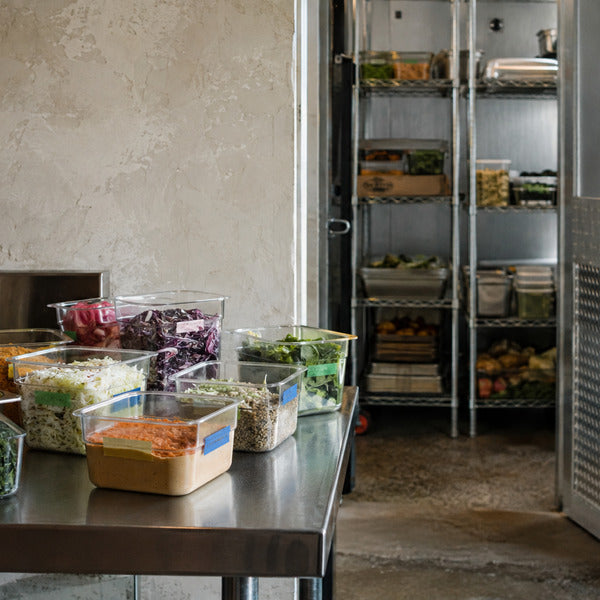
- Enforce FIFO (first in, first out). New stock goes behind old stock, every delivery, no exceptions. Clear, uniform food storage containers with dated rotation labels make FIFO visible at a glance — staff can see contents and dates without opening lids, which is exactly why mystery containers disappear when kitchens standardize their storage.
Storage discipline matters as much as ordering discipline: hold proteins at the right temperature zones, keep produce out of ethylene-heavy neighbors, and store prepped items in airtight containers to extend usable life by days.
How do portioning and prep control cut overproduction?
Portion control cuts waste at both ends: standardized portions reduce plate waste in the dining room, and demand-based batching reduces overproduction in the kitchen. The Champions 12.3 review flagged batch cooking, casserole trays, and buffets as the formats most prone to overproduction relative to cook-to-order prep. Practical fixes:
- Standardize recipes and portion tools. Scoops, ladles, and portion scales take the guesswork out of every plate and make food costing accurate.
- Batch in waves. Cook smaller batches more often during service instead of loading hot wells for the whole shift — this is the single biggest lever for buffets, cafeterias, and deli hot cases.
- Right-size the menu. Every menu item should share ingredients with at least two others; orphan ingredients become orphan inventory.
- Offer flexible portions. Half-portions and side-size options let guests order what they'll actually eat.
What is zero-waste cooking and how do you achieve it?
Zero-waste cooking is a prep philosophy that treats every edible part of an ingredient as product, not scrap — stems, tops, bones, rinds, and trim all get a culinary destination before the compost bin is even considered. It answers the question "how can we achieve zero waste during food preparation?" with a system rather than a slogan:
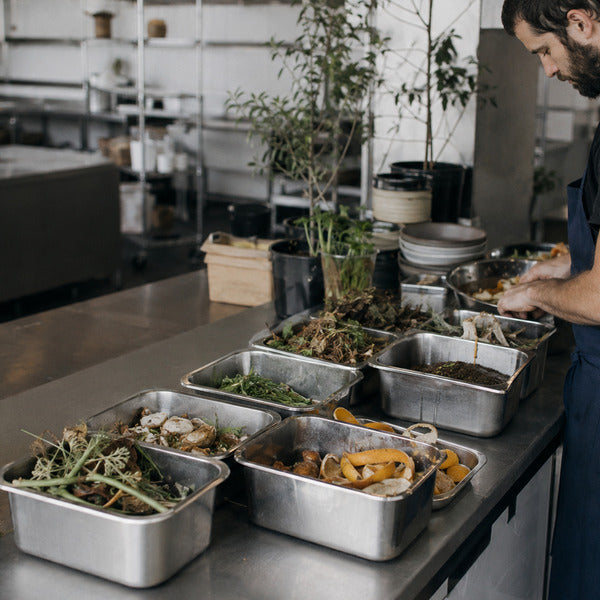
- Map your trim. List the top 10 ingredients you prep daily and assign every byproduct a use: carrot tops → chimichurri; chicken bones → stock; citrus peels → infused syrups; bread ends → croutons and breadcrumbs; whey → brines.
- Run a stock program. A dedicated, dated stock bin in the walk-in turns bones and vegetable trim into soup bases and sauces — the classic cook-clever, waste-less move.
- Design specials around surplus. A rotating "kitchen's choice" special is a pressure valve for ingredients approaching their use-by date.
- Cross-train the line. Zero-waste prep fails when only the sous chef knows the plan. Post the trim map at the prep station.
Real-world examples of zero-waste restaurants — from tasting-menu pioneers milling their own flour to neighborhood cafés running closed-loop compost gardens with local ingredient suppliers — show the philosophy scales from fine dining to fast casual. Some operators pursue formal recognition as a zero-waste certified restaurant, typically requiring documented diversion of roughly 90% of waste from landfill; our zero-waste foodservice guide covers the philosophy, audits, and certification path in depth, while this guide stays focused on kitchen-floor tactics.
What is the role of packaging in reducing food waste?
Packaging reduces food waste by extending shelf life, protecting food in storage and transit, and right-sizing portions so less is opened, plated, or delivered than gets eaten. Food waste packaging solutions work at three points in your operation:
- Back of house: airtight, stackable containers and vacuum sealing slow oxidation and dehydration, adding days of usable life to proteins and prepped items. Clear containers also prevent the "buried and forgotten" spoilage that plagues crowded walk-ins.
- Takeout and delivery: vented, insulated, leak-resistant packaging keeps food at safe temperatures and prevents transit damage — food that arrives crushed or soggy is food that gets thrown away and remade. Portion-matched container sizes stop over-filling.
- Retail and grab-and-go: modified-atmosphere and sealed packaging extend display life, and smaller pack sizes let customers buy what they'll finish. This is how food and beverage companies reduce packaging waste and food waste together: lighter, right-sized, recyclable or compostable formats cut both streams at once.
The relationship between food waste and packaging is a trade-off worth managing deliberately: slightly more packaging that prevents spoilage usually nets out environmentally ahead of the wasted food it saves, but the best programs pair shelf-life packaging with recyclable or compostable materials so the packaging itself doesn't become the next waste problem. Our restaurant recycling guide covers how to build the back-of-house sorting program that handles those materials.
How do you donate surplus food from a restaurant?
Donating surplus food means routing wholesome, unsold food to food banks, pantries, and rescue organizations instead of the dumpster — and federal law protects you when you do. The Bill Emerson Good Samaritan Food Donation Act (42 U.S. Code § 1791) grants liability protection to persons and gleaners who make good-faith donations of apparently wholesome food to nonprofits for distribution to those in need — at zero cost or a good-Samaritan reduced price. Amendments passed in January 2023 (the Food Donation Improvement Act) expanded those protections further. Protection does not cover gross negligence or intentional misconduct, so donate food you would serve.
To set up a donation program:
- Partner with a local food rescue. Food banks and rescue apps handle scheduled pickups; prepared-food donations typically require refrigerated transport and prompt distribution.
- Check local health department guidance on donating perishable prepared foods — USDA explicitly directs donors to local health rules for handling.
- Build donation into closing procedures. Label, chill, and stage donatable items in dedicated containers so pickup takes minutes.
- Log donations. Weights and values support enhanced federal tax deductions for donated food — ask your accountant.
Composting for foodservice: a restaurant's guide to diverting the rest
Composting in restaurants converts unavoidable food scraps — trim, bones, shells, coffee grounds, plate scrapings — into a resource instead of landfill mass, where food waste generates methane. Composting sits just below donation on the EPA's Wasted Food Scale, making it the right destination for everything prevention and donation can't capture. This is the deepest section of this guide for a reason: for most kitchens, composting is the step that moves diversion rates from 40% to 80%+.
How do you set up composting in your restaurant?
- Choose your composting pathway. Options include commercial organics hauling (most common for restaurants), community/municipal programs, on-site in-vessel composters for high-volume operations, and farm partnerships for produce-heavy scraps. Check local organics rules — a growing number of states and cities require food scrap diversion for commercial generators.
- Audit what you'd compost. One week of weighing scrap output tells you the bin sizes and pickup frequency you need.
- Place restaurant compost bins at the point of waste. Small, lidded countertop bins at every prep station and dish pit — not one big bin across the kitchen. If a cook has to walk, scraps go in the trash. The best compost bin for bartenders is a compact behind-the-bar caddy for citrus husks, garnish trim, and spent fruit; a compost café setup does the same beside the espresso machine for grounds and pastry waste.
- Match bins to accepted materials. Confirm with your hauler what's accepted: most take all food scraps including meat and dairy; backyard-style programs may be produce-only. Certified-compostable packaging is only compostable if your hauler accepts it.
- Train with pictures. Laminated sorting signage above every bin, in every language your team speaks. Contamination is the number-one reason haulers reject loads.
- Track diversion. Your hauler's weight reports become your diversion metric — and your marketing story.
Browse dedicated compost bins sized for countertop prep stations up to high-volume back-of-house collection.
What sanitary procedures keep composting clean in a commercial kitchen?
Sanitary composting procedures are what keep a compost program from becoming a health-inspection problem, and they directly assist in maintaining a clean commercial kitchen facility:
- Use lidded, sealed bins only — tight lids control odor and block flies and pests.
- Line and empty daily. Compostable liners speed emptying; food scraps never sit in the kitchen overnight.
- Wash and sanitize bins on a schedule. Add compost bins to the nightly dish-pit rotation exactly like cutting boards — hot water, detergent, sanitizer, air dry.
- Stage outdoor collection away from doors and dry storage, on a cleanable surface, with lids closed and pickup frequency high enough that bins never overflow.
- Separate compost handling from food prep. Staff wash hands and change gloves after handling scrap bins, same as any waste-handling task.
Where does composting fit in a full zero-waste program?
Composting is the final diversion step in the zero-waste hierarchy — after prevention, repurposing, and donation have captured everything edible. Kitchens that pair a compost program with a recycling station for cardboard, glass, metal, and film typically send only a small residual stream to landfill. For the recycling half of that equation — hauler contracts, bin systems, and staff training — see our guide to building a restaurant recycling program.
Which foodservice tools support each waste-reduction step?
Having supplied 40,000+ foodservice operations over 15+ years, Restaurantware stocks the physical infrastructure each tactic in this guide depends on:
- FIFO and spoilage control: food storage containers — clear, airtight, stackable, and label-friendly, so rotation is visible and shelf life is protected.
- Waste auditing and sorting stations: trash cans and recycling bins for color-coded, station-level stream separation.
- Organics diversion: compost bins from bar-top caddies to back-of-house collection.
- The full program: our zero waste collection gathers compostable packaging, bins, and supplies for operators building a complete diversion program.
Frequently Asked Questions
What are 10 ways to reduce food waste?
Ten proven ways to reduce food waste in a commercial kitchen: (1) run weekly waste audits, (2) forecast orders from sales data, (3) set par levels, (4) rotate stock FIFO with date labels, (5) standardize portions, (6) batch-cook in waves, (7) repurpose trim into stocks and specials, (8) use shelf-life-extending storage and packaging, (9) donate surplus under Bill Emerson Act protection, and (10) compost unavoidable scraps.
What is the 2 2 2 rule for food?
The 2-2-2 rule is a leftover-handling guideline: refrigerate food within 2 hours of cooking, use refrigerated leftovers within 2 days, or freeze them for up to 2 months. It's a consumer rule of thumb — commercial kitchens should follow their local health code's time and temperature controls, which are stricter and enforceable.
How can we reduce food waste habits?
Food waste habits change when measurement is visible and staff are engaged. Post weekly waste numbers where the team sees them, tag every discard with a reason, celebrate reductions like sales wins, and train every station on the trim map and sorting bins. The Champions 12.3 restaurant study found staff engagement was one of the five actions that most reliably predicted successful waste-reduction programs.
How can I reduce my food waste?
Start by measuring one week of waste — weigh it, tag the reasons, and cost it out. Then attack the biggest bucket first: spoilage calls for FIFO and better storage containers; overproduction calls for demand-based batching; trim calls for a stock program; and whatever remains should be donated or composted rather than landfilled.
Is composting required for restaurants?
In a growing number of jurisdictions, yes — several U.S. states and major cities require commercial food waste generators above certain volume thresholds to divert organics from landfill. Check your state and municipal organics rules, and ask your waste hauler; even where composting is voluntary, it typically reduces total hauling costs by shrinking trash volume.
Conclusion: build the system, then let it compound
Reducing food waste in a commercial kitchen isn't one heroic change — it's a system: measure, prevent, repurpose, donate, compost. The economics are proven ($7 back per $1 invested, per Champions 12.3), the legal protections for donation are federal law, and the equipment is inexpensive. Start with a one-week waste audit this week, fix your biggest bucket, and add the next lever each month. When you're ready to outfit the program, explore our zero waste collection for the containers, bins, and compostable supplies that make waste reduction stick.