Blog-Banner-5-ways-to-increase-your-grab-and-go-sales

Grab And Go Food Ideas: 5 Ways To Increase Your Sales

Published on Updated on

Grab And Go Food Ideas: 5 Ways To Increase Your Sales

The best grab and go food ideas are handheld breakfast items (breakfast sandwiches, burritos, muffins), protein snack boxes, fresh salads and grain bowls, wraps and sandwiches, and yogurt parfaits. The merchandising rule that most increases grab-and-go revenue is placement: position the display cooler directly in the natural path between the entrance and the register.

Grab and go food ideas only make money when two things happen at once: the food is genuinely craveable, and the display puts it in front of a customer who is already moving. In 15+ years supplying 40,000+ foodservice operations, we've watched cafés with mediocre coffee outsell better competitors purely because their grab-and-go case was smarter — better items, better placement, better packaging. This guide gives you both halves: the food ideas that actually sell by daypart, and the five-part sales playbook that turns a cold case into one of the highest-margin square feet in your operation.

TL;DR: Stock handheld breakfast before 10 a.m., protein boxes and salads for lunch, and snack packs all day. Put the case in the traffic path, face labels forward, price for impulse (most items under $10), bundle a drink, and rotate the menu based on what sells. Packaging that shows the food sells the food.

Daypart Top grab and go food ideas Why they sell
Breakfast (6–10 a.m.) Breakfast sandwiches, burritos, overnight oats, muffins One-handed eating for commuters; pairs with coffee
Lunch (11 a.m.–2 p.m.) Protein boxes, salads, grain bowls, wraps, sandwiches Fast, filling, visible freshness at a <$12 price point
All-day snacking Snack packs, parfaits, fruit cups, energy bites, hummus & pretzels Impulse add-ons; high margin per unit
Evening / late night Hot hand pies, pizza slices, ready-to-heat meals Captures the dinner-shortcut and late-shift crowd
Grab and go food ideas in a café display cooler with salads, protein boxes, and labeled snack packs

What Are the Best Grab-and-Go Food Ideas?

The best grab and go food ideas are items that eat well cold or at ambient temperature, hold their quality for at least a full daypart, and can be eaten with one hand or minimal utensils. That rules out anything that wilts, weeps, or separates — and it rewards formats like boxes, wraps, cups, and parfaits where the packaging itself does the portioning.

Demand for this format keeps climbing. The National Restaurant Association projects total restaurant and foodservice sales will reach $1.55 trillion in 2026, with operators competing hard for convenience-driven traffic. Meanwhile, in-store foodservice and merchandise sales at U.S. convenience retailers — the original grab-and-go channel — hit $341.2 billion in 2025, the 23rd consecutive year of growth, according to NACS. Customers have voted: they want restaurant-quality food at retail speed. (Figures current as of July 2026.)

Grab and Go Food Ideas That Actually Sell

These are the grab and go meals and snacks we see move fastest across the cafés, markets, hotels, and campus operations we supply. Each entry includes a foodservice note so you can execute it, not just list it on a menu.

1. Handheld Breakfast: Sandwiches, Burritos, and Muffins

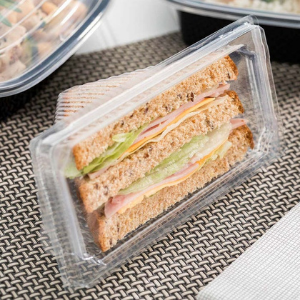
Breakfast is the single strongest grab-and-go daypart because the customer is time-poor by definition. Breakfast sandwiches on brioche or English muffins, foil-wrapped burritos, egg bites, and bakery muffins all travel well and pair naturally with a coffee upsell. Foodservice note: wrap sandwiches in grease-resistant paper or clear clamshells so the fillings show — visible bacon sells the sandwich. If breakfast becomes a core daypart for you, our guide to effective marketing strategies for your breakfast offerings covers how to promote it beyond the case.

2. Protein Boxes and Snack Packs

Protein boxes — hard-boiled eggs, cheese, nuts, fruit, and a dip — are among the top-selling grab-and-go items in almost every operation we work with, because they read as healthy, photograph well, and carry a premium price with low labor. Foodservice note: use compartmented boxes or clear containers with secure lids; the merchandising power of a protein box is that every component is visible and tidy.

3. Fresh Salads and Grain Bowls

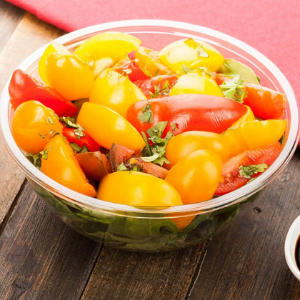
Salads and grain bowls anchor the lunch daypart. Layer wet ingredients on the bottom and greens on top, or pack dressing separately, so the product still looks fresh at 1:45 p.m. Grain bowls (quinoa, farro, rice) hold texture far longer than lettuce-based salads and extend your sellable window. Foodservice note: tall, clear, round containers show off layering and stack cleanly in a cooler.

4. Wraps and Sandwiches

Wraps and sandwiches are the workhorse grab and go food — familiar, filling, and fast to produce in batches. Cut them on the bias and face the cut side toward the glass. Foodservice note: sandwiches dry out and wraps go gummy when made too far ahead; batch twice daily rather than once, and pull anything past its daypart.

5. Yogurt Parfaits and Fruit Cups

Parfaits and fruit cups are high-margin impulse buys that work morning to close. Keep granola in a separate lid compartment or top layer so it stays crunchy. Foodservice note: clear cups with dome or flat lids turn the product itself into the label — bright fruit layers do the advertising.

6. Hot Grab-and-Go: Hand Pies, Slices, and Ready-to-Heat Meals

Hot grab and go food ideas — empanadas, hand pies, pizza slices, rotisserie items, ready-to-heat entrées — capture the dinner-shortcut customer and the late crowd that cold cases miss. Heated display cases or warmers extend your selling day past 6 p.m. If you serve an evening or overnight demographic, pair this with the thinking in our guide to designing a late-night menu to maximize sales.

7. Grab and Go Snacks: Energy Bites, Hummus Packs, and Trail Mix

Grab and go snacks are your attachment engine — the second item in the basket. Energy bites, hummus-and-pretzel packs, cheese and crackers, jerky, and house trail mix all carry strong margins and long holding times. The demand base is enormous: Mondelēz's State of Snacking research, reported by NACS, found over 90% of global consumers snack at least once a day. Foodservice note: merchandise snacks at the register and beside the beverage cooler, not only in the main case.

8. Beverage Pairings: Cold Brew, Smoothies, and Fresh Juice

Bottled cold brew, smoothies, kombucha, and fresh juices belong in the same case as your food — beverages are the most natural bundle partner and lift average ticket with zero extra labor. Foodservice note: dedicate the top shelf (eye level) to beverages when your food case doubles as your drink cooler; customers scan top-down.

How Do You Increase Grab-and-Go Sales? The 5-Part Playbook

You increase grab-and-go sales by fixing five levers in order: placement, display merchandising, packaging and labeling, pricing and bundling, and data-driven rotation. Food quality gets a customer to buy once; these five levers are what compound daily sales. This is the operator playbook page-1 meal-prep lists never cover.

Operator arranging grab and go food ideas in display baskets with front-facing labels near the register

1. Put the Case in the Path of Traffic

Placement is the highest-leverage change you can make, and it costs nothing but a floor plan. The grab-and-go case must sit in the natural walking line between the entrance and the register — not against a back wall, not behind the queue. Customers should pass the food before they order or pay, while their wallet decision is still open. In our own customers' resets, moving a cooler ten feet into the traffic path routinely outperforms any single menu change. Second-best position: directly beside the register for last-second snack and beverage adds.

2. Merchandise Vertically by Daypart

Merchandise the case like a retailer, not a restaurant. Eye level is buy level: put your highest-margin items (protein boxes, parfaits, premium salads) on the middle shelves, beverages up top, and bulk or value items low. Re-set the case between dayparts — breakfast items forward until 10 a.m., lunch items forward by 11 — and never let the case look picked over; consolidate remaining stock onto fewer shelves and front-face every unit. Food display baskets solve the "half-empty shelf" problem for ambient items like muffins, chips, and fruit: a full small basket sells better than a sparse big shelf.

3. Upgrade Packaging and Labeling

In grab-and-go, packaging is the salesperson. Clear lids and windows let the food advertise itself; compartments keep components tidy; tamper-evident seals build trust. Then label like you mean it: product name, key ingredients or callouts ("high protein," "vegan"), price, and date on every unit, facing forward. Our foodservice customers consistently tell us that adding clean, branded labels and stickers to plain clear packaging measurably lifted sales of the exact same recipes — the food didn't change; the perceived professionalism did. Grab and go packaging is also a food-safety tool: dates and rotation stickers make FIFO enforceable at a glance.

4. Price for Impulse and Bundle a Drink

Grab-and-go is an impulse economy. Keep core items in the $4–$12 band, use clear price tags (no menu-board hunting), and build a visible bundle: entrée + snack + drink at a rounded combo price. The bundle math works because the add-ons are high-margin — you trade a small discount for a bigger basket on nearly every transaction. Signage matters: one shelf-edge sign that says "Make it a meal — $11" outsells a paragraph of menu copy. Convenience-driven younger customers are the heaviest users of this format, a shift we flagged years ago in Millennials = Grab & Go — and the habit has only deepened since.

5. Rotate the Menu on Data — and Keep Food Safety Tight

Track sell-through by item and daypart weekly, cut the bottom 10–20%, and test one new item in the freed slot. A tight, fast-moving menu beats a long, stale one: fewer SKUs means fresher product, less waste, and a case that always looks full. Food safety is non-negotiable in this format because product sits unattended: USDA calls 40°F–140°F the "Danger Zone," where bacteria can double in as little as 20 minutes — so hold cold cases at 40°F or below, verify with a logged thermometer check every shift, and time-stamp anything displayed at ambient temperature. A discarded parfait costs you $1.50; a foodborne-illness report can cost you the business.

How Do You Choose Grab-and-Go Items for Your Operation?

Choose grab-and-go items by scoring each candidate against five filters: holding quality (does it look and taste right after 4+ hours?), labor cost (batch-prep friendly?), margin (target 65%+ gross on snacks, 55%+ on meals), daypart fit (does it sell when your traffic actually shows up?), and packaging fit (can it travel, stack, and display in what you already stock?). Kill any item that fails two filters — there is always a better candidate.

Then build the program deliberately: start with 8–12 SKUs covering breakfast, lunch, and snacks; perfect production and rotation; and only then expand. For a full framework on assortment, production scheduling, and menu design for this format, see our companion guide on how to create a grab-and-go menu that attracts customers, and browse more growth tactics in our restaurant advertising & marketing archive.

What Packaging and Display Supplies Does a Grab-and-Go Program Need?

A grab-and-go program needs four supply categories: clear food containers and boxes, display and organization pieces, carry-out solutions, and labeling. This is our home turf at Restaurantware, and the combinations below are what our highest-volume grab-and-go customers actually run:

  • Trays for organization and service: Fast food trays & cafeteria trays keep hot grab-and-go stations, sampling setups, and self-serve lines organized and fast to bus.
  • Display pieces that keep the case full-looking: Food display baskets merchandise ambient bakery items, fruit, and snack packs at the register and on countertops.
  • Carry-out that completes the sale: To go bags & take out bags — a sturdy, branded bag turns a single item into a multi-item purchase because the customer suddenly has somewhere to put the add-ons.
  • Labeling that sells and rotates: Labels & stickers for product names, dates, ingredient callouts, and tamper seals.

Match the container to the food's worst enemy: moisture-vulnerable items get vented or compartmented packaging, dressed items get leak-resistant seals, and hot items get vented lids that fight sogginess.

Frequently Asked Questions

What are some good grab-and-go foods?

Good grab-and-go foods are breakfast sandwiches, burritos, protein boxes, fresh salads, grain bowls, wraps, yogurt parfaits, fruit cups, snack packs, and bottled beverages. The best performers eat well cold or at room temperature, hold quality for a full daypart, and require one hand or minimal utensils to eat.

What foods are typically grab-and-go?

Typical grab-and-go foods are pre-packaged, ready-to-eat items sold from a self-serve cooler, shelf, or warmer: sandwiches, salads, parfaits, snack boxes, baked goods, fruit, and bottled drinks. The defining trait is zero wait — the customer picks it up, pays, and leaves without ordering or table service.

How do you merchandise grab-and-go?

Merchandise grab-and-go by placing the case in the entrance-to-register traffic path, putting high-margin items at eye level, front-facing every label, resetting the case by daypart, and keeping shelves looking full — consolidate stock into baskets or fewer shelves as inventory sells down. Clear pricing on every unit removes the last friction point.

What packaging is best for grab-and-go?

The best grab and go packaging is clear or windowed, leak-resistant, stackable, and tamper-evident, with compartments for multi-component items like protein boxes. Clear packaging lets the food sell itself; a forward-facing label with name, price, callouts, and date closes the sale and enforces rotation.

How do cafes increase grab-and-go sales?

Cafés increase grab-and-go sales by moving the case into the order-line traffic path, bundling food with a drink at a combo price, merchandising breakfast items until mid-morning and lunch items after, and labeling everything with clear prices. Pairing food with the beverage the customer already came for is the fastest ticket lift.

What are top selling grab-and-go items?

Top-selling grab-and-go items are breakfast sandwiches and burritos in the morning; protein boxes, salads, and wraps at lunch; and parfaits, snack packs, and bottled beverages all day. In most operations we supply, protein boxes and breakfast handhelds lead units while beverages lead attachment rate.

What are the most profitable grab and go items?

The most profitable grab and go items are low-labor, long-holding products: yogurt parfaits, fruit cups, snack packs, energy bites, house-packaged trail mix, and bottled beverages, which commonly run 65%+ gross margin. Protein boxes earn the most gross profit dollars per unit because they command a premium price from low-cost components.

Conclusion: Stock What Sells, Then Sell It Harder

Winning grab and go food ideas are only half the equation — the case that sells them is the other half. Stock handheld breakfast, protein boxes, salads, and snacks by daypart; then work the five levers: traffic-path placement, retail-style merchandising, packaging that shows the food, impulse pricing with bundles, and weekly data-driven rotation with tight food safety. Operators who treat the grab-and-go case as a managed retail business — not a leftovers shelf — routinely turn it into their highest-margin square footage.

Ready to build or upgrade your program? Outfit your case with food display baskets, labels & stickers, and to-go bags from Restaurantware — in stock and ready to ship today.

Jamil Bouchareb

Jamil Bouchareb

CEO, Restaurantware

Jamil Bouchareb is the CEO of Restaurantware, a leading foodservice packaging and supply manufacturer serving 40,000+ restaurants, hotels, and caterers worldwide. For over 15 years, Jamil has led Restaurantware's product development across sustainable packaging, takeout containers, and front-of-house supplies.