The Ultimate Guide To Carbon Steel Woks
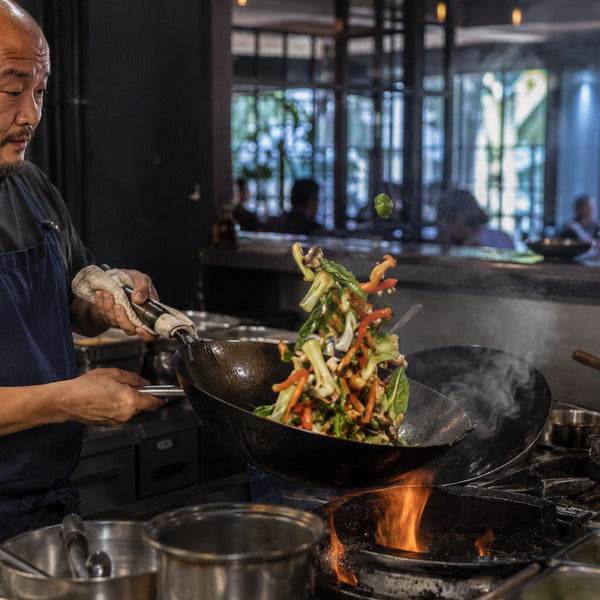
A carbon steel wok is the traditional pan for stir-frying: lightweight, fast-heating, and naturally nonstick once seasoned. It handles the high heat wok cooking demands better than stainless steel and weighs far less than cast iron. This guide covers blue vs. black carbon steel, seasoning, sizing, and daily care.
TL;DR: Carbon Steel Wok Essentials
- A carbon steel wok is made from steel containing roughly 99% iron and 1% carbon, rolled or hand-hammered into thin walls of 1.2–2 mm.
- Carbon steel heats up and cools down in seconds — the responsiveness stir-frying requires — and weighs 30–50% less than a cast iron wok of the same size.
- Blue carbon steel and black carbon steel are the same alloy; the color comes from a heat-treatment (bluing) step that adds a head start on rust resistance.
- Seasoning — baking thin layers of oil onto the metal — creates a natural nonstick surface with no synthetic coating.
- A 14-inch wok is the standard for restaurant line work and family cooking; a 12-inch suits single portions and home burners.
- Daily care is simple: hot water, soft scrub, dry on the burner, wipe with a film of oil. Never use a dishwasher.
| Attribute | Carbon Steel Wok | Cast Iron Wok | Stainless Steel Wok |
|---|---|---|---|
| Weight (14") | ~2–4 lb | ~6–9 lb | ~3–5 lb |
| Heat responsiveness | Excellent — reacts in seconds | Slow — holds heat, adjusts slowly | Moderate |
| Nonstick ability | Excellent once seasoned | Good once seasoned | Poor — food sticks at wok temperatures |
| Seasoning required | Yes | Yes | No |
| Tolerates wok-hei heat | Yes — built for it | Yes, but heavy to toss | Yes, but sticks and discolors |
| Best for | Stir-frying, searing, high-volume wok stations | Long braises, deep-frying | Acidic sauces, low-maintenance kitchens |
What Is a Carbon Steel Wok?
A carbon steel wok is a round, deep-sided cooking pan made from an alloy of about 99% iron and 1% carbon, formed into thin walls that conduct heat almost instantly. That small amount of carbon makes the steel harder and more durable than pure iron while keeping it light enough to lift, tilt, and toss with one hand — the motion that defines stir-frying.
Carbon steel has been the working material of Cantonese and Sichuan restaurant kitchens for generations, and it remains the default in commercial wok ranges today. The reason is physics: thin carbon steel transfers burner heat to food with almost no lag, so a cook can sear, steam, and sauce in the same pan within minutes. The material also develops a seasoning layer — polymerized oil bonded to the metal — that makes the surface progressively more nonstick the more you cook with it.
Demand for that kind of performance keeps growing. Datassential reports that 47% of U.S. consumers ate a globally influenced food in the past week — up from 28% in 2017 — with Asian cuisines leading growth in both new restaurant openings and grocery availability (Datassential, Global Flavors Report, current as of July 2026). Wok-fired menus are expanding, and carbon steel is the pan those kitchens run on.
Why Is Carbon Steel the Classic Wok Material?
Carbon steel is the classic wok material because it combines four properties no other metal matches at once: fast heat response, light weight, high-heat tolerance, and a natural seasoning surface.
- Speed. Walls of 1.2–2 mm mean a carbon steel wok reaches searing temperature in under two minutes on a strong burner and responds to flame adjustments in seconds. Stir-frying is a timing game; a slow pan turns crisp vegetables into steamed ones.
- Weight. A 14-inch carbon steel wok typically weighs 2–4 pounds. Wok cooking is active — you lift, tilt, and toss constantly — and a pan you cannot maneuver defeats the technique.
- Heat tolerance. Carbon steel shrugs off the 600°F+ surface temperatures that produce wok hei, the smoky "breath of the wok" flavor. Nonstick coatings degrade well below those temperatures; carbon steel only gets better.
- Seasoning. Like cast iron, carbon steel builds a patina of polymerized oil that releases food cleanly. Unlike cast iron, its smooth rolled surface seasons quickly and evenly.
The trade-off is honest: carbon steel rusts if neglected, reacts with prolonged acidic simmering, and asks for a few minutes of care after each use. The rest of this carbon steel wok guide shows how small that maintenance burden really is — and when a different material genuinely serves you better.
What Is a Blue Carbon Steel Wok?
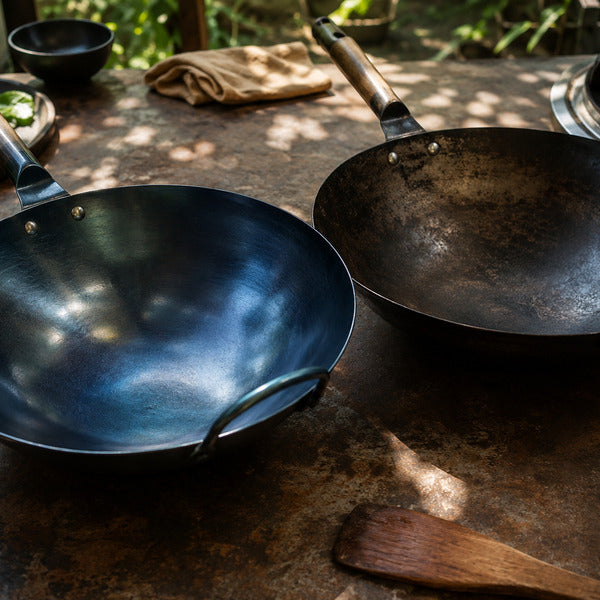
A blue carbon steel wok is a carbon steel wok that has been heat-treated in a process called bluing, which forms a blue-gray oxide layer (magnetite) on the surface. Bluing a carbon steel pan does two useful things: the oxide layer provides a modest head start on corrosion resistance before seasoning begins, and it gives the metal its signature gunmetal-blue sheen.
Blue carbon steel is not a different alloy. The steel underneath is the same ~99% iron, ~1% carbon material as any other carbon steel wok. Manufacturers blue the metal by heating it to roughly 550–650°F, converting the reactive red-rust-prone surface into a more stable oxide. French carbon steel pan makers have used the same technique for decades, which is why you also see "blue steel" crepe and fry pans.
In practice, a blue wok behaves like any carbon steel wok once seasoned. The bluing layer sits under your seasoning, not instead of it — you still season a blue carbon steel wok before first use. Expect the blue color to disappear under the amber-to-black patina within your first dozen cooks. That is normal and desirable; a color change means the seasoning is building.
What Is a Black Carbon Steel Wok?
A black carbon steel wok is a carbon steel wok that is either factory pre-seasoned (baked with oil until the surface turns dark) or coated with a protective black oxide finish. When cooks search for a "black wok," they are almost always looking at pre-seasoned black carbon steel — the most common format sold to restaurants because it is ready to cook with after a quick rinse and a light oiling.
Pre-seasoned black carbon steel woks save the smokiest step of ownership: the initial seasoning burn-in. In a commercial kitchen, that matters — nobody wants to fill a line with smoke during prep. Our Motomori 14" black carbon steel round bottom wok ships pre-seasoned with a wooden handle for exactly this reason: it goes from box to burner the same day.
How Thick Should a Carbon Steel Wok Be?
A carbon steel wok should be 1.2–2 mm thick (roughly 14–16 gauge). Wok thickness is a balance: thinner than 1.2 mm and the pan develops hot spots, warps on powerful burners, and dents easily; thicker than 2 mm and it loses the fast responsiveness that makes carbon steel worth owning. Restaurant-grade woks cluster around 1.5–1.8 mm — heavy enough to survive a wok range, light enough to toss for a full service.
Blue vs. Black Carbon Steel Wok: Which Should You Choose?
Choose a black (pre-seasoned) carbon steel wok if you want to cook immediately; choose a blue carbon steel wok if you prefer to build your own seasoning from a clean, corrosion-resistant base. Blue carbon steel vs. black carbon steel is a difference of surface treatment, not performance — after a month of regular cooking, both look and cook identically.
| Factor | Blue Carbon Steel Wok | Black Carbon Steel Wok |
|---|---|---|
| Surface treatment | Heat-blued oxide layer (magnetite) | Factory pre-seasoning or black oxide |
| Ready to cook out of the box | No — season before first use | Mostly — rinse, dry, oil lightly |
| Initial rust resistance | Moderate (bluing helps) | Good (seasoning already present) |
| Appearance over time | Blue fades to dark patina | Starts dark, deepens further |
| Best fit | Enthusiasts who want to own the seasoning process | Restaurants and cooks who need day-one usability |
Underlying alloy, heat behavior, weight, and care routine are the same for both. Do not pay a premium for one color over the other; pay for wall thickness, handle quality, and shape instead.
Carbon Steel Wok vs. Cast Iron vs. Stainless Steel
Carbon steel beats cast iron and stainless steel for stir-frying specifically, because stir-frying rewards fast heat changes and constant pan movement. Each material still has a lane:
- Carbon steel wok vs. cast iron wok. Cast iron holds heat superbly but responds slowly and weighs two to three times more — a 14-inch cast iron wok can exceed 8 pounds, which makes tossing impractical. Cast iron earns its place in long braises, deep-frying, and dishes served sizzling in the pan; browse our cast iron cookware collection for those jobs. For the flip-and-toss rhythm of stir-frying, carbon steel wins.
- Carbon steel wok vs. stainless steel. Stainless steel never rusts and handles acidic sauces indefinitely, but it has no seasoning layer — proteins and rice stick aggressively at wok temperatures, and stubborn browned-on residue slows a busy line. Stainless suits kitchens that mandate dishwasher-safe pans and tomato- or vinegar-heavy menus.
- Carbon steel vs. nonstick-coated woks. Coated nonstick fails at exactly the temperatures wok cooking requires; manufacturers typically cap coated pans well below searing heat. Carbon steel's seasoning is the high-heat nonstick alternative.
In 15+ years supplying more than 40,000 foodservice operations, we've seen the same pattern in nearly every high-volume Asian kitchen we equip: wok stations standardize on carbon steel, keep stainless for sauce work, and reserve cast iron for presentation pieces. The cooks driving 200-cover services vote with their wrists.
How Do You Season a Carbon Steel Wok?
You season a carbon steel wok by burning off the factory coating, then baking thin layers of high-smoke-point oil onto the bare metal until they polymerize into a hard, dark, nonstick film. The full process takes 30–45 minutes and only needs to be done once — after that, everyday cooking maintains it.
- Scrub off the factory finish. New raw woks ship with a protective anti-rust coating. Wash it away with hot water, dish soap, and a stainless scrubber. (Skip to step 4 for pre-seasoned black carbon steel woks.)
- Burn the wok blue. Dry the wok, then heat it over your strongest burner, rotating so every zone — including the flared sides — passes through a color change from silver to straw-yellow to blue-gray. Ventilate well; this step smokes.
- Cool and wipe. Let the wok cool until warm, then wipe out any residue.
- Apply a thin oil layer. Add about a teaspoon of a high-smoke-point oil (grapeseed, avocado, or refined peanut oil) and wipe it over the entire interior with a paper towel until the surface looks almost dry. Thick oil layers turn sticky — thin is everything.
- Heat past the smoke point. Return the wok to medium-high heat until the oil smokes and the surface darkens, about 2–3 minutes, tilting to treat the sides. Repeat the oil-wipe-heat cycle two or three times.
- Cook the seasoning in. The traditional finisher: stir-fry sliced ginger, scallions, and aromatics in a little oil for several minutes, coating the walls. This deepens the patina and neutralizes any metallic smell. Discard the aromatics.
One point worth stating plainly: a seasoned carbon steel surface is just iron, carbon, and polymerized cooking oil. There is no synthetic release coating to scratch or overheat. The FDA notes that nonstick cookware coatings are among the food-contact applications where PFAS substances have been authorized since the 1960s (FDA, Authorized Uses of PFAS in Food Contact Applications, current as of July 2026) — seasoned carbon steel simply opts out of that category altogether, which is a reason many operators standardize on it for high-heat stations.
How Do You Clean and Care For a Carbon Steel Wok?
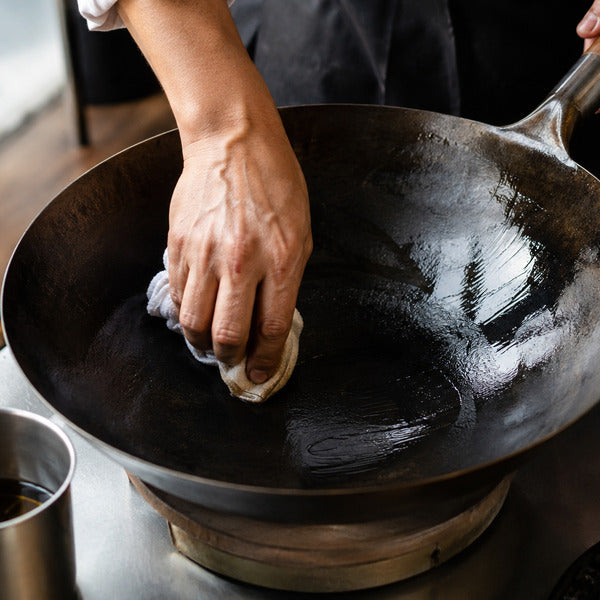
You clean a carbon steel wok with hot water and a soft brush or scrubber immediately after cooking, dry it completely over a burner, and wipe on a whisper-thin film of oil before storing. The whole routine takes about two minutes.
- After every cook: rinse under hot water while the wok is still warm; use a bamboo wok brush or non-metal scrubber on stuck bits. A drop of dish soap on a well-seasoned wok is fine — modern detergents will not strip polymerized seasoning — but skip long soaks.
- Dry on heat, not in a rack: 30–60 seconds over a flame evaporates every trace of water. Air-drying is how rust starts.
- Oil before storage: wipe the interior with a barely-visible film of neutral oil, especially in humid kitchens or coastal climates.
- If rust appears: scrub the spot bare with a stainless scrubber or fine steel wool, rinse, dry on heat, and re-season that area with two oil-wipe-heat cycles. Surface rust is cosmetic and fully reversible.
- If food starts sticking: the seasoning is thin or greasy build-up has gone tacky. Scrub back to a smooth surface and run two fresh seasoning cycles.
- Never: dishwashers, long tomato/vinegar simmers on young seasoning, or storing the wok wet with the lid on.
Our foodservice customers consistently tell us the same thing: proper seasoning and a two-minute daily routine are the difference between a carbon steel wok that lasts months and one that lasts decades. The woks that fail are almost never defective — they were left wet. Good tools help: a dedicated wok brush and spatula from our cookware accessories collection keep the routine fast enough that line cooks actually do it.
Is a Carbon Steel Wok More Hassle Than It's Worth?
No — for anyone who stir-fries even weekly, a carbon steel wok repays its two-minute care routine with performance no low-maintenance pan can match. But the objection deserves a straight answer, because the top result for "carbon steel wok" is currently a Reddit thread titled "I find Carbon Steel wok more hassle then benefit" from r/AskCulinary, and the poster's complaints are legitimate in their context.
Here is the honest breakdown:
- The hassle is real but small. Initial seasoning is smoky and takes 30–45 minutes; daily care takes about two. If either is a dealbreaker, buy pre-seasoned black carbon steel and the burden shrinks to the daily wipe-down.
- Weak burners undercut the payoff. The Reddit poster's core problem was a low-output home range that could not produce wok hei anyway. Fair point: on a weak electric coil, a flat-bottom carbon steel wok still outperforms stainless for sticking, but the flavor advantage narrows. Carbon steel shines brightest on gas, induction wok hobs, and commercial wok ranges.
- Dishwashers and acid are genuine disqualifiers. If your kitchen requires dishwasher-safe pans or your menu leans on long acidic simmers, choose stainless steel and don't look back. No seasoned pan fits that workflow.
- The benefit compounds. A stainless pan cooks the same on day 1,000 as day one. A carbon steel wok gets measurably better — darker, slicker, more forgiving — every month you use it. Restaurant woks with decades of service are the proof.
The pattern we see across the 40,000+ operations we supply: kitchens that stir-fry daily never go back from carbon steel; kitchens that wok-cook once a month often are better served by a stainless sauté pan. Match the pan to the frequency.
What Size and Shape Carbon Steel Wok Do You Need?
A 14-inch carbon steel wok is the best all-around size for both restaurant lines and family cooking; a 12-inch wok suits one-to-two portion cooking and smaller home burners. Bigger than 14 inches, woks become station equipment — 16–20 inch woks belong over dedicated wok burners with cooks trained to handle them.
- 12" carbon steel wok: 1–2 servings, lighter tossing, fits standard home burners. Batch-cook for more people.
- 14" carbon steel wok: the standard. Enough wall surface for genuine stir-frying of 3–4 portions without crowding, still light enough to toss one-handed.
- Round bottom vs. flat bottom: a round bottom wok concentrates heat in a small hot zone and pairs with gas flames, wok rings, and commercial wok ranges; a flat bottom wok sits stable on electric and induction cooktops. Match the bottom to your heat source — a round bottom on a flat electric cooktop wastes most of the burner's output.
- Handles: a single long wooden handle (often with a small helper loop) suits tossing; twin metal loop handles suit steaming, deep-frying, and oven use.
For a deeper walkthrough of matching wok styles to stovetops and menus — including materials beyond carbon steel — see our guide to choosing the right wok pan for your kitchen.
Carbon Steel in the Commercial Kitchen: What Operators Should Know
Carbon steel earns its keep hardest in foodservice, where speed and durability translate directly to covers per hour. The National Restaurant Association projects U.S. restaurant industry sales of $1.55 trillion in 2026 with employment reaching 15.8 million (National Restaurant Association, 2026 State of the Restaurant Industry, current as of July 2026) — and in a market that large and competitive, equipment that shaves seconds off every dish matters.
What we recommend to operators outfitting a wok station or high-heat line:
- Standardize on pre-seasoned 14" round bottom woks for gas wok ranges. The Motomori 14" black carbon steel round bottom wok (sold in 10-count boxes) is built for exactly this: pre-seasoned walls, a wooden handle that stays cool through service, and a per-unit price that makes it practical to equip every station identically.
- Extend carbon steel beyond the wok. The same fast-heating, naturally nonstick behavior works on flat-top and sauté stations — our Met Lux 16" pre-seasoned black carbon steel fry pan with silicone handle sleeve brings wok-grade searing to breakfast and grill lines.
- Equip the routine, not just the pan. Wok brushes, spatulas, ladles, and wok rings determine whether daily care actually happens during a rush. Stock them from the cookware accessories collection when you order the woks.
- Train the two-minute close. Rinse hot, dry on flame, wipe with oil, stack. Kitchens that put this on the closing checklist replace woks on a years-long cycle instead of a monthly one.
Browse the full Asian woks, wok covers, and wok rings collection to spec a complete station.
Frequently Asked Questions
Is carbon steel good for a wok?
Yes — carbon steel is the best all-around material for a wok. It heats and cools within seconds, weighs a fraction of cast iron, tolerates the extreme temperatures that create wok hei, and develops a natural nonstick seasoning with use. It has been the standard in professional Asian kitchens for generations.
What are the downsides of carbon steel pans?
The downsides of carbon steel pans are rust risk if stored wet, reactivity with prolonged acidic cooking (tomato, vinegar, wine reductions), a required initial seasoning, and no dishwasher compatibility. All are manageable with a two-minute dry-and-oil routine after each use; none affect the pan's cooking performance.
What is the healthiest material for a wok?
Carbon steel is widely considered the healthiest practical wok material: it is bare iron and carbon with a seasoning layer of polymerized cooking oil — no synthetic nonstick coating. Its efficiency also means less oil is needed for stir-frying than in a sticking-prone pan. Stainless steel is an equally inert alternative for acid-heavy cooking.
What should you not cook in a carbon steel wok?
Avoid long-simmered acidic dishes — tomato sauces, vinegar braises, citrus reductions — especially in a newly seasoned carbon steel wok, because acid dissolves seasoning and can add a metallic taste. Brief acidic additions (a splash of rice vinegar or sauce at the end of a stir-fry) are fine. Also avoid boiling water for extended periods, which softens seasoning.
Do you have to season a blue carbon steel wok?
Yes. Bluing adds corrosion resistance, but a blue carbon steel wok still requires seasoning before first use to develop its nonstick surface. The blue oxide layer sits beneath the seasoning and will disappear under the darkening patina within your first dozen cooks.
What size carbon steel wok should I buy?
Buy a 14-inch carbon steel wok unless you have a specific reason not to. It handles 3–4 portions without crowding, remains light enough to toss, and is the size restaurant lines standardize on. Choose 12 inches for small burners or single portions, and choose a flat bottom for electric or induction cooktops.
Conclusion
A carbon steel wok is the rare piece of equipment where the traditional choice and the technical choice are the same: nothing else combines its speed, weight, heat tolerance, and self-improving nonstick surface. Choose blue or black carbon steel based on whether you want to build the seasoning yourself, size it to your burner, and give it two minutes of care per cook — it will outlast nearly everything else in the kitchen.
Ready to outfit your kitchen or wok station? Explore Restaurantware's full lineup of Asian woks, wok covers, and wok rings, with commercial-grade carbon steel in stock and ready to ship.