Catering Equipment: The Top 10 Essentials
Catering equipment is the portable gear caterers use to prepare, transport, hold, and serve food off-site. Four categories are non-negotiable: hot-holding equipment (chafing dishes keeping food above 135°F), insulated transport carriers, serving trays and utensils, and quality disposables. Prioritize purchases by frequency of use — buy what every event requires first.
Why the Right Catering Equipment Decides Your Event Before the First Guest Arrives
Catering equipment makes or breaks off-site food service, because a caterer's kitchen is wherever the event happens. According to the National Restaurant Association, nearly 75% of all restaurant traffic now happens off-premises (2025 Off-Premises Restaurant Trends report), and the industry was projected to reach $1.5 trillion in sales in 2025 (National Restaurant Association, 2025 State of the Restaurant Industry). Food is leaving the building — and every plate that travels depends on gear that holds temperature, survives transport, and presents beautifully on arrival.
In 15+ years supplying more than 40,000 foodservice operations, we've watched the same pattern repeat: caterers rarely fail because of the food. They fail because a chafing dish let the entrée drop into the danger zone, a carrier leaked in the van, or the serving line ran out of trays halfway through dinner. This guide covers the ten essentials every caterer needs, a printable-style checklist you can adapt to any event, and specific guidance for drop-off catering, mobile catering businesses, and boxed-lunch programs.
TL;DR: Buy in this order — (1) hot/cold holding equipment, (2) insulated transport carriers, (3) serving trays and utensils, (4) disposables, then specialty gear. Hot food must hold at 135°F or above and cold food at 41°F or below per the FDA Food Code, so temperature-control equipment always comes first.
What Is Catering Equipment?
Catering equipment is defined as the specialized tools, appliances, and serviceware used to prepare, transport, hold, serve, and present food away from a fixed commercial kitchen. It differs from standard restaurant equipment in one key way: portability. Everything must load into a vehicle, survive the trip, set up fast, and perform without a full kitchen behind it.
The category breaks down into five groups:
- Temperature control: chafing dishes, chafing fuel, food pan carriers, ice bins, portable refrigeration
- Transport: insulated food delivery bags, catering bags, sheet pan racks, dollies
- Service: serving trays, platters, utensils, beverage dispensers, displayware
- Disposables: plates, cutlery, cups, napkins, to-go boxes, portion containers
- Prep and utility: cutting boards, knives, food pans, gloves, sanitizing supplies
| Equipment | Primary job | Priority | Typical starting budget |
|---|---|---|---|
| Chafing dishes + fuel | Hot holding at 135°F+ | 1 — every event | $30–$150 per chafer |
| Insulated carriers & bags | Temperature-safe transport | 1 — every event | $25–$300 |
| Serving trays & platters | Service and presentation | 1 — every event | $1–$40 each |
| Serving utensils | Portioning at the line | 1 — every event | $2–$15 each |
| Beverage dispensers | Self-serve drinks | 2 — most events | $40–$250 |
| Food pans & lids | Prep, transport, holding | 2 — most events | $5–$30 each |
| Disposables | Guest service, cleanup speed | 2 — most events | Per-guest cost |
| Portable tables & linens | Buffet and prep surfaces | 3 — venue-dependent | $60–$200 per table |
| Coolers & ice bins | Cold holding at 41°F or below | 3 — menu-dependent | $40–$400 |
| Signage & display risers | Presentation, guest flow | 4 — nice to have | $10–$100 |
The Top 10 Essential Catering Equipment
These ten items form the core catering equipment list for any operation, from a two-person drop-off startup to a full-service banquet team. They are ordered by how often events actually require them.
1. Chafing Dishes and Chafing Fuel
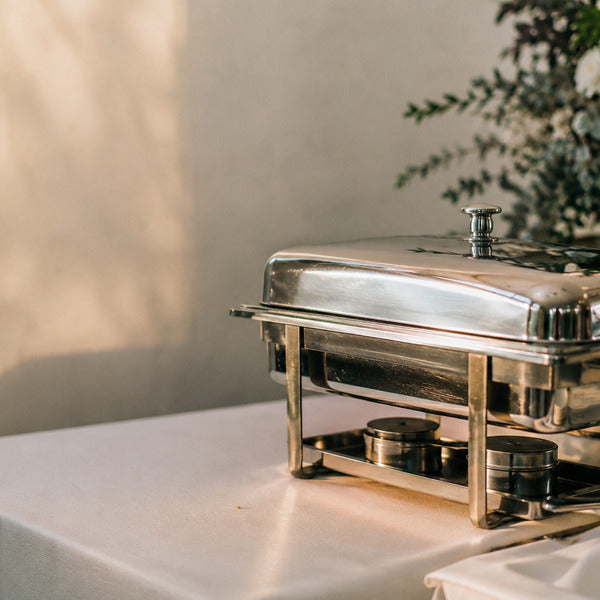
Chafing dishes are the single most reordered piece of catering equipment we sell, because every buffet and hot drop-off depends on them. The FDA Food Code requires hot time/temperature-control-for-safety (TCS) foods to hold at 135°F (57°C) or above (FDA Food Code), and a chafer with fresh fuel is the simplest way to meet that off-site. Stock full-size chafers for entrées, half-size for sides, and roughly two fuel cans per chafer per event. Stainless steel survives constant transport; disposable aluminum chafer kits work for drop-offs where nothing comes back.
2. Insulated Food Carriers and Catering Bags
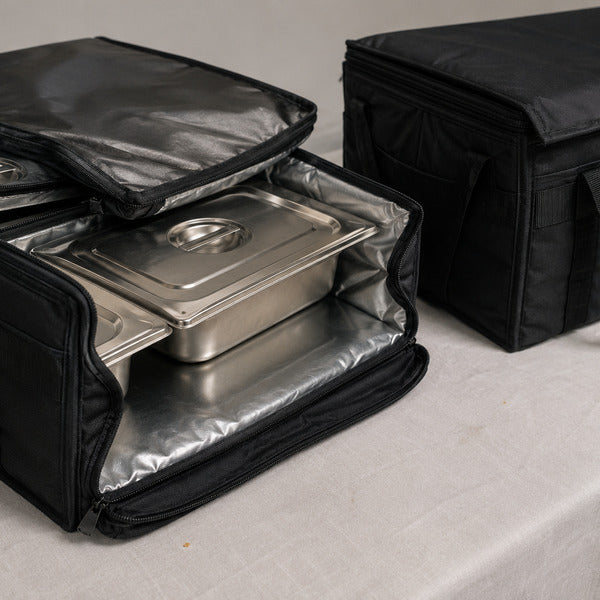
Insulated carriers keep food out of the temperature danger zone (41°F–135°F) between kitchen and venue — the window where, per the FDA, pathogens grow fastest and food held without temperature control must be discarded after 4 hours. Our foodservice customers consistently tell us that insulated food delivery bags & catering bags are the difference between a smooth off-site event and cold, damaged presentation on arrival. Choose rigid pan carriers for full hotel pans and soft-sided insulated bags for boxed meals and smaller drops.
3. Serving Trays and Platters
Serving trays do double duty: they move food through the room and they are the presentation. For passed appetizers, lightweight rimmed trays prevent slides and spills; for buffets and drop-offs, sturdy disposable serving & catering trays with clear lids protect food in transit and eliminate the return trip for dirty platters. Plan at least one tray per 10–12 guests per course, plus backups.
4. Serving Utensils
Serving utensils control portions, pace the line, and keep service sanitary. The workhorse set: slotted and solid spoons, tongs in two sizes, ladles (2 oz and 4 oz for sauces and soups), cake servers, and salad sets. Bring one utensil per pan plus spares — a dropped tong with no replacement stalls an entire buffet.
5. Beverage Dispensers and Drinkware
Beverage dispensers turn drinks into self-service, freeing staff for food. Insulated urns hold coffee for morning corporate drops; clear infused-water and lemonade dispensers anchor event tables. Pair them with cups sized to the event — 8 oz for coffee service, 12–16 oz for cold drinks — and count 1.5–2 drinks per guest per hour.
6. Food Pans, Lids, and Storage Containers
Standard-size food pans (full, half, third) are the connective tissue of catering: the same pan moves from prep to carrier to chafer. Buy pans and carriers on the same standard so everything nests. Leak-resistant lids matter more in catering than in any restaurant — every pan you load will ride in a vehicle.
7. Quality Disposables
Disposables are equipment in catering, not an afterthought — they are your plates, cutlery, and cleanup plan at venues with no dish pit. Heavy-weight plates that survive a full entrée, cutlery that doesn't snap in brisket, and napkins that match the event's tier all shape how guests judge the meal. Browse catering disposables by event style, and stock 10–15% overage; running out mid-event is the one mistake guests always notice.
8. Portable Tables and Linens
Folding tables give you a buffet line and a back-of-house prep surface anywhere. Two 6-foot tables handle a buffet for 40–50 guests; add one prep table out of guest sight. Fitted or clipped linens beat draped cloths outdoors — wind is a caterer's oldest enemy.
9. Coolers and Cold-Holding Equipment
Cold holding is a food-safety requirement, not a convenience: the FDA Food Code sets 41°F (5°C) or below for cold TCS foods. High-quality coolers with ice or gel packs handle most events; verify with a probe thermometer on arrival, not a guess. Salads, dairy, seafood raw ingredients, and garnish trays all count as TCS.
10. Signage, Risers, and Display Pieces
Display equipment is what separates a catering spread from a cafeteria line. Menu cards and allergen labels reduce staff interruptions; risers create visual levels that make the same food look more abundant; galvanized bins, wood crates, and slate boards set the theme. This is the last category to buy — and the first place to upgrade once the essentials are covered.
How Does Catering Equipment Change by Event Type?
Catering equipment needs change with the service format: plated dinners are labor- and smallwares-heavy, buffets are holding-equipment-heavy, and off-site drop-offs are packaging-heavy. Match your kit to the formats you actually sell before buying anything specialty.
| Event format | Equipment emphasis | What you can skip |
|---|---|---|
| Plated dinner | Plate covers, sheet pan racks, holding cabinets, tray stands, service utensils per station | Chafer-heavy buffet gear, self-serve dispensers |
| Buffet | Chafing dishes, risers, signage, beverage dispensers, extra serving utensils, sneeze protection where required | Individual packaging, plate covers |
| Off-site drop-off | Disposable chafer kits, lidded trays, insulated bags, labels, cutlery kits | Reusable chafers, tables, most displayware |
| Boxed lunch | Boxes, inserts, sauce cups, cutlery kits, cold-chain bags with gel packs | Chafers, buffet tables, dispensers |
| Cocktail reception | Passed-service trays, appetizer plates, picks and mini serveware, drink stations | Full-size pans and chafers |
One practical rule from our customer base: own the equipment for your two most-booked formats and rent for the rest. A buffet-first caterer who owns twelve chafers but rents china for the occasional plated wedding keeps capital in the kitchen where it earns.
What Belongs on a Catering Equipment Checklist?
A catering checklist is a per-event packing and task list built from four blocks: food service equipment, transport gear, guest-facing supplies, and utility items. Use the template below as your master catering equipment checklist — copy it, delete what a given event doesn't need, and print it for the load-out. Teams that pack from a written catering checklist for events almost never make the "forgot the fuel" call from a venue parking lot.
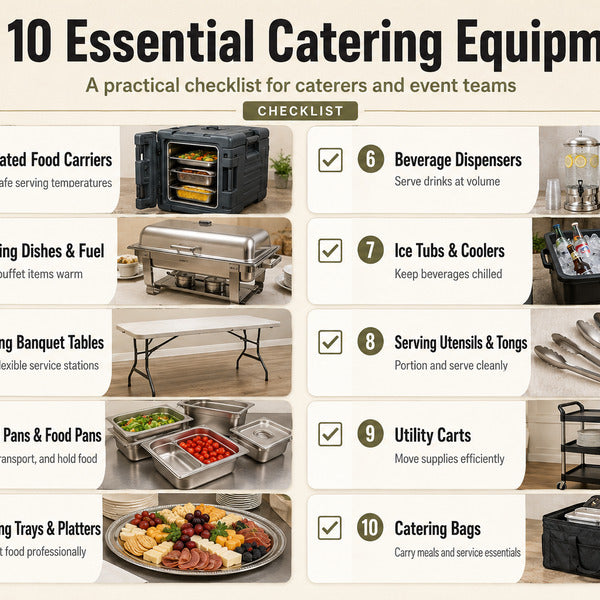
Catering Checklist Template (adapt per event)
- Hot service: chafing dishes (full + half), chafing fuel (2 cans per chafer), lighters, serving utensils per pan, probe thermometer
- Cold service: coolers, ice or gel packs, cold display trays, drain pans
- Transport: insulated pan carriers, insulated catering bags, sheet pans, lids, tape and pan labels, hand truck or dolly
- Guest-facing: plates, cutlery kits, cups, napkins (all +10–15% overage), serving trays, platters, beverage dispensers, menu cards, allergen labels
- Buffet setup: folding tables, linens and clips, risers, table numbers or signage
- Utility: gloves, sanitizer and wipes, trash bags, first-aid kit, extension cords, scissors, extra towels, zip ties
- Paperwork: event order, venue contact, load-in instructions, invoice copy
Tip: save this list as a one-page PDF per event type (corporate drop-off, wedding buffet, boxed lunch) so your team packs from the right version every time.
What Equipment Does a Drop-Off Catering Program Need?
Drop-off catering needs equipment engineered for one-way trips: disposable chafer kits, sturdy trays with tamper-evident lids, insulated bags, and clear labeling — because no staff stays behind to fix problems. Drop-off is the fastest-growing catering format for restaurants entering catering, and it is equipment-light by design: you deliver ready-to-serve food, set the spread, and leave.
To launch a successful drop-off catering program, build around these rules:
- Everything is disposable or left behind. Aluminum chafer kits with wire racks and fuel cost a few dollars and eliminate pickup logistics.
- Label every pan with contents, allergens, and reheating/holding instructions — the client's team becomes your service staff.
- Insulate the ride. Food loaded hot must arrive at 135°F+; one quality insulated bag per two pans is a good working ratio.
- Package for the occasion. Product launches, office lunches, and client meetings are the core drop-off market — corporate buyers reorder from whoever makes them look good in front of their own guests, so presentation-grade trays and matching disposables earn repeat business.
- Systematize the menu. A tight drop-off menu of 8–12 items that travel well beats a full restaurant menu that doesn't.
For restaurants, drop-off is also the lowest-risk way to test a catering business: it uses your existing kitchen, needs no service staff, and the equipment investment is a few hundred dollars in carriers and disposables rather than tens of thousands.
What Equipment Do You Need to Start a Mobile Catering Business?
A mobile catering business needs three equipment layers: a transport vehicle with secure racking, self-sufficient power and temperature control, and a compact service kit that sets up anywhere. Mobile catering means your operation travels — whether that's a van-based caterer serving weddings across a region or a food-trailer setup working festivals.
- Vehicle and racking. A cargo van with e-track rails and strapped speed racks protects equipment and food in transit. Unsecured pans are the #1 cause of mobile catering losses.
- Power independence. Venues without kitchens mean you bring the heat: butane burners, chafing fuel, and (where allowed) a quiet inverter generator for holding cabinets or coffee urns.
- Temperature control on wheels. Insulated pan carriers for hot, coolers for cold, and a probe thermometer to document safe temps on arrival — health departments in most jurisdictions inspect mobile caterers against the same FDA Food Code holding standards (135°F hot / 41°F cold) as fixed kitchens.
- Compact service kit. Folding tables, nesting displayware, and multi-use serving trays keep the load small. Every item should earn its space in the van.
- Licensing. Before buying equipment, confirm your local requirements — commissary kitchen agreements, food handler certification, and vehicle permits vary by county and state.
Start-up equipment for a lean mobile catering operation typically lands under $5,000 excluding the vehicle — chafers, carriers, tables, serviceware, and smallwares — which is why mobile catering remains one of the most accessible entry points into professional foodservice.
Boxed Lunch Catering: Equipment for Catering Inside the Box
Boxed lunch catering replaces the buffet line with individual packaging, so the packaging is the equipment. Box lunches for catering surged with hybrid workplaces and remain the default for corporate trainings, film sets, field crews, and any event where speed and individual portions beat a shared spread.
Build a boxed-lunch program around four equipment choices:
- The box itself. Kraft lunch boxes, window boxes, and multi-compartment bento-style boxes each set a different tone. Bento-style meal-prep boxes keep components separated — dressing off the salad, crisp items away from hot items — which is the single biggest quality upgrade in boxed catering.
- Breakfast catering boxes. Morning drops need boxes engineered for pastries, fruit cups, and hot sandwiches with vented compartments so steam doesn't wilt the contents. Breakfast is the highest-frequency corporate reorder; a dialed-in breakfast box wins standing weekly orders.
- Inserts and portion containers. Sauce cups with lids, compostable inserts, and cutlery kits with napkins make each box self-contained.
- Cold-chain transport. Boxed meals are usually served cold or room-temp, but TCS components (chicken, dairy-based salads) still must hold at 41°F or below — insulated bags with gel packs solve this for delivery routes with multiple stops.
Boxed lunches are also among the best catering options for scaling: assembly is linear, per-unit costs are predictable, and the same equipment serves 20 boxes or 500.
How Restaurantware Equipment Fits Each Category
Restaurantware supplies catering operations at every tier, and our 15+ years serving 40,000+ foodservice operations shape what we stock: the items caterers reorder most are the ones that survive constant transport and turnover — chafing dishes, insulated carriers, and serving trays take the hardest use of anything in foodservice. A few places to start:
- Full range: our catering collections gather hot-holding, transport, display, and serviceware in one place.
- One-way service: catering disposables — plates, cutlery kits, portion cups, and boxes for drop-off and boxed-lunch programs.
- Presentation-grade trays: disposable serving & catering trays with lids that keep food protected from kitchen to table.
- Transport: insulated food delivery bags & catering bags sized from single-order to full-pan capacity.
Related Catering Guides
Equipment is one leg of a catering operation. These companion guides cover the rest:
- How to Create a Catering Menu — pricing, menu engineering, and formats
- How to Create a Luxury Picnic — the upscale outdoor-events niche
- How to Create a Catering Invoice — billing, deposits, and payment terms
- Luxury Food Ideas for Catering Events — premium menu ideas and the serveware they demand
Frequently Asked Questions
What equipment do caterers need?
Caterers need equipment in four core categories: hot- and cold-holding gear (chafing dishes, fuel, coolers), insulated transport carriers and bags, service items (trays, platters, utensils, beverage dispensers), and disposables (plates, cutlery, cups, napkins). Supporting gear includes food pans, folding tables, linens, probe thermometers, and display pieces. Buy holding and transport equipment first — every event requires it.
What is the most profitable food to cater?
The most profitable foods to cater are high-perceived-value, low-food-cost items that hold well: pasta dishes, rice and grain bowls, taco and fajita bars, pulled meats, and appetizer/finger-food spreads. These share cheap base ingredients, batch preparation, and tolerance for hot-holding in chafing dishes. Buffet and drop-off formats beat plated service on margin because they need less labor per guest.
How much will it cost to feed 40 guests?
Feeding 40 guests typically costs about $480 to $2,000+, based on common catering rates of roughly $12–$50+ per person. Drop-off boxed lunches and simple buffets sit at the low end ($12–$25/person); staffed buffets run mid-range ($25–$40); plated dinners and premium menus exceed $50 per person. Final pricing depends on menu, staffing, rentals, delivery distance, and region — always quote from your own food and labor costs.
What are common catering supply materials?
Common catering supply materials are stainless steel (chafers, utensils, pans), aluminum (disposable chafer kits and trays), polypropylene and PET plastics (containers, lids, drinkware), melamine (durable displayware), and eco-friendly fibers like bamboo, palm leaf, kraft paper, and bagasse (sugarcane) for compostable plates, boxes, and cutlery alternatives. Material choice balances durability, presentation tier, and sustainability goals.
What is essential catering equipment for a small business?
Essential catering equipment for a small business is the minimum kit that covers every event type you sell: 2–4 chafing dishes with fuel, insulated carriers or bags, standard food pans with lids, serving trays and utensils, a probe thermometer, two folding tables, and event-appropriate disposables. This starter kit typically costs $1,000–$3,000 and expands as your bookings dictate — rent specialty items until demand proves the purchase.
What is the difference between catering equipment and catering supplies?
Catering equipment refers to reusable, durable items — chafing dishes, carriers, tables, dispensers, serving utensils — that you buy once and use for years. Catering supplies are consumables replenished per event: disposables, chafing fuel, napkins, gloves, and packaging. Budget them separately: equipment is a capital purchase, while supplies are a per-event cost built into your pricing.
Conclusion: Build the Kit, Then Book the Events
Catering equipment rewards buying in priority order: temperature control first, transport second, service third, presentation last. Master the ten essentials above, pack from a written checklist, and match your kit to your format — drop-off, mobile, boxed lunch, or full-service. The caterers who grow are the ones whose equipment never becomes the story at an event.
Ready to build or upgrade your kit? Explore the full range of catering collections at Restaurantware — from chafing dishes and insulated carriers to presentation-grade disposables trusted by 40,000+ foodservice operations.